 Bellingham Siding
 Bellingham's Coastal Weather Is Hard on Windows
Homes in the Puget area sit close enough to open water and exposed weather fronts that windows take a beating most inland houses never see. Salt-laden air corrodes hardware and fasteners over time. Driving rain — the sideways kind that comes in on a west wind rather than falling straight down — finds every gap in a poorly flashed window. And Whatcom County's long, wet moss season keeps sills, tracks, and north-facing frames damp for months at a stretch, which is exactly the environment mold, wood rot, and failed seals need to take hold.
Tree cover common around Puget properties adds another wrinkle: shaded, north-facing windows dry out slower after every rain, which is why moss and algae tend to build up there faster than on sun-exposed walls. None of this means custom windows are a bad investment here. It means the installation has to account for the climate from the start — not as an upgrade, but as the baseline. A window that would perform fine in a dry inland town can fail in five years on a Puget-area house if it's installed the way you'd install it anywhere else.
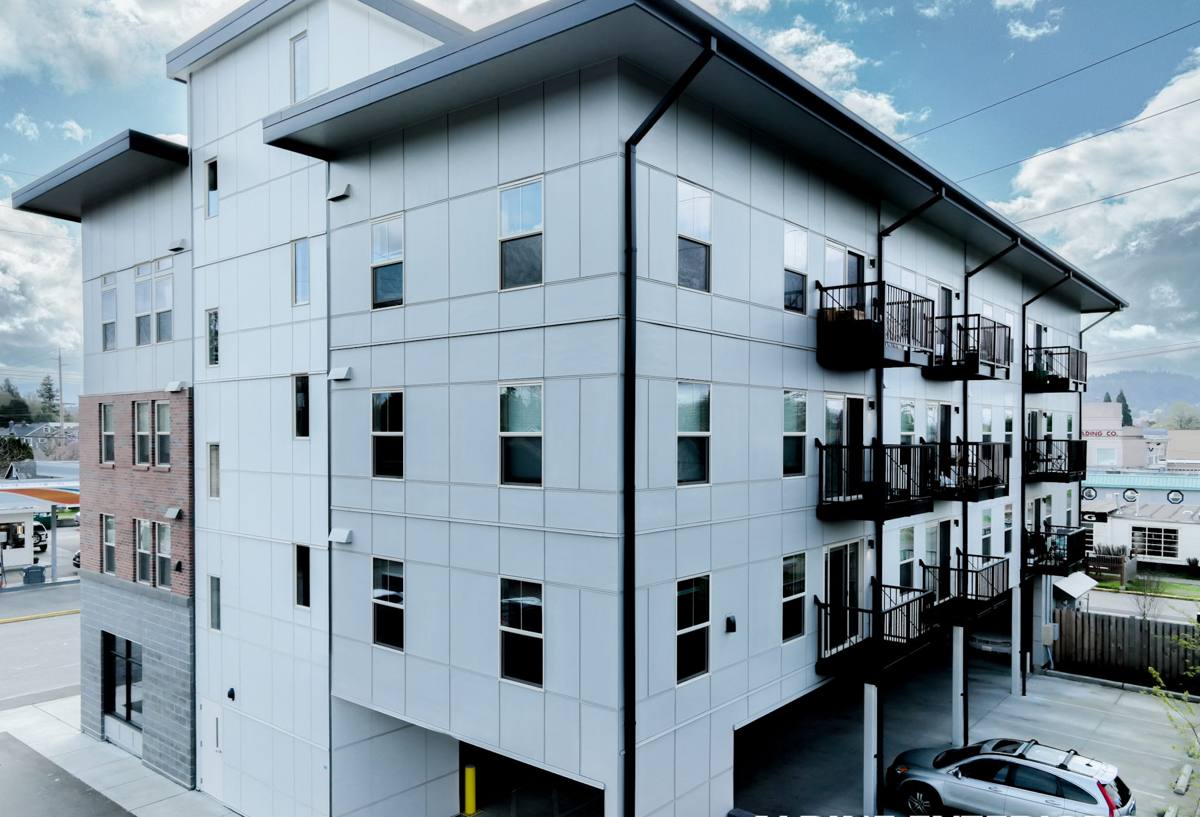
What Correct Custom Window Installation Actually Involves
"Correct" isn't a marketing word here — it's the difference between a window that lasts twenty-plus years and one that leaks into the wall cavity within a few winters. In a high-rain, salt-air climate, three details matter more than they would elsewhere.
Flashing and Sill Pans That Actually Shed Water
Every window opening needs a sloped sill pan and properly lapped flashing tape that directs water out and down, never back into the framing. This is the single most common point of failure we find when we remove an old window — not the window itself, but water management around it that was never installed correctly, or that was installed correctly decades ago and has since failed.
Insulation and Air Sealing Around the Rough Opening
Gaps around the frame get backer rod and low-expansion foam, not just fiberglass batting stuffed in by hand. Done wrong, this creates a cold spot where interior humidity condenses against the frame — a common cause of the "my new windows are sweating" call we get in winter.
Fasteners and Hardware That Won't Corrode
Standard zinc-plated screws and cheap cam locks pit and seize faster near the water. We use stainless or coated fasteners and hardware rated for coastal exposure, because replacing corroded hardware on a window that's otherwise sound is an avoidable expense, and it's an easy detail to skip if a crew isn't used to building this close to salt air.
Choosing Frame Materials for a Salt-Air, High-Rain Climate
There's no single "best" window material — there's a best fit for your house, your budget, and how much upkeep you want to take on. Here's how the common options actually behave in this specific climate, based on what we see in the field.
| Frame Material | Coastal Performance | Maintenance | Typical Trade-Off |
|---|---|---|---|
| Vinyl | Won't corrode or rot; handles moisture well | Low — occasional cleaning | Fewer color/finish options; can look less premium on higher-end homes |
| Fiberglass | Excellent — dimensionally stable, resists moisture and salt | Low | Higher upfront cost than vinyl |
| Wood with clad exterior | Good if the cladding and flashing detail are done right; the wood interior still needs protection from any leak | Moderate — exterior clad is low-maintenance, interior wood may need periodic finishing | Best appearance for traditional homes; more installation-sensitive |
| Aluminum | Conducts cold and can condense or corrode faster near salt air unless thermally broken | Moderate | Slim sightlines, but usually not our first recommendation this close to the water |
For most Puget-area homes, we steer clients toward vinyl or fiberglass for pure durability, and reserve wood-clad for houses where the look is the priority and the owner understands the slightly higher maintenance involved. We'll walk through the honest trade-offs for your specific house rather than pushing one product line.
Cost Factors to Expect
Every custom window project is priced around the specific opening, not a flat per-window rate, but a few factors consistently move the number up or down. Getting a feel for these up front makes it easier to compare quotes and understand why two bids for the "same" window can look different.
- Window size and how many openings are being replaced at once
- Frame material selected — vinyl and fiberglass sit at different price points than wood-clad
- Full-frame replacement versus an insert into the existing frame, which affects labor and trim work
- Condition of the existing opening — rot or water damage found during removal adds repair scope
- Glazing package, including pane count and any specialty coatings
- Accessibility, such as second-story windows or tight side-yard clearance
We give you a firm, itemized number after the on-site assessment rather than a rough phone quote, so there are no surprises once work starts.
Signs Your Current Windows Are Already Failing
Window failure in this climate is usually gradual, and homeowners often adjust to small problems without realizing they're symptoms of a bigger issue. Before you decide whether to repair or replace, check for these:
- Soft or discolored drywall or trim below or beside the window, a sign of water tracking down from a flashing failure
- Condensation or fogging between the panes of a double- or triple-glazed unit — a seal failure that's only fixed by replacement, not repair
- Visible corrosion or seized hardware on locks, hinges, or cranks
- A persistent musty smell near a window, especially on north- or west-facing walls
- Green or black growth building up in the track or sill faster than you can keep it clean
- A noticeable draft you can feel with your hand along the frame edge on a windy day
- Difficulty opening, closing, or locking a window that used to operate smoothly
One or two of these can often be addressed without a full replacement. Several at once, especially with any sign of water reaching the framing, usually means it's time to replace rather than patch.
Our Process for Puget-Area Custom Window Projects
We treat every project as custom because every house is different — different orientation to wind and rain, different age of construction, different existing window sizes and openings.
1. On-Site Assessment
We look at each opening individually, not just the window itself. That means checking existing flashing, sill condition, and any evidence of past moisture intrusion before we ever talk product selection.
2. Measurement and Product Selection
Windows are measured to the actual opening, not a catalog size. We'll go over frame material, glazing, and finish options based on that specific wall's sun and weather exposure.
3. Removal and Opening Prep
Old windows come out carefully to avoid unnecessary damage to siding or interior trim. Any rot, soft framing, or failed flashing we find gets addressed before the new window goes in — installing a new window over a compromised opening just hides the problem for a while.
4. Installation
New sill pans, flashing, insulation, and the window itself go in to manufacturer spec and to the water-management standard this climate requires, not the minimum needed to pass a quick inspection.
5. Finish and Walkthrough
Interior and exterior trim get finished to match your home, and we walk you through how the new windows operate, lock, and should be maintained before we consider the job done.
Energy Efficiency and Condensation Control
New windows are one of the more noticeable upgrades for comfort — less draft, less noise, and a house that holds heat better through a wet Bellingham winter. But efficiency and condensation control come from the whole assembly working together: the glazing package, the frame's insulating value, and the quality of the air seal around the rough opening. A high-end window installed with a poor air seal will still feel drafty, and a modest window installed correctly will often outperform expectations.
If you're seeing condensation on the inside of your current glass every winter morning, that's usually a humidity and ventilation issue inside the home rather than a window defect — something worth mentioning when we do your assessment, since the fix might be simpler than a full replacement.
Why Hire a Crew That Already Works in Puget
A contractor who works this specific area regularly has already seen how a given wall orientation handles driving rain, how fast moss builds up on a shaded sill, and which detailing choices hold up after a few wet seasons rather than just looking right on installation day. That's knowledge you don't get from a manufacturer's install manual — it comes from following up on jobs a few years later and seeing what actually happened.
It also matters for scheduling. Window replacement in a rainy climate means timing the removal and install to a dry weather window, having the opening protected the moment the old unit is out, and not leaving a house exposed longer than necessary. A crew unfamiliar with the local weather pattern is more likely to get caught mid-install by a system rolling in off the water.
Protecting Your Investment After Installation
Even the best-installed window benefits from a little seasonal attention in this climate:
- Clear moss and debris from tracks and sills before it holds moisture against the frame, especially on shaded or north-facing windows
- Rinse salt residue off frames and hardware a few times a year, particularly on wind-exposed elevations
- Check exterior caulking and sealant annually and re-seal any cracked or separated joints before winter rains set in
- Lubricate locks, hinges, and cranks so hardware doesn't seize from corrosion or grit
- Keep gutters and downspouts clear so roof runoff isn't sheeting down across window heads
A few minutes of upkeep a couple times a year is far cheaper than repairing water damage from a flashing failure that went unnoticed.
If you're weighing repair versus replacement, or just want a straight answer on what your Puget-area home actually needs, we're happy to take a look. The estimate is free, there's no pressure, and you'll get a clear picture of what's involved before you decide anything.