 Bellingham Siding
 Roofing in Sunnyland: A Neighborhood With Its Own Set of Problems
Sunnyland is one of Bellingham's older, tree-shaded residential neighborhoods, and that combination — mature tree canopy, close proximity to Bellingham Bay, and a housing stock that spans decades of different roofing eras — creates a specific set of roof problems. It's not the same roof-aging pattern you'd see in a newer subdivision with young landscaping and open sun exposure. Homes here deal with more shade, more organic debris, and roofs that were installed under very different code and material standards than what's available today.
Whatcom County's climate doesn't do a roof any favors either. Salt-laden air off the bay slowly works on exposed metal fasteners and flashing. Driving rain — the kind that comes in sideways during a fall or winter system — finds every gap in flashing or underlayment that a light straight-down rain would never expose. And the region's long moss season, often stretching from late fall through spring, means organic growth has months to establish itself on any roof section that doesn't get regular sun and airflow. None of these factors are dramatic on their own, but together, over years, they're what turns a small maintenance item into a leak.
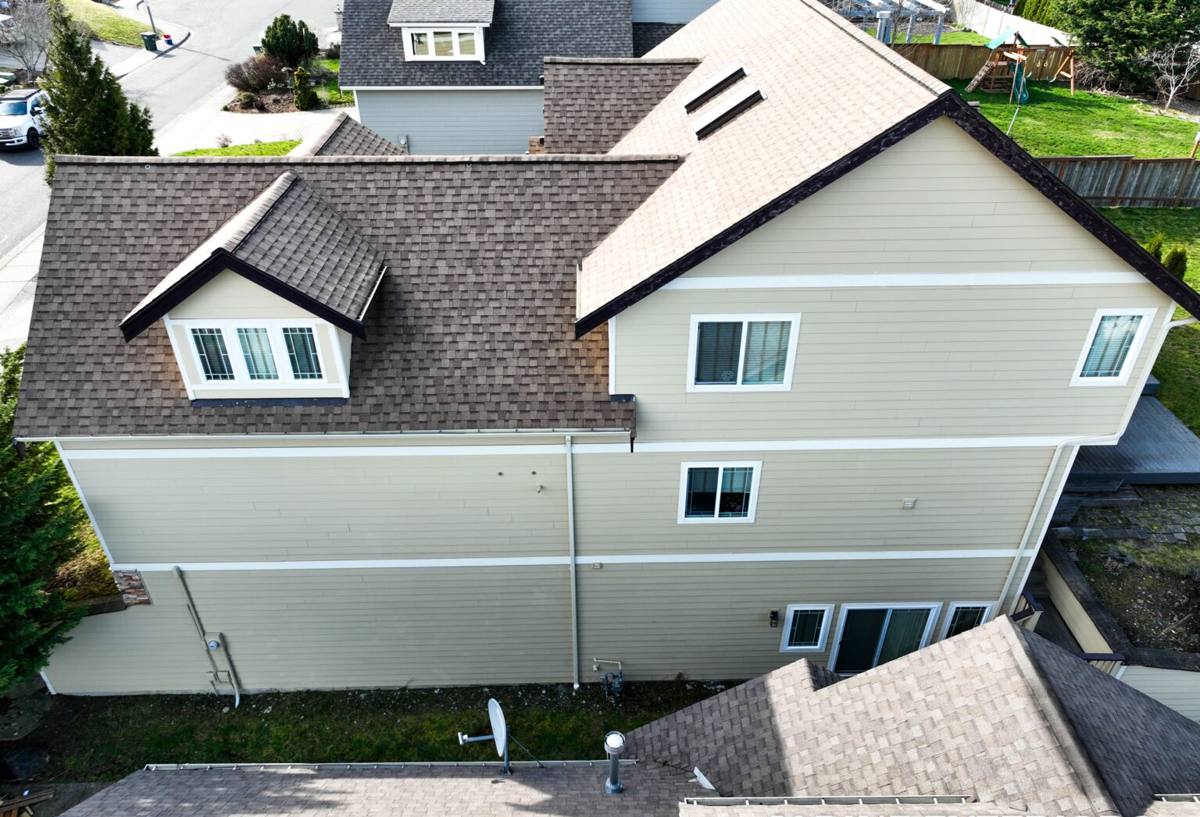
Signs You Need Roof Repair, Not Replacement
Most roofs don't fail all at once. They fail in one spot, and if that spot gets addressed early, the rest of the roof can go on doing its job for years. Here's what typically points to a repair rather than a full replacement:
- A stain on an interior ceiling or wall that appears after heavy rain, especially near a chimney, skylight, or where two roof planes meet
- Missing, cracked, or curling shingles in an isolated area rather than across the whole roof
- Visible daylight through the attic roof deck at a seam or nail hole
- Granules collecting in gutters from one section of roof but not others
- Soft or spongy decking felt underfoot in one spot during an inspection
- Flashing that's visibly lifted, rusted through, or separated from a chimney, wall, or vent pipe
If the damage is contained and the rest of the roofing material still has useful life left, a targeted repair is the honest recommendation. We don't push replacement on a roof that doesn't need it — that's a disservice to the homeowner and it's not how we want to be known in this neighborhood.
What a Proper Roof Repair Actually Involves
Inspection First, Always
Before anything gets touched, we get on the roof and in the attic. A stain on a ceiling doesn't always mean the leak is directly above it — water travels along rafters and sheathing before it shows itself, sometimes appearing several feet from the actual entry point. Skipping this step is how homeowners end up paying for a repair that doesn't fix the actual problem.
Diagnosing the Real Cause
Most leaks trace back to one of a handful of causes: failed flashing, deteriorated underlayment, a cracked or missing shingle, a compromised roof penetration (vent pipe, skylight, chimney), or ice and debris damming water against an edge. Each of these needs a different fix, and treating the symptom instead of the cause is why some repairs don't hold.
The Repair Itself
Depending on the diagnosis, a repair might involve replacing a section of shingles and matching them as closely as possible to the existing roof, re-flashing a chimney or wall intersection, resealing or replacing a vent boot, or repairing a small section of damaged decking underneath. We always pull back more material than the visible damage suggests, because water-damaged decking or underlayment often extends past what's obvious from the surface.
Cleanup and Follow-Up
A repair isn't done until the work area is cleared of old material and debris and the homeowner understands what was found and what was fixed. We'll also flag anything else we noticed while we were up there — a matter of professional honesty, not an upsell.
Common Repair Types We Handle in Sunnyland
| Repair Type | Typical Cause | Urgency |
|---|---|---|
| Flashing repair/replacement | Rust, thermal movement, poor original install | High — direct leak path |
| Shingle patch/replacement | Wind lift, age, granule loss, moss undermining | Moderate to high |
| Vent pipe boot resealing | Rubber boot cracking with UV/age | Moderate |
| Decking/sheathing repair | Prolonged undetected leak | High — structural concern |
| Gutter and edge flashing repair | Debris buildup, driving rain overshoot | Moderate |
Flashing and vent boot issues make up a disproportionate share of the repair calls we get in older neighborhoods like Sunnyland, largely because those components have a shorter service life than the shingle field around them and are easy to overlook during a casual roof check from the ground.
The Tree Canopy and Moss Factor
Why Shade Matters More Than Roof Age
A roof under heavy tree cover can develop moss and organic buildup well before a same-age roof in full sun, simply because it never fully dries out between rain events. Moss isn't just cosmetic — as it establishes, it lifts shingle edges and holds moisture directly against the roofing material, which accelerates granule loss and, eventually, opens a path for water underneath the shingle itself.
Moss Removal Done Right
Moss should be removed gently — soft-washed or hand-cleared, never pressure-washed, which strips granules and shortens shingle life faster than the moss itself would. Zinc or copper control strips near the ridge can help slow regrowth on shaded sections, using rainwater runoff to carry trace metals down the roof face over time.
Gutter and Debris Management
Needles and leaf litter from surrounding trees collect in valleys and behind chimneys faster than most homeowners expect, and that debris holds water against the roof surface exactly where it's hardest to notice from the ground. Keeping gutters and valleys clear isn't just a gutter maintenance item — it's roof protection.
Materials We Use and Why
For shingle repairs, matching the existing roofing material as closely as possible in profile, color, and manufacturer where feasible keeps the repair from standing out and preserves the roof's overall performance — mismatched shingle repairs can actually create their own small leak points if the profiles don't seat together properly. For flashing, we favor corrosion-resistant metals suited to a coastal climate, since Bellingham's salt air will shorten the life of lower-grade materials faster than it would inland. Underlayment gets replaced with a synthetic or self-adhered product in any section we open up, rather than reusing old felt, because that layer is doing the real waterproofing work if a shingle ever fails again.
Repair vs. Replacement: Weighing the Cost Factors
| Factor | Favors Repair | Favors Replacement |
|---|---|---|
| Age of roof | Under roughly 15-20 years | Approaching or past material's rated life |
| Extent of damage | Localized to one area | Spread across multiple roof planes |
| Decking condition | Sound, dry | Widespread soft spots or rot |
| Shingle availability | Close match available | Discontinued profile/color |
| History of repairs | First or second repair | Repeated repairs on same roof |
A roof with a good repair history and sound decking can often go several more years with targeted fixes. A roof that's been patched repeatedly in different spots is usually telling you the underlying material is at the end of its service life, and continuing to chase individual leaks stops being cost-effective.
Why Local Experience Actually Matters Here
A crew that regularly works Sunnyland and the surrounding Bellingham neighborhoods knows which roof orientations in this area tend to hold moss, which older home styles commonly have undersized or outdated flashing details, and how the specific rainfall patterns off Bellingham Bay behave differently than a generic Pacific Northwest forecast suggests. That's not something a crew traveling in from outside Whatcom County picks up on a single job. It also means we're not learning the local permitting expectations or typical construction details of this area's housing stock on the customer's dime — we already know them.
Roof Repair Maintenance Checklist for Sunnyland Homeowners
- Have gutters and roof valleys cleared of debris at least twice a year, more often under heavy tree cover
- Get an annual visual check of flashing around chimneys, skylights, and vent pipes
- Address moss while it's a thin layer, not after it's established and lifting shingles
- Check the attic after major storms for new stains, damp insulation, or daylight through the deck
- Trim back branches that overhang the roofline to reduce shade and debris buildup
- Don't ignore a small stain — get it looked at before the next heavy rain event, not after
If you're seeing signs of a leak, moss buildup, or damaged flashing on a Sunnyland roof, we're happy to take a look and give you a straightforward, no-pressure estimate on what it would take to fix it right. Fill out the form below and we'll get in touch.