 Bellingham Siding
 Roofing in York: A Different Set of Problems Than Most of the Country
York is a Bellingham neighborhood, and like the rest of Whatcom County it sits close enough to the water and the mountains that roofs here age on their own schedule — not the schedule a shingle manufacturer's warranty booklet assumes. A roof that would last 25 years in a dry inland climate can show real wear in York in half that time if it wasn't installed with our conditions in mind. Salt-laden air off the Sound accelerates corrosion on fasteners and metal flashing. Driving rain, often pushed sideways by wind rather than falling straight down, finds every weak seam and undersized flashing detail. And the long stretch of cool, damp months each year gives moss and moisture months to work into a roof surface before a homeowner ever sees a stain on the ceiling.
None of that means roofing in York is impossible to get right — it means the details that get skipped in easier climates can't be skipped here. This page covers what a roof replacement actually needs to hold up in this specific area, what our process looks like, and what to weigh when you're comparing materials and bids.
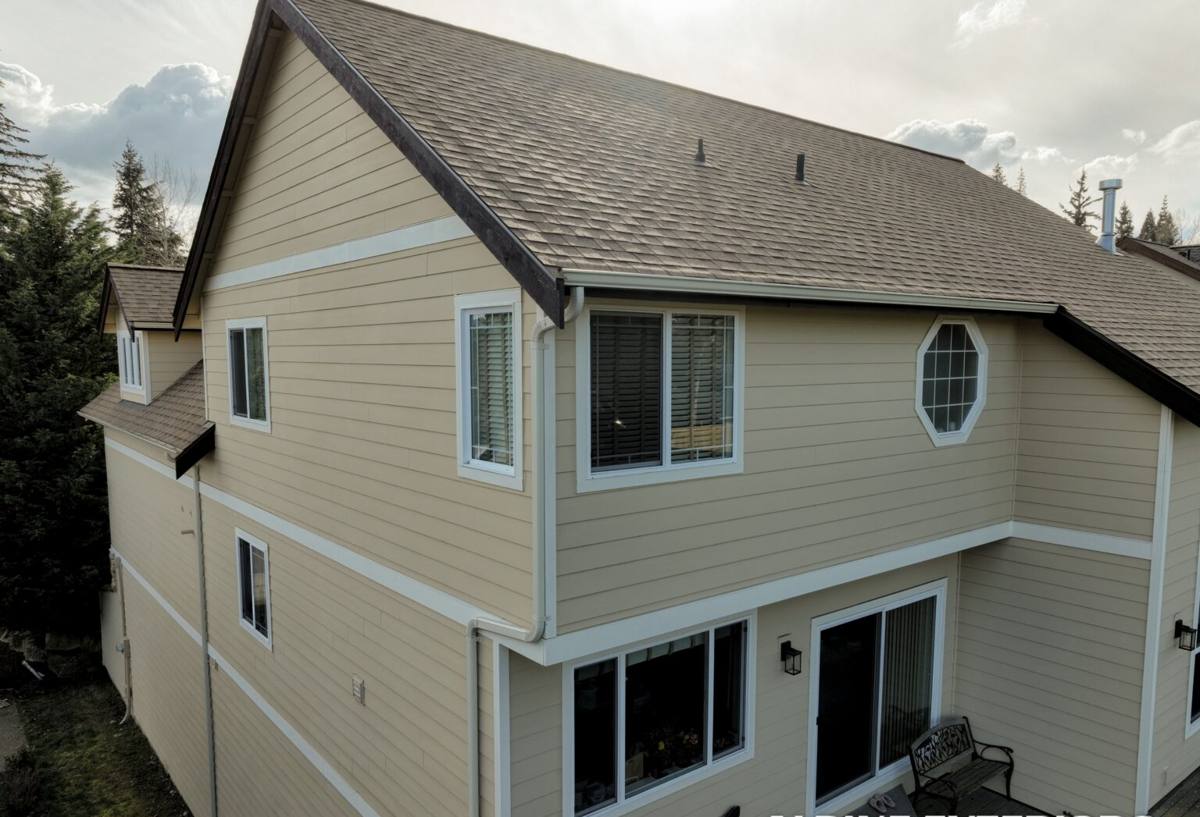
Signs a York Roof Is Due for Replacement, Not Another Repair
Repairs make sense when a roof is otherwise sound and the damage is isolated. Replacement makes sense once the roof's ability to shed water and resist moss has broken down system-wide. A few patched shingles can buy time; they can't fix underlayment that's failing or decking that's absorbing moisture underneath.
- Granules collecting in gutters or at downspout outlets, especially after a windy rain
- Moss established in mats rather than a light green haze — mats hold water against the shingle surface year-round
- Shingles that are cupping, curling at the edges, or visibly brittle
- Soft spots underfoot on a roof walk, or sagging visible from the ground
- Dark streaking or staining on ceilings and around chimneys or skylights after heavy rain
- A roof approaching or past 20 years old with no major upgrades to ventilation or underlayment
- Repeated repair calls to the same two or three spots over consecutive winters
If two or more of these apply, a roof replacement is almost always more cost-effective than continuing to chase repairs, because the underlying deck and underlayment are usually further along than the visible shingle damage suggests.
What a Correct Roof Replacement Involves Here
A roof replacement in this climate is not just "new shingles on the old deck." The parts of the job that don't show — underlayment, flashing, ventilation, and deck condition — matter more here than in drier regions, because they're what determine whether the next 20 years of driving rain and moss pressure actually stay outside.
Deck Inspection and Repair
Once the old roofing is stripped, we check the decking for soft spots, delamination, or rot — most commonly around valleys, chimneys, and any spot where a previous leak went unnoticed. Any compromised sheathing gets replaced before anything new goes down. Skipping this step is the single most common shortcut in cheap re-roofs, and it's the one that causes trouble fastest in a wet climate.
Underlayment Built for Wind-Driven Rain
Standard felt underlayment is a minimum, not a standard, for a coastal Whatcom County roof. We use synthetic or self-adhering underlayment in the areas most exposed to wind-driven rain — eaves, valleys, and around any roof penetration — because those are the spots where water gets pushed uphill under normal shingle overlap rather than running straight down.
Flashing That Won't Corrode Prematurely
Salt air in this region shortens the life of poor-quality or improperly fastened metal flashing. We detail flashing at every roof-to-wall transition, chimney, skylight curb, and valley with corrosion-resistant materials and proper fastener selection, and we don't rely on caulk or roof cement as a substitute for correctly lapped metal.
Ventilation Sized to the Roof, Not Guessed At
Poor attic ventilation traps moisture underneath the roof deck, which shortens shingle life from below and contributes to moss and mildew from above. We calculate intake and exhaust ventilation to the actual square footage and roof design rather than installing a generic vent count, which is a detail that gets skipped more often than homeowners realize.
Roofing Material Options for York Homes
There's no single "best" roofing material for every York home — it depends on the roof's pitch, the home's style, and how much long-term maintenance the owner wants to take on. Here's how the common options actually compare in this climate, with the trade-offs stated plainly rather than glossed over.
| Material | Typical Lifespan Here | Moss Resistance | Maintenance Burden |
|---|---|---|---|
| Architectural asphalt shingle | 20–30 years | Moderate — benefits from zinc/copper strips | Low to moderate |
| Standing seam metal | 40–50+ years | High — sheds moss and debris well | Low |
| Cedar shake | 20–30 years with upkeep | Low without regular treatment | High |
| Synthetic composite shake/slate | 40–50 years | High | Low |
Asphalt shingle remains the most common choice because it balances upfront cost with a lifespan that's still respectable when it's installed with the underlayment and ventilation details above. Metal and synthetic composites cost more up front but ask almost nothing of the homeowner afterward, which matters for a roof exposed to this much seasonal moss and rain. Cedar shake has real aesthetic appeal and a long history in this region, but we're honest with clients that it demands regular cleaning and treatment to resist moss here — without that upkeep, it ages faster than the other options. We'll always walk through which option fits your home and your appetite for maintenance rather than pushing one product across every job.
Our Roof Replacement Process
- On-site inspection and estimate. We walk the roof and attic, check the current deck and ventilation condition, and give you a written scope and price — not a verbal ballpark.
- Material selection. We go over shingle, metal, or composite options against your budget, roof pitch, and how the home is used, with real trade-offs explained.
- Permitting. Roof replacements in Bellingham typically require a permit; we handle that filing so you don't have to track it down.
- Tear-off and deck inspection. Old roofing comes off down to the deck, which gets inspected and repaired before anything new is installed.
- Underlayment, flashing, and ventilation installation. This is where the climate-specific work happens — done before a single finish shingle or panel goes down.
- Finish roofing installation to manufacturer specification, which is what keeps the material warranty valid.
- Cleanup and final walkthrough, including a magnetic sweep for stray fasteners and a review of the finished work with you.
Ventilation, Moisture, and Moss: The Ongoing Fight in This Climate
Moss on a roof isn't just cosmetic — it holds moisture against the shingle surface and can lift edges over time, which is exactly what shortens roof life in Whatcom County compared with drier parts of the country. A correct replacement reduces the conditions moss needs to establish: proper drainage with no low spots that hold standing water, flashing that doesn't trap debris, and in some cases zinc or copper strips near the ridge that discourage moss growth as rain washes trace minerals down the roof surface.
None of that eliminates the need for basic seasonal maintenance — clearing gutters and valleys of debris before the wet season, and keeping overhanging branches trimmed so less organic matter lands on the roof to begin with. A well-built roof reduces how much moss pressure matters; it doesn't remove the need for a homeowner to keep an eye on it.
What Affects the Cost of a Roof Replacement
| Factor | Why It Matters |
|---|---|
| Roof size and number of stories | More square footage and steeper access both add labor and material time |
| Roof pitch and complexity | Multiple valleys, dormers, and roof-to-wall transitions all need extra flashing detail |
| Deck condition underneath | Rotted or delaminated sheathing found during tear-off adds repair cost, but skipping it costs far more later |
| Material choice | Asphalt shingle costs less up front than metal or synthetic composite, which cost more but need less upkeep |
| Ventilation upgrades needed | Older homes often need added intake or exhaust vents to meet current airflow needs |
| Number of penetrations | Skylights, chimneys, and vent stacks each require individual flashing work |
We give a firm written price after inspecting the actual roof — not a phone-quoted range — because the deck condition and complexity are the two factors that most often separate an accurate bid from a guess.
Why It Matters to Hire a Crew That Already Works in York
A crew that regularly works this part of Whatcom County has already seen how roofs in this specific area age — which directions the driving rain tends to come from, which roof details tend to trap moss first, and which underlayment and flashing choices hold up under the salt air here versus further inland. That's not something a national roofing brand's install crew necessarily accounts for, and it's not something you can verify from a glossy brochure.
It also matters for accountability. A local crew is answerable to the neighborhood it works in — if something isn't right after the job, we're not a phone number in another state. We stand behind our work because we're going to keep working in this community, not because a script tells us to say so.
Questions Worth Asking Any Roofer Before You Sign
- Will you inspect and repair the deck before installing new roofing, and is that itemized in the bid?
- What underlayment are you using at eaves, valleys, and penetrations specifically?
- How will you calculate attic ventilation for this roof, rather than using a standard vent count?
- What's the warranty on materials versus on your labor, and who do I call if either fails?
- Are you pulling the required city permit, and will there be a final inspection?
A contractor who answers these clearly and specifically, without deflecting to "we always do it right," is worth trusting more than one who just quotes a low number.
If your York home's roof is showing its age or you just want an honest read on where it stands, we're happy to take a look. The estimate is free, there's no pressure attached to it, and you'll get a straight answer either way — use the form below to get started.