 Bellingham Siding
 Why Sehome's Climate Is Hard on Windows
Sehome sits close enough to Bellingham Bay that salt-laden air is a fact of life, and it doesn't just affect siding and gutters — it works on window hardware, seals, and exposed fasteners year-round. Add Whatcom County's long wet season, where driving rain comes in sideways off the Sound for months at a time, and you've got two forces constantly testing every seam in a window assembly. Then there's moss season, which in this part of Washington isn't really a season so much as most of the year: constant moisture keeps moss and algae active on north-facing walls, shaded eaves, and anywhere airflow is limited, and that organic growth holds water against wood trim and sills longer than it would in a drier climate.
None of this is exotic — it's just Pacific Northwest weather doing what it does. But it means a window that's rated fine for a dry inland climate can underperform here within a few years if it wasn't installed with local conditions in mind. Sehome's mix of older homes and newer infill means we see both problems: original single-pane or early double-pane windows that were never energy-efficient to begin with, and newer replacement windows that were installed without the flashing and sealing details this climate actually requires.
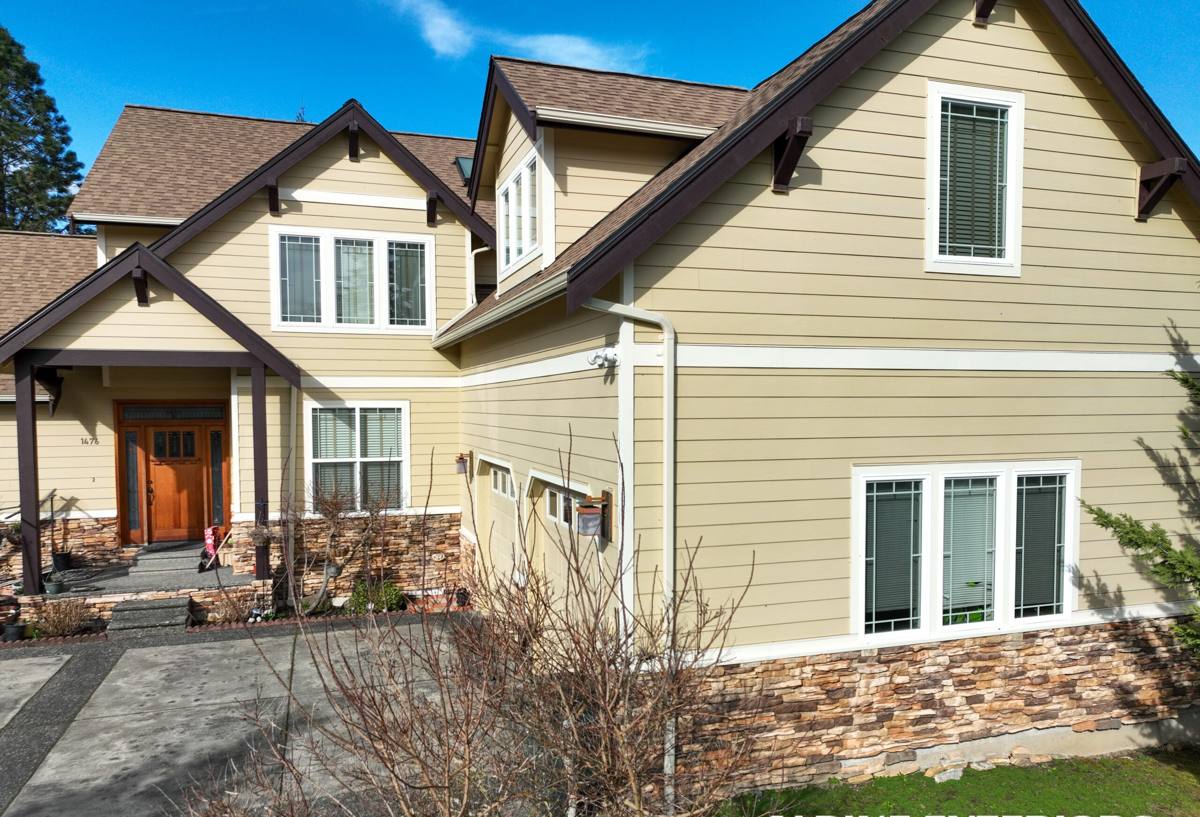
What "Energy-Efficient" Actually Means for a Bellingham Home
Energy efficiency in a window comes down to three things working together: the glass, the frame, and the installation. Homeowners often focus only on the glass package, but a well-rated window installed poorly will still leak air and moisture — and a modest window installed correctly will usually outperform it. In Whatcom County's marine climate, we weigh these factors differently than a contractor in a hot, dry region would.
Glass Performance
Look for U-factor (how well the window resists heat loss — lower is better here, since we care more about keeping heat in than keeping it out) and low-E coatings tuned for a heating-dominated climate. Double-pane, low-E, argon-filled units are the standard baseline for this region; triple-pane can make sense on north- or west-facing walls that take the brunt of wind-driven rain and cold.
Frame Material
Vinyl, fiberglass, and clad-wood frames each handle our humidity differently. We'll walk through the real trade-offs for your home rather than push one product line — maintenance burden, how the frame handles years of damp exposure, and long-term warranty structure all matter more here than they would in a milder, drier market.
The Installation Itself
This is the part that's easy to overlook and the part that fails first. Proper flashing, sill pan drainage, backer rod and sealant at the right joints, and correct shimming all determine whether a high-performance window actually performs — or just looks new while air and water find their way in around it anyway.
Signs Your Sehome Home's Windows Are Costing You Money
- Visible condensation or fogging between panes (a sign the seal has failed and the insulating gas is gone)
- Drafts you can feel near the frame on a windy day, even with the window latched
- Rooms that are noticeably colder or draftier than the rest of the house
- Paint or trim damage around the window frame from trapped moisture
- Difficulty opening, closing, or locking — often a sign the frame has swollen or shifted
- Rising heating bills without a clear reason, especially in an older home with original windows
- Soft or discolored wood at the sill, a common early symptom in homes exposed to driving rain
Any one of these is worth a look. Several together usually mean the windows are past the point where caulk and weatherstripping will fix the problem.
What a Correct Installation Involves
Replacing a window is straightforward in concept — remove the old unit, set the new one, seal it up — but the details are where performance and longevity are actually won or lost, especially in a climate that sees this much sustained moisture.
- Assess the opening. We check the rough opening, sill, and surrounding framing for existing water damage or rot before anything new goes in. Installing a new window over a compromised opening just hides a problem that will resurface.
- Install a sill pan and flashing. This gives any water that gets past the exterior cladding a way to drain back out instead of soaking into the framing — the single most important detail for long-term performance in a wet climate.
- Set and shim the window plumb, level, and square. A window that's slightly out of square will bind, won't seal evenly, and will wear unevenly over time.
- Seal with the right materials in the right order. Backer rod, sealant, and house wrap integration all have a correct sequence — done out of order, you can trap moisture inside the wall instead of keeping it out.
- Finish and test. Interior and exterior trim goes back cleanly, hardware is tested, and we walk the job with you before we call it done.
Frame and Glass Options Compared
| Option | Best For | Trade-Offs |
|---|---|---|
| Vinyl, double-pane low-E | Most Sehome homes on a standard budget | Low maintenance, solid performance; fewer color and profile choices than fiberglass or wood |
| Fiberglass frame | Homes wanting a slimmer profile or paintable finish | Higher upfront cost; excellent stability in temperature and moisture swings |
| Clad-wood frame | Older or character homes wanting a traditional interior look | Needs more attention to exterior sealing details; higher maintenance over its life |
| Triple-pane glass | North- and west-facing exposures catching wind-driven rain | Added cost and weight; best used selectively rather than whole-house |
Matching Windows to Sehome's Housing Stock
Sehome has a mix of early-20th-century homes and later infill, and window replacement looks different depending on which you have. Older homes often have smaller, individually sized openings and trim details worth preserving — we measure each opening rather than assuming they match, and we talk through options for keeping the exterior trim profile consistent with the rest of the house. Newer construction usually has more standardized openings, which can simplify the project but doesn't change the need for correct flashing and sealing — the climate doesn't care how old the house is.
If your home has never had its original windows replaced, it's also worth having us check for compatibility issues between old and new construction methods before we quote the job, so there are no surprises once we open the wall.
What Drives the Cost
Every home is different, so we won't quote a number without seeing the job, but a few factors consistently move the price:
- Number of windows and how many are custom-sized versus standard
- Frame material chosen (vinyl generally costs less than fiberglass or clad-wood)
- Glass package — double-pane versus triple-pane, and coating options
- Condition of the existing opening — hidden rot or framing damage adds labor
- Access and site conditions, including second-story or hard-to-reach windows
- Trim and finish work needed to match the rest of the home's exterior
As a general guide, most homeowners in this region budget window-by-window rather than assuming a flat whole-house rate, since a small bathroom window and a large picture window are very different jobs. We'll give you a clear, itemized number once we've actually looked at your windows.
Our Process, Start to Finish
We keep the process the same for every Sehome job because consistency is what prevents mistakes:
- Free estimate and walk-through. We look at every window being considered, check the openings, and talk through your priorities — comfort, noise, appearance, or budget.
- Clear, written quote. No surprise line items later.
- Scheduling around the weather. In a climate like ours, timing an opening's exposure matters — we plan installs to minimize how long any opening sits uncovered.
- Installation with proper flashing and sealing as outlined above, done one opening at a time so your home is never left exposed.
- Cleanup and walkthrough so you can see and test the finished work before we consider the job complete.
Why Hire a Crew That Already Works in Sehome
Window installation done wrong doesn't usually fail on day one — it fails two or three winters later, when a flashing detail that was skipped finally lets water into the wall. A crew that already works in this part of Bellingham has seen how Whatcom County's rain and salt air expose those shortcuts, and builds the job to avoid them from the start rather than learning the hard way on your house. Local experience also means realistic scheduling around our wet stretches, and a straight answer about which products actually hold up here versus which ones just look good on a spec sheet.
If your Sehome home has drafty, foggy, or hard-to-operate windows, we'd rather take a look and give you an honest read on what's actually needed than guess over the phone. Reach out for a free, no-pressure estimate — the form below gets you started.