 Bellingham Siding
 What South Hill's Weather Does to Siding
South Hill sits above the rest of Bellingham, which means homes here catch more of what comes off Bellingham Bay and the Salish Sea — salt-laden air, wind-driven rain that hits walls sideways instead of falling straight down, and long stretches of shade and dampness that keep moss and algae established on north- and east-facing walls for much of the year. None of that is unusual for Whatcom County. But it adds up differently on an elevated, more exposed lot than it does in a sheltered valley neighborhood, and it's a big reason siding that looks fine going up can start failing within a few years if the wrong product or the wrong installation method gets used.
Salt air is corrosive to exposed metal fasteners and trim over time. Driving rain finds every gap in flashing, caulk, or panel overlap and pushes water where it doesn't belong. And moss doesn't just look bad — it holds moisture against the siding surface, which is exactly the condition that causes rot, delamination, and paint failure in products that aren't built to handle sustained dampness. A siding installation done for South Hill needs to account for all three, not just look good on install day.
Why We Only Install James Hardie Fiber Cement Here
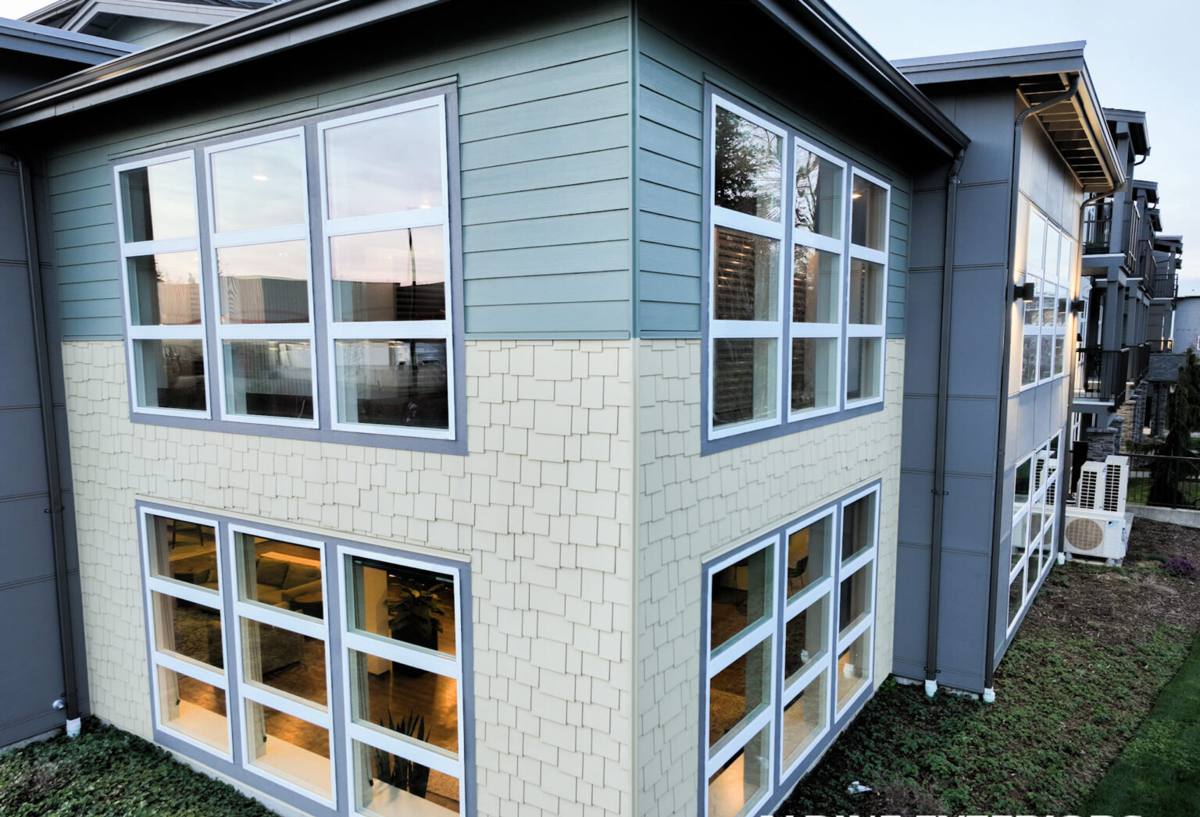
We standardized on James Hardie fiber cement siding for every home we work on, including South Hill, and we don't install vinyl, LP SmartSide, Cemplank, Allura, or wood siding products like primed spruce or cedar. That's not a marketing position — it's a decision based on what actually holds up in this climate over decades, not just the first few years.
Fiber cement is non-combustible and dimensionally stable, meaning it doesn't expand, contract, warp, or absorb water the way wood-based or wood-composite products do. James Hardie's HZ5 product line is engineered specifically for climates like ours, with freeze-thaw cycling, sustained moisture exposure, and coastal air in mind. The factory-applied ColorPlus finish is baked on under controlled conditions rather than field-painted, which matters directly for moss season — a consistent, properly cured finish sheds water and resists the kind of surface breakdown that gives algae and moss something to grip onto. It also carries a real transferable warranty backed by the manufacturer, not just an installer's promise.
We're not going to tell you every other siding product is junk — some of them have real strengths. But we've made a professional call that for South Hill's combination of salt exposure, wind-driven rain, and moss pressure, fiber cement installed correctly is what gives homeowners the best long-term outcome, and it's the only thing we put our name behind.
What a Correct Siding Installation Actually Involves
Siding failures on South Hill homes are rarely about the siding material itself — they're almost always about installation details that got rushed or skipped. A correct install has several layers working together, and every one of them matters more here than in a drier, more sheltered part of the county.
Weather-Resistive Barrier
Before any siding goes up, the wall needs a continuous, properly lapped weather-resistive barrier (housewrap or equivalent) with all seams, penetrations, and openings sealed. This is the backup system that protects the wall assembly if wind-driven rain ever gets past the siding itself — and on an exposed South Hill lot, it will be tested.
Flashing at Every Penetration
Windows, doors, hose bibs, light fixtures, vents — every penetration through the siding is a potential water entry point. Proper flashing, installed in the correct shingle-lap order (so water is always directed outward and downward, never trapped behind), is non-negotiable. This is one of the most commonly shortcut steps we see when we're called in to fix a prior installation.
Clearance and Fastening
James Hardie specifies minimum clearances from grade, roof lines, decks, and other siding terminations, along with specific fastener types, spacing, and depth. Fastening too tight or too loose, using the wrong fastener material, or ignoring clearance requirements are all things that void the manufacturer warranty and shorten the real service life of the siding — regardless of how good the product itself is.
Caulking and Joint Treatment
Panel joints, trim intersections, and butt joints need the right sealant, applied correctly, at the right points in the sequence. Over-caulking is almost as much of a problem as under-caulking — sealing a joint that's designed to allow drainage can trap water instead of letting it escape.
Our Installation Process
1. On-Site Assessment
We walk the exterior with you, looking at existing siding condition, moisture staining, moss buildup patterns, and areas of the home most exposed to wind and rain based on its orientation and elevation. This tells us where extra attention to flashing and drainage is needed.
2. Tear-Off and Substrate Check
Old siding comes off and we inspect the sheathing and framing underneath for existing rot or moisture damage before anything new goes up. Covering a compromised substrate with new siding just hides a problem — we address what we find before proceeding.
3. Weather Barrier and Flashing Installation
This is the step that determines how the home performs in a storm five or ten years from now, not how it looks on install day. We install and lap the weather-resistive barrier correctly and flash every window, door, and penetration before a single piece of Hardie siding goes on.
4. Hardie Panel or Lap Installation
Panels and trim go up per James Hardie's fastening and clearance specifications, with attention to consistent reveal lines and properly staggered joints for a clean, uniform look as well as correct water shedding.
5. Final Inspection and Walkthrough
We walk the finished job with you, checking fastening, caulking, trim details, and clearances, and answer any questions about care going forward.
What We Find When We Replace Older Siding on South Hill
When we're called out to South Hill homes with siding problems, a handful of issues show up repeatedly:
- Moss and algae established along north-facing walls and under eaves where sun exposure is limited and moisture lingers longest
- Caulk failure at panel joints and trim from sun and moisture cycling, letting water behind the siding
- Missing or improperly lapped flashing above windows and doors, often invisible until water damage shows up on interior walls
- Fastener corrosion or staining from salt-air exposure on metal trim and improperly rated fasteners
- Siding installed too close to grade or roof lines, wicking moisture from ground contact or roof runoff
- Warped or delaminating wood-based or composite panels that never fully dried out between rain events
Every one of these is preventable with correct material choice and correct installation — which is the whole reason we've narrowed our focus to one product line installed one correct way.
Cost Factors for South Hill Siding Projects
Every home is different, and we won't quote a number without seeing the house, but these are the factors that typically move a South Hill siding project up or down in cost:
| Factor | Why It Matters |
|---|---|
| Home size and wall complexity | More corners, gables, and dormers mean more cutting, trim, and labor time |
| Tear-off scope | Removing existing siding down to sheathing takes longer than installing over a prepared surface |
| Substrate repair | Rot or water damage found under old siding adds carpentry time before new siding can go up |
| Siding profile chosen | Lap siding, panel siding, and shingle-style Hardie products differ in material and labor cost |
| Trim and accessory detail | Corner boards, window trim, and fascia detailing add material and installation time |
| Site access and elevation | Steeper South Hill lots and multi-story walls can require additional staging or lift equipment |
Why It Matters That We Already Work in This Neighborhood
A crew that regularly works South Hill already knows how the wind moves across an exposed lot, which wall orientations take the worst of the driving rain, and how aggressive moss growth gets in the shadier pockets of the neighborhood. That's not something you can fully account for from a general specification sheet — it comes from having done the work here before and seen how homes in this specific part of Bellingham actually perform over time.
It also means we're not learning Whatcom County's permitting and inspection expectations on your project. We know what's expected, and we build the job to meet it the first time.
What to Ask Before Hiring a Siding Contractor
Whether you hire us or someone else, these questions will tell you a lot about how a contractor actually works:
- Are they a James Hardie-certified or factory-trained installer, and can they explain why they use the products they use?
- Will they inspect and address sheathing or framing damage before installing new siding, not just cover it?
- Do they follow manufacturer-specified fastening, clearance, and flashing requirements, and can they explain what those are?
- Does the warranty come from the manufacturer as well as the installer, and is it transferable if you sell the home?
- Can they speak specifically to how they handle wind-driven rain and moss exposure on elevated or exposed lots?
Get a No-Pressure Estimate
If your South Hill home's siding is showing moss staining, caulk failure, or damage from years of coastal weather, we're glad to take a look and give you an honest read on what's going on and what it would take to fix it right. Use the form below to request a free estimate — no pressure, no obligation.