 Bellingham Siding
 Siding Repair in Birchwood: A Bellingham Neighborhood With Its Own Weather Story
Birchwood sits close enough to Bellingham Bay and the broader Whatcom County coastline that its homes take a different kind of beating than houses further inland. Salt-laden air moves through the neighborhood on a regular basis, driving rain comes in sideways during fall and winter storms, and the shaded, moisture-heavy stretches of the year give moss and algae months at a time to get established on north-facing walls and anywhere siding stays damp. None of that is unique to Birchwood, but it's a heavier combination than a lot of siding products were ever designed to handle over the long run.
When we get a call for siding repair in this part of Bellingham, we're rarely looking at one isolated problem. Usually it's a pattern — a section of wall that's been quietly absorbing moisture for a season or two, a corner where wind-driven rain has been finding its way behind a panel, or moss that's been holding water against the surface long enough to start softening what's underneath. Repair work here has to account for why the damage happened, not just patch what's visible.
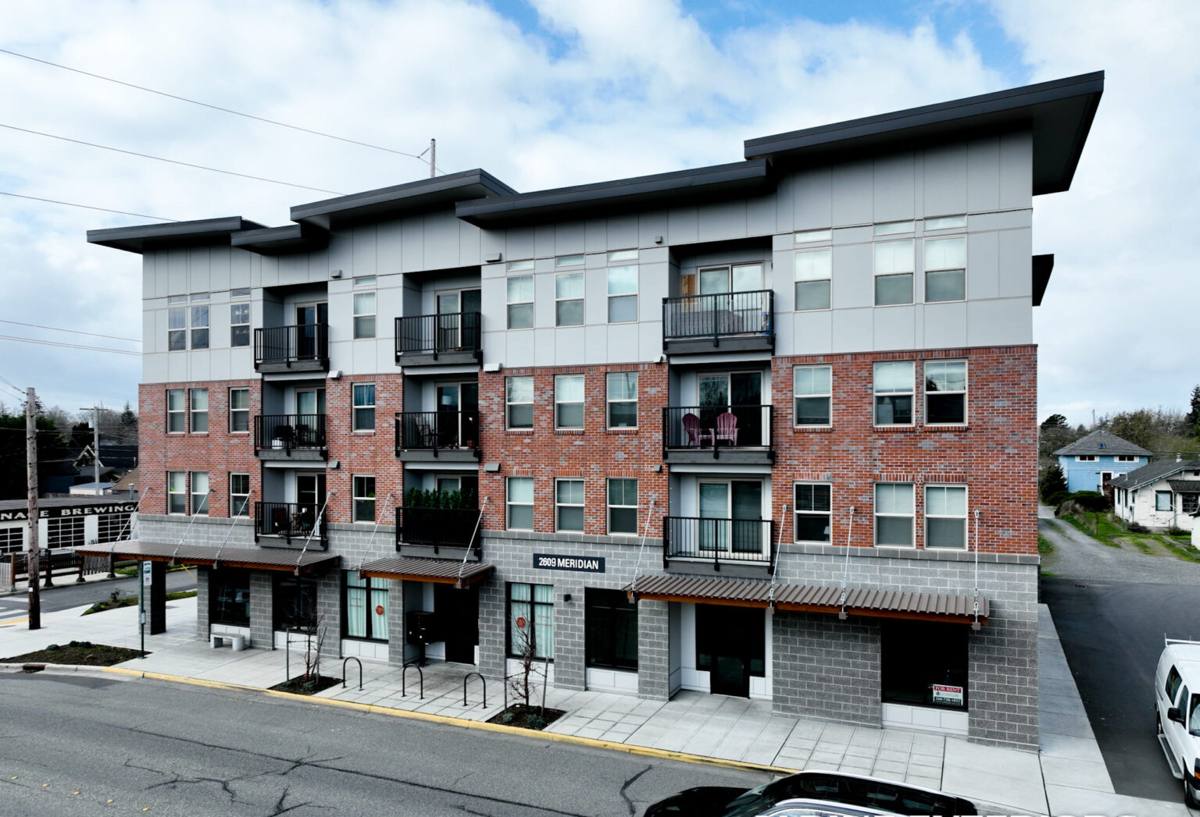
Why Whatcom County Weather Is Harder on Siding Than Most Homeowners Realize
Salt Air
Airborne salt from the Puget Sound and Bellingham Bay area accelerates corrosion on fasteners, flashing, and any exposed metal trim. Over years, that corrosion can compromise the very hardware holding siding panels in place, even when the siding material itself looks fine.
Driving Rain
Storms coming off the water don't just fall straight down — they push rain horizontally into wall assemblies, testing every seam, joint, and piece of trim. A siding system with weak caulking, poor flashing details, or gaps at panel joints will let water in during these events even if it sheds a normal vertical rain just fine.
Long Moss Season
Whatcom County's mild, wet climate gives moss and algae a long growing window — often much of the year on shaded or north-facing walls. Moss holds moisture directly against the siding surface far longer than open air would, and on materials that aren't engineered to resist that kind of sustained dampness, it can contribute to softening, staining, and premature wear.
Individually, each of these is manageable. Together, over enough years, they're what turns a small siding issue into a repair call — and why repair work in Birchwood needs to be diagnosed with the local climate in mind, not treated as a generic patch job.
Signs a Birchwood Home Needs Siding Repair
Some siding damage announces itself. A lot of it doesn't — it shows up first as something small and easy to write off. Here's what we tell Birchwood homeowners to watch for:
- Soft or spongy spots when you press on the siding, especially near the bottom of walls or below windows
- Visible gaps, cracks, or separation at panel seams and corner trim
- Persistent moss or algae growth that keeps coming back after cleaning
- Peeling, bubbling, or chalky paint on painted siding — often a sign moisture is moving through the material
- Warping, bowing, or panels that no longer sit flat against the wall
- Staining or dark streaks running down from seams, trim, or fastener points
- Rust streaks around nails or screws, especially on older or corroded fasteners
- Soft trim boards or window/door casings adjacent to siding
- Musty smells or unexplained interior wall staining near exterior walls
Any one of these on its own might be minor. Two or three together, especially in the same section of wall, usually means water has been getting behind the siding for a while.
What a Correct Siding Repair Actually Involves
A siding repair that just replaces the damaged piece and moves on often misses the reason the damage happened in the first place — which means the same spot fails again in a year or two. A repair done right works through a few distinct steps:
1. Find the Real Source of the Water
Damaged siding is usually a symptom. Before anything gets replaced, we trace where water is actually getting in — a failed caulk joint, a flashing detail that was never installed correctly, a gap at a penetration like a hose bib or light fixture, or wind-driven rain finding a weak seam.
2. Check What's Behind the Siding
Once panels are pulled, we look at the water-resistive barrier (the house wrap or building paper underneath) and the sheathing itself. If either has been compromised, replacing siding without addressing what's underneath just sets up the next repair.
3. Repair or Replace the Structural Layer
Soft or rotted sheathing gets cut back to solid material and replaced. Damaged house wrap gets repaired or replaced with proper overlap and taping so water sheds correctly, not just at the siding surface but at every layer behind it.
4. Correct the Flashing and Detailing
A huge share of siding failures we see in this area trace back to flashing that was skipped or installed incorrectly around windows, doors, and horizontal trim. We don't just match the old detail if it was the problem — we fix it properly, per manufacturer specification.
5. Install and Finish the New Siding
New panels are installed with correct fastening, gapping, and caulking for the material and the climate, then finished to blend with the surrounding siding as closely as the existing product allows.
Repair or Replace? How We Make the Call
Not every damaged section needs a full re-side, and not every repair is worth doing on its own. We walk Birchwood homeowners through the same set of questions on every job:
| Factor | Leans Toward Repair | Leans Toward Replacement |
|---|---|---|
| Extent of damage | Isolated to one or two wall sections | Spread across multiple elevations |
| Underlying structure | Sheathing and wrap are sound | Rot or moisture damage found behind siding |
| Age of existing siding | Siding is mid-life and otherwise performing well | Siding is at or past its expected service life |
| Material match | Matching material is still available and cosmetically close | Original product is discontinued, faded, or was already a poor climate fit |
| Recurrence | First repair in this area of the home | Same wall has needed repair more than once |
When damage keeps recurring in the same spots, that's usually the clearest sign the underlying material or original installation wasn't suited to Bellingham's weather — and that a patch will only buy a little time.
Why We Repair and Replace With James Hardie Fiber Cement
We install one siding system: James Hardie fiber cement, in the HZ5 product line engineered for this climate zone. When a repair calls for new panels — whether it's a small patch or a full elevation — that's what we use, and it's worth explaining why.
Fiber cement doesn't absorb water the way wood-based or wood-composite siding products can, which matters directly in a neighborhood dealing with driving rain and a long wet season. It's non-combustible, holds paint and factory finish far longer than most alternatives, and James Hardie's ColorPlus finish is baked on at the factory specifically to resist the fading and chalking that coastal sun and salt air cause over time. We've made the call not to install vinyl, LP SmartSide, primed spruce, cedar, or other fiber cement brands like Cemplank or Allura — not because every one of those products is without merit, but because after years of doing repair work in this climate, fiber cement engineered for our region has consistently held up with the least maintenance and the fewest callbacks.
On a repair job specifically, this shows up in a practical way: when we're already opening up a wall section, it makes sense to close it back up with a material built to shrug off the exact conditions that caused the original damage — rather than repeat the same materials and risk the same failure down the road.
Our Process for a Birchwood Repair Call
- Inspection and diagnosis. We look at the damaged area, the surrounding siding, and — where accessible — what's happening behind the panels.
- Honest scope and estimate. You get a clear explanation of what's damaged, why, and whether repair or a partial/full replacement makes more sense, with a written estimate before any work starts.
- Source correction. Any flashing, caulking, or water-management issue causing the damage gets fixed as part of the job, not left for next time.
- Repair execution. Damaged sheathing, wrap, and siding are replaced to spec, matched as closely as possible to your existing exterior.
- Final walkthrough. We review the completed work with you and flag anything else worth keeping an eye on.
What Siding Repair Typically Costs — and What Drives the Price
Every repair is different, but the same handful of factors tend to move the price up or down on jobs in and around Birchwood:
| Cost Factor | Why It Matters |
|---|---|
| Size of the affected area | A single panel repair costs far less than a multi-section or full-wall repair |
| Hidden damage behind the siding | Rotted sheathing or compromised house wrap adds labor and material beyond the visible siding |
| Material match | Matching an existing product's profile and color can add cost versus a straightforward same-system repair |
| Access and wall height | Second-story or hard-to-access walls take more time and equipment |
| Flashing and trim corrections | Fixing the underlying water-management detail, not just the siding, adds scope but prevents repeat repairs |
We don't quote broad national averages, because they rarely reflect what a Birchwood home actually needs. Every estimate we give is based on what we find on your specific home.
Keeping Repaired Siding Looking Good in This Climate
Once a repair is done, a little regular attention goes a long way in a neighborhood with this much moisture and moss pressure:
- Rinse siding gently once or twice a year to keep salt residue and grime from building up
- Trim back vegetation and tree cover that keeps walls shaded and damp
- Check caulking at trim, windows, and penetrations annually and re-caulk before gaps open up
- Address moss or algae early with a gentle wash rather than letting it establish
- Walk the exterior after major storms and note anything that looks different
Why Hiring a Crew That Already Works in Birchwood Matters
Siding repair isn't just a materials question — it's a judgment call about what's actually causing damage in a specific setting, and that judgment gets sharper with local experience. A crew that's worked repeatedly in Birchwood and the surrounding Bellingham area already has a feel for which elevations take the worst of the driving rain, how aggressively moss establishes on the shaded sides of homes here, and where salt air tends to do the most damage to fasteners and trim first. That local pattern recognition means fewer surprises during the job and a repair that's built for the conditions your home actually faces, not a generic set of assumptions.
If you're seeing soft spots, recurring moss, cracked seams, or any of the warning signs above on your Birchwood home, we're glad to take a look. We'll give you a straight assessment of what's going on, whether repair or replacement makes more sense, and a written estimate — no pressure, no upsell. Reach out using the form below to get started.