 Bellingham Siding
 Why Cordata Siding Takes a Different Kind of Beating
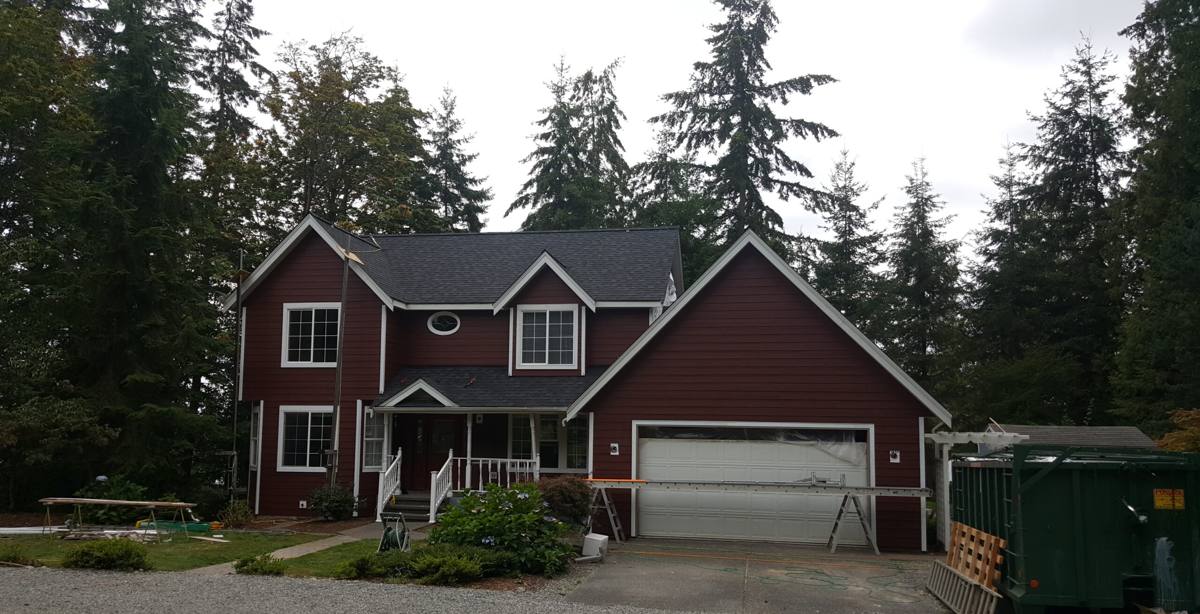
Cordata sits in north Bellingham, close enough to the water and to Whatcom County's wet weather patterns that siding here works harder than siding in drier parts of the state. The neighborhood's mix of newer developments and older single-family homes means we see a wide range of siding conditions — but the underlying stress on the material is the same across the board. Moist marine air moves through year-round, driving rain comes in sideways during fall and winter storms, and the shaded, tree-lined lots that make Cordata pleasant to live in also mean siding stays damp longer after every rain event.
That combination — persistent moisture, limited direct sun on north- and east-facing walls, and a moss season that can stretch from October well into spring — is exactly the environment where lower-grade siding materials and poor original installations start showing their age early. Repair work in this neighborhood isn't just about patching what's broken; it's about understanding why it broke and making sure the fix doesn't fail the same way again.
What Bellingham's Climate Actually Does to Siding
Moisture That Doesn't Dry Out Fast
Whatcom County doesn't get the heaviest rainfall totals in the state, but it gets frequent, low-intensity rain combined with overcast stretches that keep humidity high and drying time long. Siding that would shed water and dry out in a sunnier climate can stay damp for days here, especially behind gutters, under eaves, and around window trim where water tends to pool or wick.
Driving Rain and Wind-Driven Water
Storms off the Salish Sea often push rain sideways into exposed walls rather than straight down. That matters for siding repair because it's not just the face of the siding that gets wet — wind-driven rain finds its way behind poorly lapped boards, undersized flashing, and old caulk joints that have shrunk or cracked. A repair that only addresses the visible damage without correcting the water path behind it will fail again.
Moss, Algae, and Organic Growth
The long moss season in this area is a direct result of shade, moisture, and mild temperatures working together for months at a time. Moss and algae hold water against the siding surface, and on the wrong material that trapped moisture leads to swelling, delamination, or rot. Even on siding that's holding up structurally, green and black staining is often the first visible sign that a section of wall isn't drying properly.
Salt Air's Slow, Steady Effect
Cordata isn't waterfront, but Bellingham's proximity to Bellingham Bay means a mild salt-air influence reaches inland further than people expect. Salt-laden moisture accelerates corrosion on fasteners, trim flashing, and any exposed metal components tied into the siding system. Over years, corroding fasteners loosen boards, and loose boards let in more water — a slow cycle that shows up as a repair call once it's visible.
Signs a Cordata Home Needs Siding Repair
Most siding problems in this area don't start as emergencies — they start as small, easy-to-miss signs. Catching them early is almost always cheaper and less disruptive than waiting until the damage spreads to sheathing or framing.
- Soft or spongy spots when you press on the siding, especially near the bottom courses and around window and door trim
- Visible gaps, cupping, or separation between boards, particularly on walls that face prevailing wind and rain
- Persistent moss or algae growth that returns quickly after cleaning, often a sign the wall isn't drying between rain events
- Peeling, bubbling, or chalking paint, which points to moisture moving through the material rather than just weathered finish
- Staining or streaking below seams, nail heads, or trim joints — usually a sign water is getting behind the siding
- Rust bleed around fasteners or flashing, a common early warning in areas with salt-air influence
- Rot or soft wood at inside corners, under window sills, or where siding meets the foundation
- Warped or bowed panels, especially on composite or engineered wood products not rated for this climate
What a Correct Siding Repair Actually Involves
A proper siding repair is more than swapping a damaged board for a new one. In a climate like Bellingham's, the repair has to address why the original section failed, not just how it looks afterward. Our process on Cordata homes typically includes:
1. Diagnosis Before Demolition
We start by identifying the actual source of the moisture intrusion — whether it's a flashing gap, a failed caulk joint, a grading issue directing water at the wall, or simply an original installation that didn't account for this area's rain exposure. Cutting out damaged siding without understanding the cause almost guarantees the same failure returns.
2. Checking What's Behind the Siding
Once damaged sections are removed, we inspect the water-resistive barrier, sheathing, and framing underneath. In homes where moisture has been getting in for a while, the siding itself is often the least of the problem — soft sheathing or compromised framing has to be addressed before anything new goes back up.
3. Correcting Water Management, Not Just Appearance
Repairs on our jobs include restoring proper flashing at windows, doors, and horizontal trim; correcting board overlaps and gaps to manufacturer spec; and making sure kickout flashing and drip caps are actually directing water away from the wall assembly, not into it. This is the step that gets skipped most often in quick patch jobs, and it's the reason those patches fail again within a few years.
4. Matching Material and Finish
Where we're repairing an existing James Hardie installation, we match the exact profile, exposure, and ColorPlus finish so the repaired section blends in rather than standing out as an obvious patch. Where the original siding is a different material entirely, we'll talk through whether a targeted repair makes sense or whether that section — or the whole elevation — is better served by a proper Hardie replacement.
Why We Only Repair and Install James Hardie Fiber Cement
We don't install or repair with vinyl, LP SmartSide, primed spruce, cedar, or other fiber cement brands, and in a climate like this one, that's a practical decision, not a brand preference. James Hardie's HZ5 product line is engineered specifically for climates with significant moisture exposure like the Pacific Northwest. It's non-combustible, resists swelling and delamination in ways wood-based composite products can't match, and the factory-applied ColorPlus finish holds its color and resists the chalking and peeling that plague field-painted siding in wet climates. When we do a repair on a Hardie home, we're working with a product system that's proven to handle exactly the conditions Cordata deals with every year — and when a homeowner is deciding whether to repair an aging non-Hardie product or replace it, that long-term performance is part of an honest conversation, not a sales pitch.
Repair vs. Replacement: How We Help You Decide
Not every damaged section needs full replacement, and not every repair is worth doing if the underlying siding is near the end of its useful life. We walk Cordata homeowners through the real trade-offs:
| Factor | Favors Targeted Repair | Favors Full Replacement |
|---|---|---|
| Extent of damage | Isolated to one or two wall sections | Recurring issues across multiple elevations |
| Underlying material | Existing James Hardie siding in otherwise good shape | Vinyl, LP, or wood product showing widespread wear |
| Sheathing condition | Dry, sound sheathing behind the damage | Soft or rotted sheathing found during inspection |
| Age of siding | Siding is well within its expected service life | Siding is original to an older home and past due |
| Moisture source | Source identified and easily corrected | Chronic moisture intrusion tied to original installation |
This is always a homeowner's call — our job is to give you an honest read on which side of that table your home falls on, backed by what we actually find once we open up the wall.
Why Local Experience in Cordata Matters
Siding repair isn't one-size-fits-all across Whatcom County. A crew that mostly works drier, more exposed sites will size up flashing and drying time differently than a crew that regularly works Cordata's shaded, moisture-heavy lots. Knowing which walls in this neighborhood typically take the worst of the driving rain, where moss tends to establish fastest, and how the salt-air influence shows up in fastener corrosion means we're not guessing at causes — we've already seen the pattern on homes nearby. That local pattern recognition shortens diagnosis time and helps make sure the repair we do actually holds up through the next wet season, not just through the next dry month.
Maintenance That Keeps Repairs From Becoming Routine
A correctly done repair on James Hardie siding shouldn't need attention again for a long time, but a little seasonal upkeep goes a long way in this climate:
- Rinse siding annually to remove moss, algae, and organic buildup before it takes hold, especially on shaded north- and east-facing walls
- Keep gutters clear so overflow doesn't run down the siding face during heavy storms
- Trim back landscaping and tree limbs that keep walls shaded and slow to dry
- Re-caulk trim joints and penetrations on the manufacturer's recommended schedule rather than waiting for visible gaps
- Walk the exterior after major windstorms to check for loosened boards or displaced flashing
Get an Honest Look at Your Siding
If you're seeing soft spots, stubborn moss, staining, or gaps in your Cordata home's siding, it's worth having someone look at it before a small issue turns into a sheathing problem. We'll give you a straightforward assessment of what's actually going on, what a proper repair involves, and whether repair or replacement makes more sense for your home — no pressure, no upsell. Reach out for a free estimate using the form below.