 Bellingham Siding
 Why Silver Beach Roofs Wear Differently Than Roofs Inland
Silver Beach sits close enough to the water that homes here take a different kind of beating than roofs a few miles inland in Bellingham. Salt-laden air off Bellingham Bay accelerates corrosion on metal fasteners, flashing, and vents. Driving rain off the water finds every weak seam and gap in underlayment and flashing detail. And Whatcom County's long, wet moss season — often running from late fall through spring — keeps organic growth actively working on shaded, north-facing slopes almost year-round. None of this means a Silver Beach roof needs to be exotic. It means the materials, fastener choices, and detail work have to be matched to what the neighborhood actually deals with, not just what's standard on a spec sheet.
A roof that's correctly built for this stretch of Whatcom County will outlast one installed with generic techniques by years, simply because the flashing doesn't corrode as fast, the moss doesn't get a foothold as easily, and the underlayment doesn't let wind-driven rain sneak past the shingles during a strong Bay storm.
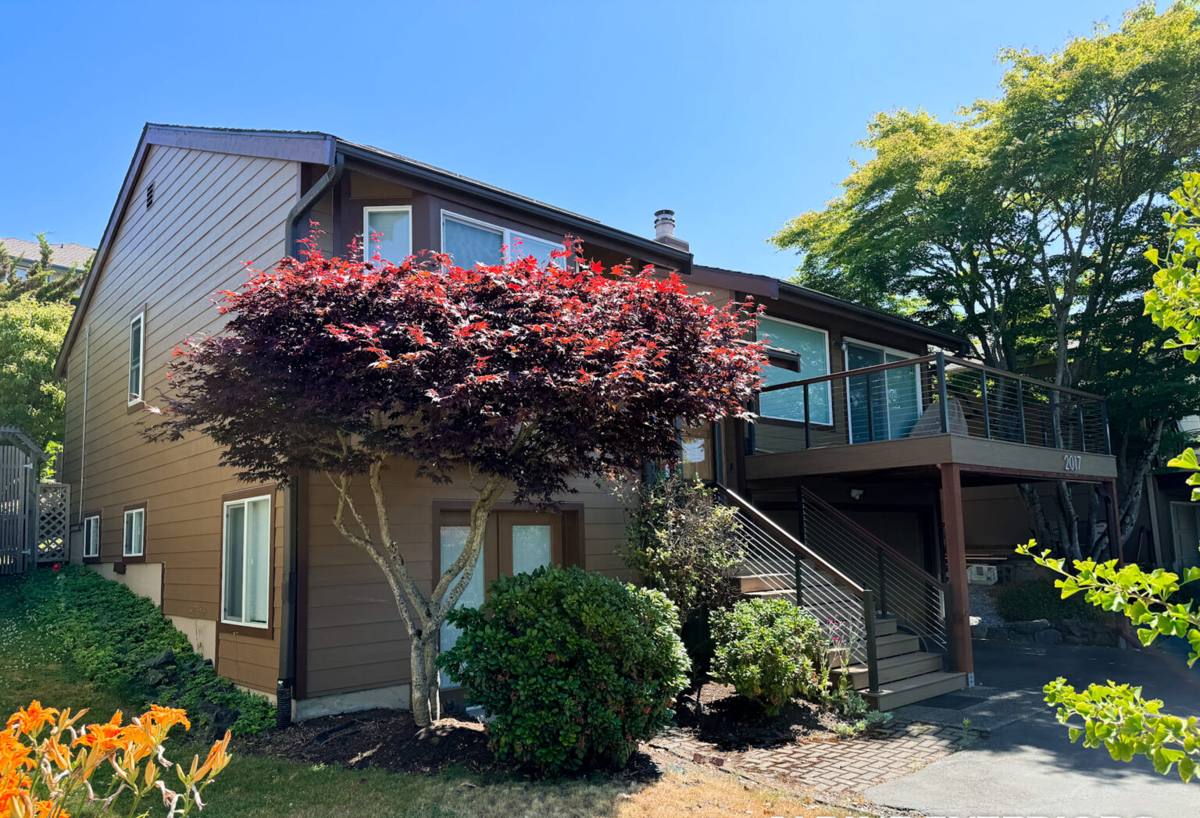
What a Correct New Roof Installation Actually Involves
"New roof" sounds simple, but a proper installation is a sequence of decisions, most of which are invisible once the job is done. Skipping or rushing any one of them is how a roof that looks fine on day one starts leaking in year three.
Tear-Off and Deck Inspection
We remove the old roofing down to the deck rather than layering over it. This is the only way to actually see the plywood or plank sheathing underneath — soft spots, old water staining, and rot hide under existing shingles and only show up once they're gone. Any damaged sheathing gets replaced before anything new goes down; installing new roofing over a compromised deck just guarantees a repeat problem.
Underlayment Built for Wind-Driven Rain
In a location that regularly sees rain pushed sideways by wind off the water, underlayment choice matters more than it does on a sheltered inland lot. We use synthetic underlayment with self-adhering ice-and-water membrane at the eaves, valleys, and any low-slope transitions — the places where water is most likely to be forced backward under the shingle line during a hard storm.
Flashing That Won't Corrode in Salt Air
Flashing around chimneys, skylights, sidewalls, and roof-to-wall transitions is where most roof leaks actually originate — not the field of the roof itself. Near the water, we favor corrosion-resistant flashing materials and fastener coatings over standard-grade galvanized steel, which pits and rusts noticeably faster in salt-influenced air.
Ventilation That Matches the Attic
Every roof needs balanced intake and exhaust ventilation, but it's especially important here because poor ventilation traps the moisture that this climate already produces in abundance. We calculate net free ventilation area for the specific attic, not a generic rule of thumb, and match ridge, soffit, or gable venting to what the structure can actually support.
Material Options for Silver Beach Conditions
There's no single "best" roofing material for every home — the right choice depends on the roof's slope, the home's style, and how much long-term maintenance the owner wants to take on. Here's how the common options compare for this specific stretch of coastline.
| Material | Typical Lifespan | How It Handles Salt Air & Moisture | Moss Resistance |
|---|---|---|---|
| Architectural asphalt shingles | 25–30 years | Good with proper flashing and ventilation; algae-resistant granules recommended | Moderate — benefits from zinc/copper strips |
| Standing seam metal | 40–50+ years | Excellent when fasteners and flashing are marine-rated; sheds water fast on steep slopes | Very good — hard surface, fast drying |
| Composite/synthetic shake | 30–50 years | Good; doesn't absorb moisture like wood shakes do | Good |
| Cedar shake | 20–30 years with upkeep | Requires regular maintenance in a wet, salt-air climate | Poor without ongoing treatment |
For most Silver Beach homes, architectural asphalt with algae-resistant granules or standing seam metal ends up being the most sensible balance of upfront cost, low maintenance, and durability against the specific conditions here. We'll walk through the honest trade-offs for your roof's slope and exposure during the estimate rather than push a single product.
Tackling the Moss Problem Directly
Moss isn't just cosmetic — it holds moisture against the roof surface, works its way under shingle tabs, and lifts edges over time, which is exactly how small leaks get started. A correct installation addresses moss at the design stage, not just with a warning label:
- Zinc or copper control strips installed near the ridge, which release trace metal ions with every rain and inhibit moss and algae growth on the slopes below
- Algae-resistant shingle granules on asphalt roofing, which slow the black streaking and organic growth common on shaded, north-facing sections
- Proper slope transitions and valley design so water and debris don't pool or collect in low spots where moss gets its start
- Keeping overhanging branches trimmed back where possible, since shade and falling debris are the two biggest drivers of moss growth on a roof
None of these steps eliminate the need for occasional roof cleaning, but together they dramatically slow how fast moss becomes a problem — which matters in a county where moss season can run more than half the year.
Our Process, Start to Finish
- On-site inspection: We walk the roof and attic, check the deck condition where visible, and assess flashing, ventilation, and slope-specific moisture patterns.
- Written estimate: A clear scope of work and price — material options explained honestly, with no pressure to upgrade beyond what the roof actually needs.
- Scheduling around weather: Roofing in Whatcom County means working around rain windows. We plan tear-off days for realistic dry stretches and tarp exposed sections if weather turns mid-project.
- Tear-off and deck repair: Full removal of old roofing, deck inspection, and replacement of any compromised sheathing.
- Underlayment, flashing, and ventilation installed: The parts of the job that determine whether the roof actually performs, done to spec rather than shortcut.
- Final roofing material installed: Shingles, metal panels, or composite material installed per manufacturer specification to keep warranty coverage intact.
- Cleanup and final walkthrough: Magnetic nail sweep of the yard and driveway, debris hauled off, and a walkthrough so you know exactly what was done.
Signs a Repair Won't Cut It Anymore
Not every roofing problem means a full replacement. But there are signs that point toward replacement being the more honest recommendation rather than another round of patching:
- Granule loss heavy enough that shingles look bald or patchy across large sections, not just one spot
- Multiple layers of prior roofing already on the deck, which limits what a repair can realistically fix
- Soft or spongy decking felt underfoot, indicating water has already reached the sheathing
- Curling, cracking, or cupping shingles across the majority of the roof rather than an isolated area
- Persistent moss buildup that keeps returning within a season or two of cleaning
- Roof age approaching or past the material's expected service life, especially with unresolved ventilation issues
What Drives the Cost of a New Roof Here
Every roof is priced from its own specifics, but the same handful of factors move the number up or down on nearly every Silver Beach project we estimate.
| Factor | Why It Matters |
|---|---|
| Roof size and number of slopes | More square footage and more complex slope layouts mean more material and labor |
| Deck condition | Rotted or soft sheathing found during tear-off adds repair cost that can't be known until the old roofing is off |
| Material choice | Standing seam metal and composite materials cost more upfront than asphalt but require less long-term upkeep |
| Flashing and ventilation complexity | Chimneys, skylights, valleys, and dormers all add flashing detail and labor time |
| Access and pitch | Steep or hard-to-access roofs require more safety setup and take longer to work |
We give a firm written estimate after the on-site inspection — not a phone-quote guess — because so much of the real cost depends on what the deck looks like once the old roofing comes off.
What to Look for When Hiring a Roofing Crew
Roofing is one of those trades where a bad install can look identical to a good one for the first year or two, then fail early. A few things are worth confirming before signing a contract with any contractor, not just us:
- Current Washington State contractor license and liability insurance, verifiable through the state's licensing lookup
- A written scope of work naming the specific underlayment, flashing materials, and ventilation approach — not just "new roof installed"
- Manufacturer certification for the shingle or metal system being installed, which matters for warranty coverage
- A clear plan for weather delays, since a half-torn-off roof left exposed overnight in a Bellingham rainstorm is a real risk
- Local references or a track record of work in the immediate area, since crews unfamiliar with coastal conditions sometimes underspec flashing and ventilation
Why Local Silver Beach Experience Matters
A crew that's worked roofs throughout Bellingham and Whatcom County already knows how Silver Beach's proximity to the water changes the job — where salt exposure is worst, which slopes hold moss longest, and how local wind patterns drive rain up under eaves during a storm. That's the difference between a roof that's technically installed to code and one that's actually built for where it sits. We'd rather spend the extra time getting the flashing and ventilation right the first time than have a homeowner calling about a leak two winters from now.
If your roof is showing its age or you're planning ahead for a replacement, we're happy to come out, take an honest look, and walk you through what your home actually needs — no pressure, no upsell. Use the form below to request a free estimate.