 Bellingham Siding
 Siding Built for Silver Beach's Conditions
Silver Beach sits close enough to the water and the tree line that its homes take on a different kind of weather load than houses just a few miles inland. Salt-tinged air drifting off Bellingham Bay, wind-driven rain that doesn't just fall but gets pushed sideways into wall assemblies, and a moss season that can run most of the year on shaded, north-facing walls — all of it adds up over time. Siding in this neighborhood isn't decorative. It's the first and most important line of defense between the framing of a house and a climate that never really dries out for long.
We install James Hardie fiber cement siding exclusively, and we've done enough work in and around Bellingham and Whatcom County to know which failure patterns show up first on homes like the ones in Silver Beach. This page walks through what that means in practical terms: what the climate actually does to siding here, what a correct installation looks like, and how our process is built around the specific conditions of this part of town.
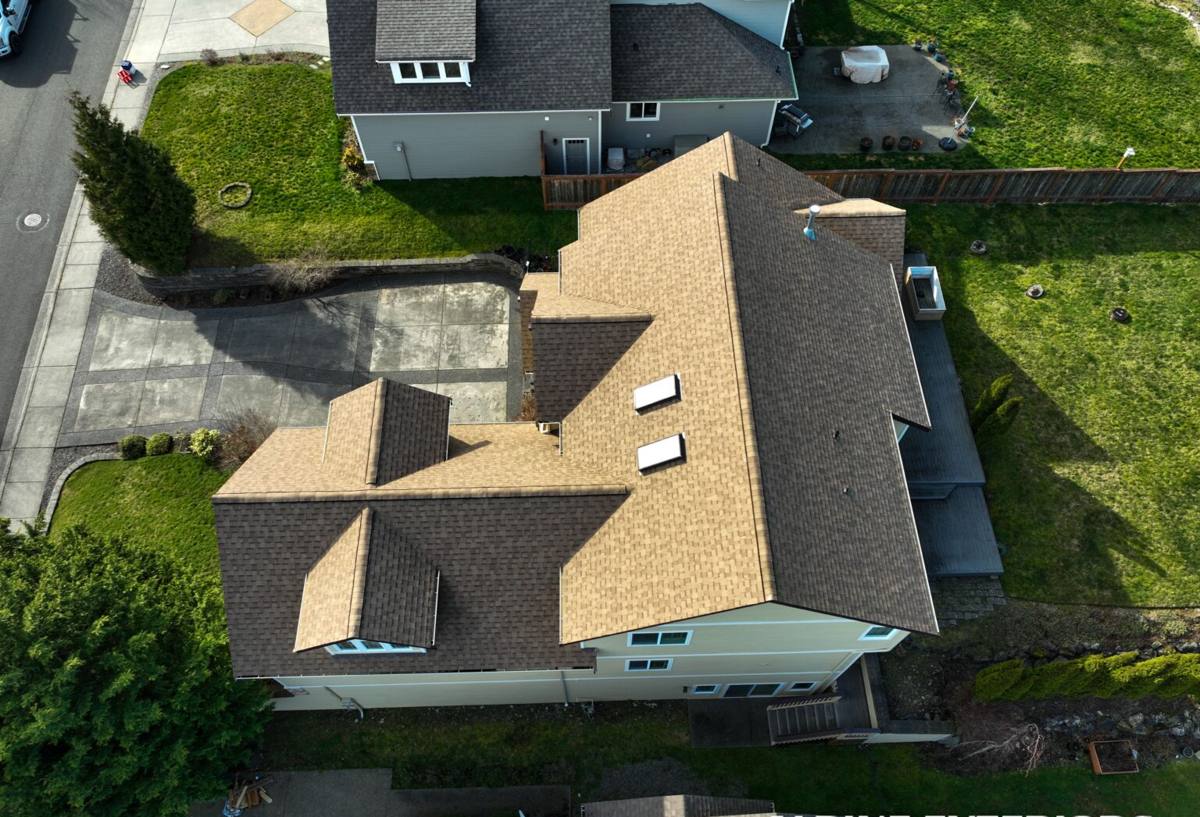
What This Climate Does to a Wall Over Time
Whatcom County gets a lot of rain, but the number that matters more than total rainfall is how often a wall gets wet and how slowly it gets to dry back out. Silver Beach's proximity to the water means more days with high humidity and salt-laden air moving across exterior surfaces, and tree cover on many lots means shaded siding that stays damp longer after a storm passes.
Salt Air and Metal Fasteners
Airborne salt accelerates corrosion on anything metal — fasteners, flashing, trim connectors. Cheap or improperly rated fasteners can start bleeding rust streaks down a wall within a few years near the water. This is one of the easiest things for a crew to get wrong if they're not used to coastal-adjacent installs, because it doesn't show up as a problem until well after the job is done and paid for.
Driving Rain and Wall Penetration
Wind off the bay doesn't let rain fall straight down — it drives it into vertical surfaces, seams, and any gap around windows, doors, or utility penetrations. Siding systems have to manage that water at the surface and behind it, with a drainage plane and flashing details that actually move water back out rather than trapping it against the sheathing.
Moss, Algae, and Prolonged Dampness
North-facing and tree-shaded walls in Silver Beach can stay damp for days after a rain event, which is exactly the condition moss and algae need to take hold. On the wrong siding material, that sustained moisture doesn't just look bad — it can soften the substrate, hold water against fasteners, and shorten the useful life of the wall assembly.
Why the Material Choice Is the Real Decision
Most siding failures we get called out to inspect trace back to the material itself struggling with exactly the conditions described above, not just poor workmanship. Wood-based products absorb moisture and can swell, delaminate, or rot when they stay wet as often as walls do near the water. Vinyl can hold up structurally but tends to fade, warp in temperature swings, and offers little real protection against moisture intrusion behind the panel — it's a rain screen at best, not a moisture-managed system. That's why we standardized on James Hardie fiber cement: it's engineered specifically to resist moisture absorption, doesn't feed mold or rot the way wood-based sidings can, and holds its factory finish far longer in damp, shaded conditions than painted alternatives.
| Factor | What Silver Beach Homes Need | How Hardie Fiber Cement Performs |
|---|---|---|
| Moisture exposure | Frequent wetting, slow drying on shaded walls | Non-organic composition resists swelling and rot |
| Salt air proximity | Accelerated corrosion risk on metal components | Paired with corrosion-resistant fasteners and flashing |
| Moss and algae | Long damp seasons on north/shaded exposures | ColorPlus finish resists staining better than field paint |
| Wind-driven rain | Water pushed into seams and penetrations | Correct lap, flashing, and drainage plane detailing manage bulk water |
| Fire exposure | Regional wildfire smoke and ember risk in dry stretches | Non-combustible fiber cement construction |
What a Correct Installation Actually Involves
Fiber cement siding is only as good as the assembly behind it. A huge share of the siding problems we see on older Bellingham-area homes aren't the fault of the siding material at all — they're installation shortcuts that let water get behind the cladding where it can't easily get back out.
The Water Management System
Correct installation starts with a continuous weather-resistive barrier over the sheathing, properly lapped and taped at seams. Flashing goes in at every horizontal transition, window and door head, and roof-to-wall intersection — installed so each layer sheds water onto the layer below it, never behind it. On a site like Silver Beach, where wind-driven rain is a regular event rather than an occasional one, these details aren't optional extras; they're the difference between siding that lasts decades and siding that hides rot for years before anyone notices.
Fastening and Clearances
James Hardie specifies exact nailing patterns, fastener types, and minimum clearances from grade, roof lines, and other siding terminations. Skipping these — face-nailing where blind-nailing is called for, using the wrong fastener length, or butting siding too close to grade or a deck surface — voids warranty coverage and creates entry points for moisture. We follow Hardie's installation instructions to the letter because that's what keeps both the product warranty and our own workmanship guarantee intact.
Joint and Seam Treatment
Every butt joint, corner, and penetration is a potential water entry point. We treat seams with the sealants and flashing components Hardie specifies for its ColorPlus and primed product lines, and we plan joint layout before the first board goes up rather than improvising as we go.
Our Process on Silver Beach Jobs
- Walkthrough and assessment. We look at existing siding, moisture damage, trim condition, and any problem areas specific to your lot — shade exposure, wind direction, proximity to the water.
- Scope and product selection. We recommend the Hardie product line and profile that fits your home's exposure, and walk through ColorPlus finish options versus field-painted options.
- Removal and substrate check. Old siding comes off and we inspect sheathing for rot or damage before anything new goes up — this is where hidden water damage from a prior installation usually surfaces.
- Weather barrier and flashing. We install and inspect the drainage plane and flashing details before any siding is hung, since this layer is invisible once the job is finished.
- Siding installation. Boards are hung to Hardie's fastening specification, with attention to butt joint layout, corner treatment, and clearances.
- Trim, caulking, and final detailing. Trim, penetrations, and transitions get sealed with compatible sealants; nothing is left for water to find a way through.
- Final walkthrough. We review the finished job with you before calling it complete.
Signs Your Current Siding Is Already Losing the Fight
Homeowners in Silver Beach often reach out after noticing something specific rather than doing a full inspection. If any of these look familiar, it's worth having someone take a closer look before it turns into a bigger repair:
- Soft or spongy spots when you press on siding near the bottom edge or around windows
- Persistent moss or dark streaking on shaded or north-facing walls that returns soon after cleaning
- Visible gaps, cracking, or separation at butt joints and corners
- Paint that's bubbling, peeling, or failing faster than expected on a wall exposed to weather
- Rust streaks below fastener heads or trim connectors
- Warping, cupping, or bowing panels, especially on wood-based or engineered wood products
- Interior signs like musty smells, damp drywall, or peeling interior paint on exterior walls
Why We Only Install James Hardie
We get asked fairly often why we don't offer vinyl, LP SmartSide, or cedar as options. The honest answer is that we've standardized on one product because it's the one we trust to perform in exactly the conditions Silver Beach deals with — sustained moisture, salt air, and long stretches without full drying. Fiber cement doesn't feed rot or mold the way wood-based sidings can. It holds a factory-applied ColorPlus finish far longer than field paint holds up on wood or engineered wood alternatives, which matters a great deal on shaded walls that spend a lot of the year damp. And it's non-combustible, which carries real weight for insurance and long-term fire risk in Washington's increasingly variable dry seasons. It isn't the cheapest option on the shelf, but installed correctly it's the one we're comfortable standing behind with a workmanship warranty.
What Local Experience Actually Buys You
A crew that hasn't worked this specific stretch of Bellingham doesn't automatically know that a shaded lot near the water needs different moss and drainage planning than a sunny lot a few miles inland, or that fastener corrosion shows up faster this close to salt air. That knowledge doesn't come from a manufacturer's install manual alone — it comes from having done the work here, seen what fails first, and adjusted accordingly. When you're comparing quotes, ask specifically how a contractor handles flashing at wall-to-roof transitions and what fastener spec they use near the coast. The answers will tell you a lot about whether they've actually worked this area or are treating it like any other job.
What Drives the Cost of a Siding Job Here
Every home is different, but a few factors consistently move the price up or down on jobs in this area:
| Cost Factor | Why It Matters |
|---|---|
| Substrate condition | Rotted sheathing found during tear-off adds repair scope before new siding goes up |
| Home size and complexity | More corners, dormers, and roof transitions mean more flashing detail and labor |
| Siding profile and finish | ColorPlus prefinished boards versus field-painted primed boards affect material and labor cost |
| Trim and accessory scope | Full trim replacement alongside siding adds cost but keeps the whole exterior consistent |
| Access and site conditions | Sloped lots, mature landscaping, or tight setbacks near the water can affect staging and labor time |
We don't quote broad numbers without seeing the home, because the substrate condition alone can shift a project significantly once tear-off starts. What we can tell you upfront is that we price and scope every job around a correct water-management installation — not a stripped-down version of one.
Get a Free, No-Pressure Estimate
If you're weighing a siding replacement for a home in Silver Beach, we're happy to come take a look, walk the exterior with you, and give you a straight assessment of what your walls actually need. There's no pressure and no obligation — just an honest read on your siding's condition and what a correct James Hardie installation would involve for your specific home. Fill out the form below to get started.