 Bellingham Siding
 Why South Hill Decks Take a Beating
South Hill sits above the rest of Bellingham, which means more exposure to wind-driven rain coming off Bellingham Bay and less afternoon sun than lower, more sheltered parts of town. That combination is hard on decks. Wood and even composite decking here deal with three things year-round: near-constant moisture, salt-laden air off the water, and a moss and algae season that can run from October through May in a wet year. None of that is unusual for Whatcom County, but it adds up fast on a structure that's bolted to your house and exposed to the weather on every side.
A deck that would show minor wear after ten years in a dry inland climate can develop real structural problems in the same timeframe here if it wasn't built or maintained with our conditions in mind. That's the gap we see most often on repair calls — decks that were fine when installed, but weren't detailed for this specific climate.
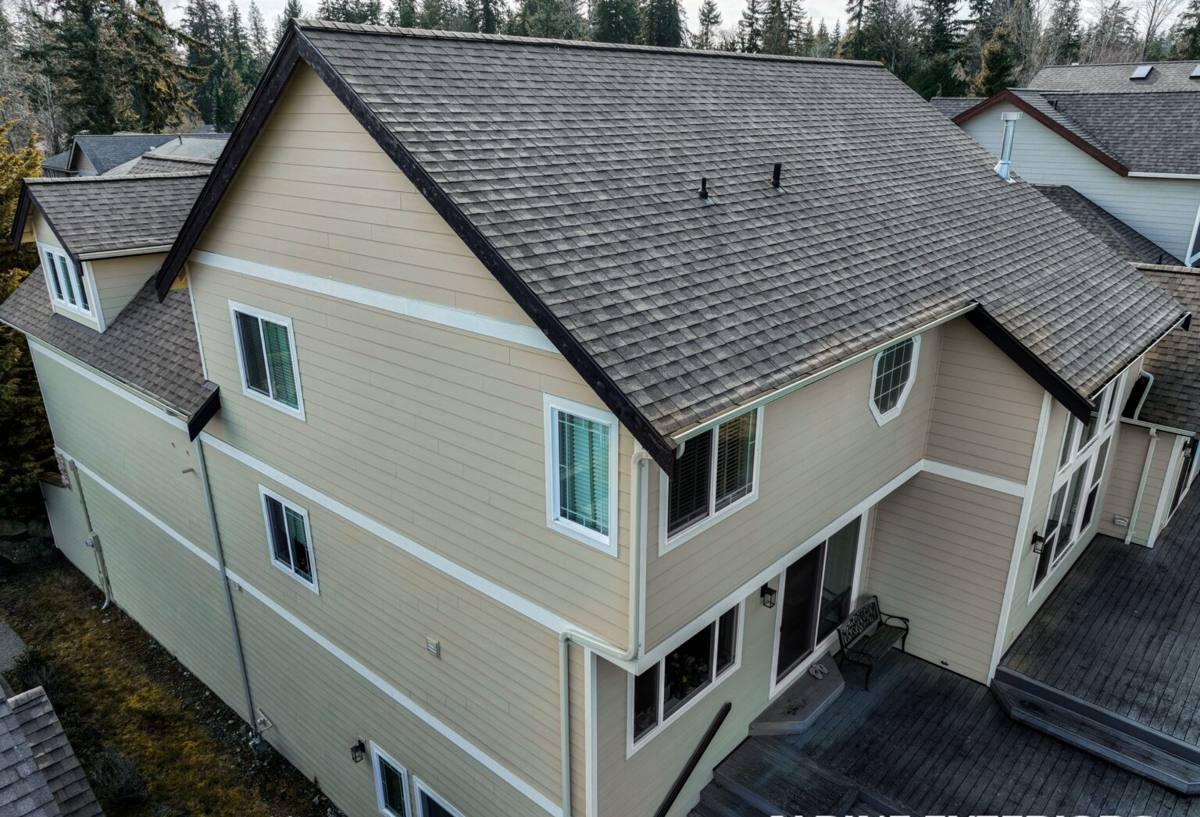
Signs Your Deck Needs Repair, Not Replacement
Most decks don't fail all at once. They fail in specific spots, usually where water sits or where two materials meet. Knowing what to look for can save you money by catching a repair before it becomes a full rebuild.
- Soft, spongy, or discolored decking boards, especially near the house or along the edges
- Rust streaks running down from screw heads or under metal hardware
- Green or black staining that comes back within weeks of cleaning it off
- Gaps opening up between the ledger board and the house siding or trim
- Railings or posts that flex or wobble more than they used to
- Stairs that feel less solid underfoot, or visible gaps at stringer connections
- Visible daylight or water staining underneath the deck where joists meet the ledger
Any one of these on its own might be a simple fix. Several at once, especially around the ledger board or support posts, usually means the underlying structure needs a closer look before we talk about surface repairs.
What a Proper Deck Repair Actually Involves
The Ledger Board Connection
The ledger board — the piece that attaches your deck to the house — is the single most important connection on the entire structure, and it's also the one most exposed to water intrusion if it wasn't flashed correctly the first time. In a climate with this much sustained rainfall, a poorly flashed ledger will trap moisture against the house framing, not just the deck. Repairing a deck without checking this connection is, in our view, an incomplete repair.
Joists, Beams, and Posts
Underneath the visible decking, joists and beams carry the actual load. Rot here doesn't always show from above — it shows up as soft spots, sag, or bounce. We check these from underneath whenever a deck is more than a few years old or shows any surface symptoms, because a board replacement over a rotted joist just hides the problem for another season.
Fasteners and Hardware
Salt air accelerates corrosion on standard fasteners and connectors. Rust stains bleeding out around screw heads or joist hangers are one of the clearest signs that hardware wasn't rated for coastal exposure, or has simply reached the end of its service life. Replacing decking boards without upgrading the fasteners underneath them is a repair that won't hold.
Decking Surface and Railings
This is the part most homeowners notice first — cupped or splintering boards, loose balusters, a railing that's lost its rigidity. It's also often the smallest part of the actual repair once the structure underneath has been checked and confirmed sound.
Repair vs. Replace: How We Make the Call
| Condition | Usually a Repair | Usually a Replacement |
|---|---|---|
| Decking boards | Isolated cupping, splintering, or a few soft boards | Widespread rot or fastener failure across most of the surface |
| Ledger board | Minor flashing gap caught early | Sustained water intrusion into house framing |
| Joists/beams | One or two soft spots near an isolated leak | Rot spread across multiple joists or the main beam |
| Posts/footings | Surface checking, minor movement | Undersized or heaving footings, structural leaning |
| Railings | Loose balusters, worn caps | Posts pulling away from rim joist, code non-compliance |
The honest answer is that most decks we're called out for in South Hill fall into the repair column — the structure is sound and the damage is concentrated in a few predictable spots. But we won't recommend a repair that just resets the clock on the same failure. If a ledger board or beam is genuinely compromised, we'll tell you that plainly and explain what a repair versus a rebuild would each cost you over time.
Materials and Hardware: Why the Details Matter Here
Not every fastener or flashing product performs the same way in a coastal, high-rainfall climate, and this is where a lot of past corner-cutting shows up years later.
- Fasteners: we use stainless or heavy hot-dip galvanized hardware rated for coastal exposure, not standard zinc-coated screws that streak and weaken within a few seasons of salt air contact.
- Flashing: ledger flashing needs to shed water away from the house, not just sit against it. We check that existing flashing actually laps correctly before assuming a repair will hold.
- Decking material: wood decking is affordable and repairable board-by-board but needs regular sealing to handle our rain season; composite decking resists rot and moss staining better but can't be spot-repaired the same way — a damaged composite board usually means a full board swap, not a patch. We'll walk through that trade-off honestly rather than push one material as a cure-all.
- Connectors: joist hangers and post bases matched to the actual load and moisture exposure, not generic hardware-store brackets.
Our Deck Repair Process
- On-site inspection: we check the ledger connection, joists and beams from underneath where accessible, post and footing condition, and the decking surface — not just what's visible from the top.
- Honest scope and estimate: we tell you what's actually failing, what's just cosmetic, and what a proper repair requires — including anything we find that goes beyond the original reason for the call.
- Structural repairs first: ledger, framing, and hardware issues get addressed before any cosmetic work, since surface repairs over a compromised structure don't last.
- Surface and railing repair: board replacement, railing tightening or rebuilding, and any refinishing needed once the structure underneath is confirmed sound.
- Final check: we walk the deck with you before we consider the job done, and explain any maintenance steps that will extend the life of the repair.
Permits and Building Code in Whatcom County
Deck repairs that involve structural elements — ledger reattachment, beam or post replacement, or railing rebuilds — can trigger permit requirements depending on scope, even when the original deck was already permitted. Guardrail height, baluster spacing, and stair rise/run all have code minimums that older decks sometimes don't meet, especially if they were built or altered before current standards. Part of a proper repair is flagging where your deck falls short of code and giving you a straight answer about what's required versus what's optional. We handle permit questions as part of the estimate process so there are no surprises mid-project.
Keeping a Repaired Deck in Good Shape
A repair is only as good as the maintenance that follows it, especially in a climate with this much sustained moisture and moss pressure. A few habits go a long way:
- Clear leaves and debris from between boards before they trap moisture through the wet season
- Rinse or lightly scrub moss and algae growth off the surface before it stains or gets slick
- Check the gap where the deck meets the house each fall for signs of new flashing failure
- Reseal or restain wood decking on the schedule appropriate to the product — don't wait for visible graying
- Keep gutters and downspouts near the deck clear so runoff isn't dumping extra water onto the structure
- Look underneath once a year for new soft spots, rust streaks, or standing water
Why It Matters to Hire a Crew That Already Works South Hill
Deck repair advice that's generic for the Pacific Northwest isn't always specific enough for a neighborhood with South Hill's exposure and elevation. A crew that regularly works this part of Bellingham has already seen how these decks fail — where moss builds up fastest, which ledger details hold up against driving rain and which don't, and how much salt air exposure actually shortens hardware life here versus a more sheltered lot. That experience shows up in fewer callbacks and repairs that are scoped correctly the first time, instead of a patch job that reveals a bigger problem next winter.
If your deck is showing any of the signs above, we're happy to take a look and give you a straight, no-pressure estimate — what's structural, what's cosmetic, and what it will actually take to fix it right for this climate. There's no charge and no obligation to use the form below to get started.