 Bellingham Siding
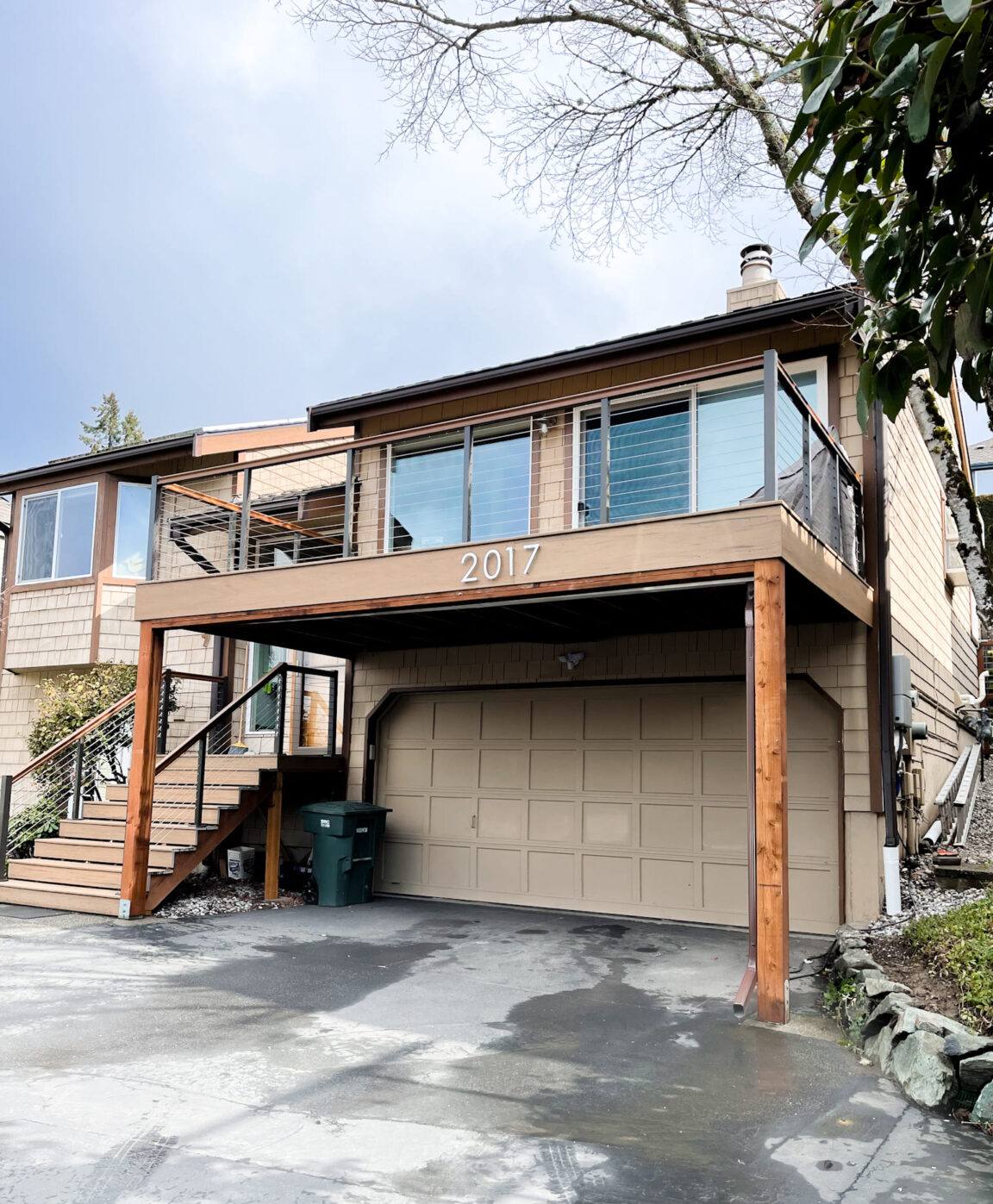
 Deck Replacement Built for South Hill's Weather, Not Against It
South Hill sits up on the slope above downtown Bellingham, which means most decks here get more wind-driven rain and more direct exposure than decks tucked into lower, more sheltered parts of Whatcom County. Combine that with the salt air coming off Bellingham Bay and a moss season that can run from October well into May, and you have a climate that is genuinely hard on outdoor structures. Wood fibers stay damp longer, fasteners corrode faster, and any spot where water can sit instead of shed becomes a rot starting point. A deck replacement done for South Hill needs to account for all of that from the framing up, not just get a new surface laid over old problems.
We're not here to sell you on fear of the weather. Decks in this area last for decades when they're built and maintained correctly. But "correctly" here means something a little different than it would in a drier inland climate, and that's the lens we bring to every replacement in this neighborhood.
Why Repair Isn't Always the Right Call
A lot of homeowners call us thinking they need a repair and end up needing a replacement, and it's worth understanding why before you spend money on the wrong fix. Surface boards are the visible part of a deck, but the framing underneath — joists, beams, posts, and especially the ledger board where the deck attaches to the house — is what actually holds everything up. If that structure has been absorbing moisture for years, replacing a few boards on top doesn't solve the underlying problem, it just delays the bigger job and can mask a safety issue in the meantime.
Signs a Full Replacement Makes More Sense Than a Repair
- Soft, spongy, or springy spots when you walk across the deck, especially near the house
- Visible rot, black staining, or fungal growth on joists or the ledger board
- Rust streaking from fasteners, which usually means the metal is corroding faster than it should
- Persistent moss or algae growth on the deck surface that comes back within weeks of cleaning
- Railings or posts that wobble or flex under normal weight
- A deck more than 20-25 years old that has never had the ledger flashing inspected or replaced
- Gaps opening up between boards, or boards cupping and pulling away from fasteners
If you're only seeing one or two of these on a deck that's otherwise sound, a repair may still be reasonable. If you're seeing several, or if the framing itself is compromised, replacement is usually the more honest recommendation — and the safer one.
What a Correct Deck Replacement Actually Involves
Deck replacement is more than tearing off old boards and screwing down new ones. In a climate like Bellingham's, the parts of the job you don't see matter as much as the parts you do.
Ledger Board and Flashing
The ledger board — where the deck bolts into the house framing — is the single most common failure point on decks in wet climates. Water that gets behind an improperly flashed ledger has nowhere to go, and it can sit against your home's structure for years before anyone notices. A correct replacement includes proper flashing between the ledger and the house, with the flashing lapped so water sheds outward and down, away from the wall, every time.
Framing and Footings
We check post footings for frost depth and drainage, use fasteners and hardware rated for exterior and coastal exposure, and size joists and beams to current code span tables rather than just matching whatever was there before. Older decks were sometimes built to standards that have since been tightened up, particularly around joist hangers and post-to-beam connections.
Ventilation and Drainage Underneath
Decks that sit low to the ground or over concrete patios need airflow underneath to keep the framing dry between rain events. Part of a proper replacement is making sure water has a clear path away from the structure instead of pooling under it.
Decking Material Options for This Climate
There's no single "best" decking material — there's a best material for your budget, your maintenance appetite, and how much sun versus shade and rain your specific deck gets. Here's how the common options compare for a South Hill deck.
| Material | Moisture Behavior | Maintenance | Typical Lifespan Here |
|---|---|---|---|
| Pressure-treated lumber | Absorbs and releases water; needs sealing to control swelling and checking | Annual cleaning, re-staining or sealing every 2-3 years | 15-20 years with upkeep |
| Cedar | Naturally rot-resistant but still absorbs moisture; grays without treatment | Regular cleaning, sealing every 2-3 years to hold color and resist moss | 20-25 years with upkeep |
| Capped composite | Core resists moisture absorption; capped shell sheds water and resists staining | Occasional washing, no staining or sealing | 25-30+ years, manufacturer-warrantied |
| PVC/cellular decking | Essentially non-absorbent; best resistance to moss and mildew staining | Lowest maintenance of the group, occasional washing | 25-30+ years, manufacturer-warrantied |
Given how much moss pressure South Hill decks see, we generally steer homeowners who want to minimize upkeep toward capped composite or PVC. Real wood still has its place — it's a good fit for homeowners who like the natural look and don't mind the maintenance rhythm, and it's often the more budget-friendly choice up front. We'll walk you through the honest trade-offs for your specific deck rather than pushing one product line.
Our Deck Replacement Process
- On-site evaluation: We inspect the existing deck, ledger, footings, and framing to determine what's driving the need for replacement and confirm scope.
- Design and material selection: We talk through decking material, railing style, and layout, with honest input on what performs well in this climate versus what looks good on day one but creates upkeep later.
- Permitting: Most deck replacements in Bellingham require a permit, especially for structural work or decks over a certain height. We handle the permit process so you don't have to chase it down.
- Demolition and disposal: Full removal of the old structure, including old footings or framing that don't meet current standards.
- Framing and flashing: New footings, framing, ledger attachment, and flashing built to code and sized for this climate's moisture load.
- Decking, railing, and finish work: Installation of your chosen decking material, railings, stairs, and any lighting or finish details.
- Final walkthrough: We go over the finished deck with you, including care instructions specific to the material you chose.
Permits and Building Codes in Bellingham
Whatcom County and the City of Bellingham both have specific requirements around deck footings, railing height, guard spacing, and structural connections, and those requirements exist for good reason — undersized framing or a poorly attached ledger is a real safety risk, not just a code technicality. If your South Hill property is on a slope, footing depth and drainage planning matter even more, since standing water around a footing in freeze-thaw conditions can shift a post over time. We pull the necessary permits and build to inspection standards as a matter of course, not as an upsell.
What Drives the Cost of a Deck Replacement
Every deck is different, so we won't quote a number without seeing the site, but these are the factors that move the price up or down:
- Size and shape: Square footage and the number of angles, levels, or stairs
- Decking material: Pressure-treated lumber sits at the lower end; capped composite and PVC cost more up front but less over time
- Framing condition: Whether footings and structural posts can be reused or need full replacement
- Height and access: Elevated decks and decks with difficult site access take more labor
- Railing style: Standard wood or composite rail versus cable, glass, or custom designs
- Site slope: Sloped South Hill lots sometimes need additional footing work or grading
We'll give you a clear, itemized estimate before any work starts, so you know exactly what you're paying for and why.
Why It Matters to Hire a Crew That Already Works in South Hill
A deck built for a dry, inland climate and a deck built for a hillside neighborhood a few miles from Bellingham Bay shouldn't be built the same way. A crew that regularly works in South Hill already knows how the wind and rain patterns here behave, understands the moss pressure specific to this part of Whatcom County, and has already worked through the local permitting process. That familiarity shows up in details — flashing choices, fastener selection, footing depth — that aren't obvious from a set of generic plans but make a real difference in how long your deck lasts.
We also stand behind the work after it's done. A deck replacement is a structural project attached to your home, and it deserves a contractor who treats it that way rather than a fast turnaround crew that's gone the moment the last screw is in.
Keeping Your New Deck in Good Shape
Whatever material you choose, a little seasonal attention goes a long way in this climate. Clear leaves and debris before they trap moisture, keep gutters above the deck clean so runoff doesn't pool on it, and give wood decking its scheduled cleaning and sealing. Composite and PVC decks need far less attention, but even they benefit from an occasional wash to keep moss and algae from getting a foothold during the wet months. We'll give you a maintenance rundown specific to your new deck's material at the end of the job.
If your South Hill deck is showing signs of rot, softness, or age, we're happy to take a look and give you a straightforward assessment — no pressure, no obligation. Use the form below to request a free estimate and we'll get back to you to schedule a visit.