 Bellingham Siding
 Window Installation Built for South Hill's Hillside Climate
South Hill sits up above downtown Bellingham with open exposure toward Bellingham Bay, and that elevation cuts both ways. The views are part of why people love living here, but the same wind that carries in off the water also drives rain sideways into window frames that a more sheltered lot would never see. Add in the older housing stock common to the neighborhood — a mix of early-1900s craftsman and Victorian-era homes alongside mid-century additions — and you get a lot of original wood window openings that were never built with today's weather sealing or glass technology in mind.
Window installation here isn't a one-size-fits-all job. A home tucked under mature trees a few blocks away deals with shade and moss more than wind. A home with a clear line to the bay deals with salt-laden gusts and driving rain that finds every gap in old caulk and glazing putty. Getting it right means reading the specific exposure of the house in front of us, not just installing whatever's in stock.
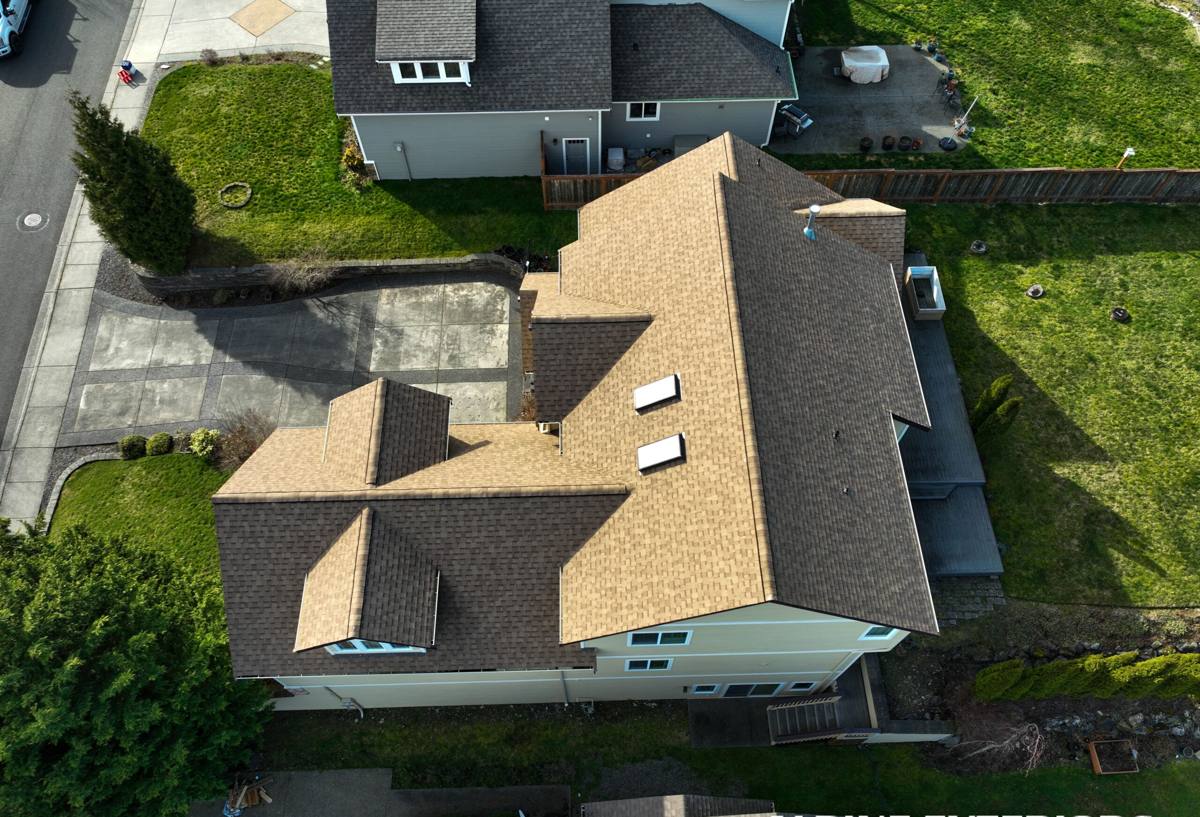
What Driving Rain, Salt Air, and Moss Season Do to Windows Over Time
Whatcom County's marine climate is mild, which is part of the appeal, but "mild" also means long stretches of damp weather with very little hard freeze to dry things out between storms. On an exposed hillside lot, that plays out in a few predictable ways:
Driving rain pushed by wind off the bay doesn't just hit a window head-on — it gets forced upward and sideways under sills and around trim that were only ever detailed to shed water falling straight down. Older wood windows without proper flashing or a sloped sill pan are especially vulnerable, and water that gets behind the frame can sit there for months before it shows up as a stain or soft spot.
Salt air off the Puget Sound side of the bay accelerates corrosion on window hardware — hinges, balances, screen frames, and fasteners — years faster than the same components would wear inland. It also breaks down certain sealants and finishes over time, which is one reason we pay close attention to hardware and sealant specs, not just glass, when we quote a job.
Moss and mildew season in this part of Whatcom County can run from fall through spring on shaded or north-facing walls. Moss holds moisture against wood trim and sills, and once it gets a foothold in checked or unpainted wood, it keeps that wood wet far longer than open sun and air would allow. On older single-pane windows with wood sash, this is often what finally causes rot around the bottom rail.
None of this means a South Hill home needs anything exotic — it means the install has to account for wind-driven water and sustained dampness instead of just assuming rain falls straight down and dries out quickly.
What a Correct Window Installation Actually Involves
A window installation is judged almost entirely on what you can't see once the trim goes back on. The visible window itself is only part of the job.
Full-Frame vs. Insert Replacement
There are two basic approaches. An insert (pocket) replacement keeps the existing exterior frame in place and fits a new window unit inside it — faster, less invasive, and often the right call when the existing frame is square, dry, and sound. A full-frame replacement removes the old window down to the rough opening, which is necessary whenever there's rot, the frame is out of square, or the opening needs new flashing to correct a water problem that's been there for years. On older South Hill homes we often find the second scenario once trim comes off — it's a big part of why an honest in-person look matters more than a phone quote.
Flashing and Water Management
Whichever method applies, the water management details are what actually keep a wind-driven rain event out of the wall: a sloped sill pan so any water that gets in drains back out, correctly lapped flashing tape integrated with the house wrap (not just caulk smeared over gaps), and a drip cap or head flashing above the unit. Caulk is a backup layer, not the primary defense — a window that depends on a perfect bead of sealant to stay dry will eventually fail once that sealant ages, and on a salt-exposed hillside lot, that aging happens faster.
Signs Your South Hill Home Needs New Windows
Not every drafty window needs full replacement, but a few signs point clearly toward it rather than a repair:
- Visible soft or spongy wood at the sill, bottom corners, or trim — often found under paint that looks fine from a few feet away
- Persistent fogging or a visible haze between panes of a double-pane unit, meaning the seal has failed and the gas fill is gone
- Windows that are difficult to open, won't stay up on their own, or have broken sash cords or balances
- Noticeable cold drafts near the frame even with the window latched shut
- Moss or dark staining building up on exterior sills or trim that keeps coming back after cleaning
- Single-pane original wood windows with no storm window — common on older South Hill homes and a major source of heat loss and condensation
- Visible daylight or gaps around the frame from outside
Choosing the Right Window for a Bay-Facing, Hillside Home
Frame material matters more here than in a sheltered inland location, because of the combination of UV exposure, salt air, and sustained damp weather. Here's how the common options compare for this climate:
| Frame Material | How It Handles This Climate | Maintenance |
|---|---|---|
| Vinyl | Good moisture resistance, won't rot or corrode; performs well in coastal marine air | Low — occasional cleaning |
| Fiberglass | Excellent stability in temperature swings and damp conditions; holds paint well if a custom color is wanted | Low |
| Wood (unclad) | Classic look for older/historic homes but needs consistent upkeep to resist the rot risk described above | High — repainting/sealing on a regular cycle |
| Wood with aluminum or vinyl cladding | Wood interior look with a weather-resistant exterior shell; good option for period-appropriate homes near the bay | Moderate |
For glass, a double-pane unit with a Low-E coating and argon gas fill is the standard baseline for this region, cutting both heat loss and condensation risk on cold, damp mornings. Triple-pane is worth discussing for a home with heavy direct wind exposure or a north-facing wall that never gets sun, though it adds cost and weight that not every job needs.
What Drives the Cost of a Window Installation
Every quote we give is specific to the house, but the same handful of factors move the price up or down on almost every job:
| Factor | Why It Matters |
|---|---|
| Insert vs. full-frame replacement | Full-frame work involves more labor, new flashing, and trim rebuild |
| Condition of the rough opening | Rot or out-of-square framing found once trim is removed adds carpentry work |
| Frame material chosen | Vinyl, fiberglass, and clad-wood carry different material costs |
| Glass package | Double-pane Low-E is standard; triple-pane or specialty glass costs more |
| Number and size of openings | Larger bay-view units and odd shapes take more time and custom sizing |
| Access and site conditions | Hillside lots with limited staging area or steep approach can add setup time |
We'd rather walk a homeowner through these factors in person than throw out a number that doesn't hold up once we see the actual openings.
Our Installation Process
Every job follows the same basic sequence, adjusted for the specifics of the house:
- On-site assessment of each opening — checking framing condition, current flashing (or lack of it), and how the wall has handled water historically
- Honest recommendation on insert vs. full-frame replacement, with the reasoning explained, not just a product pitch
- Precise measurement and window selection matched to the home's exposure and, where relevant, its architectural style
- Careful removal of the old unit, with any rot or damaged framing addressed before anything new goes in
- Installation with a sloped sill pan, properly lapped flashing tied into the existing water-resistive barrier, and correct shimming so the unit operates smoothly for years
- Interior and exterior trim finished to match the home, and full cleanup before we leave
We don't consider a window "installed" until the water management behind the trim is done right — that's the part that determines whether the job holds up through its first real South Hill windstorm.
Why Hire a Crew That Already Works South Hill
A contractor who's worked this neighborhood already knows what to expect before pulling the first piece of trim: older homes with a real chance of hidden rot behind original wood windows, hillside lots where staging materials and protecting landscaping takes some planning, and the specific way wind off the bay hits certain exposures harder than others. That familiarity shows up in fewer surprises mid-job and a quote that's realistic from the start, rather than one that balloons once the crew finds what's actually behind the old frame.
It also matters for anything involving the City of Bellingham or Whatcom County permitting and, where applicable, any neighborhood or historic character considerations tied to older homes in the area — a crew that's done this before knows what's expected and won't leave a homeowner to sort that out alone.
If your South Hill home has drafty, foggy, or hard-to-operate windows, or you're just planning ahead for the next wet season, we're happy to take a look and put together a straightforward, no-pressure estimate using the form below.