 Bellingham Siding
 Why Silver Beach Roofs Take a Different Kind of Beating
Silver Beach sits in a pocket of Bellingham where wind, water, and tree cover all work against a roof at the same time. Storms rolling in off the water bring driving rain that doesn't just fall straight down — it gets pushed sideways into flashing, vents, and shingle laps that were never designed to handle water moving horizontally. Add in the marine air common to Whatcom County, which carries moisture and salt further inland than most homeowners expect, and you've got a roof that's under low-grade stress even on the calm days between storms.
Then there's the tree canopy. Silver Beach has more mature trees close to rooflines than a lot of newer Bellingham subdivisions, which means more shade, more debris, and a moss season that can run eight or nine months out of the year in a wet stretch. Moss alone doesn't blow a roof off, but it sets the stage — it holds moisture against shingles, lifts tabs, and clogs the exact drainage paths a roof needs when a storm actually hits. When wind and rain arrive on top of a roof that's already compromised by moss and trapped moisture, that's when we see real damage instead of minor wear.
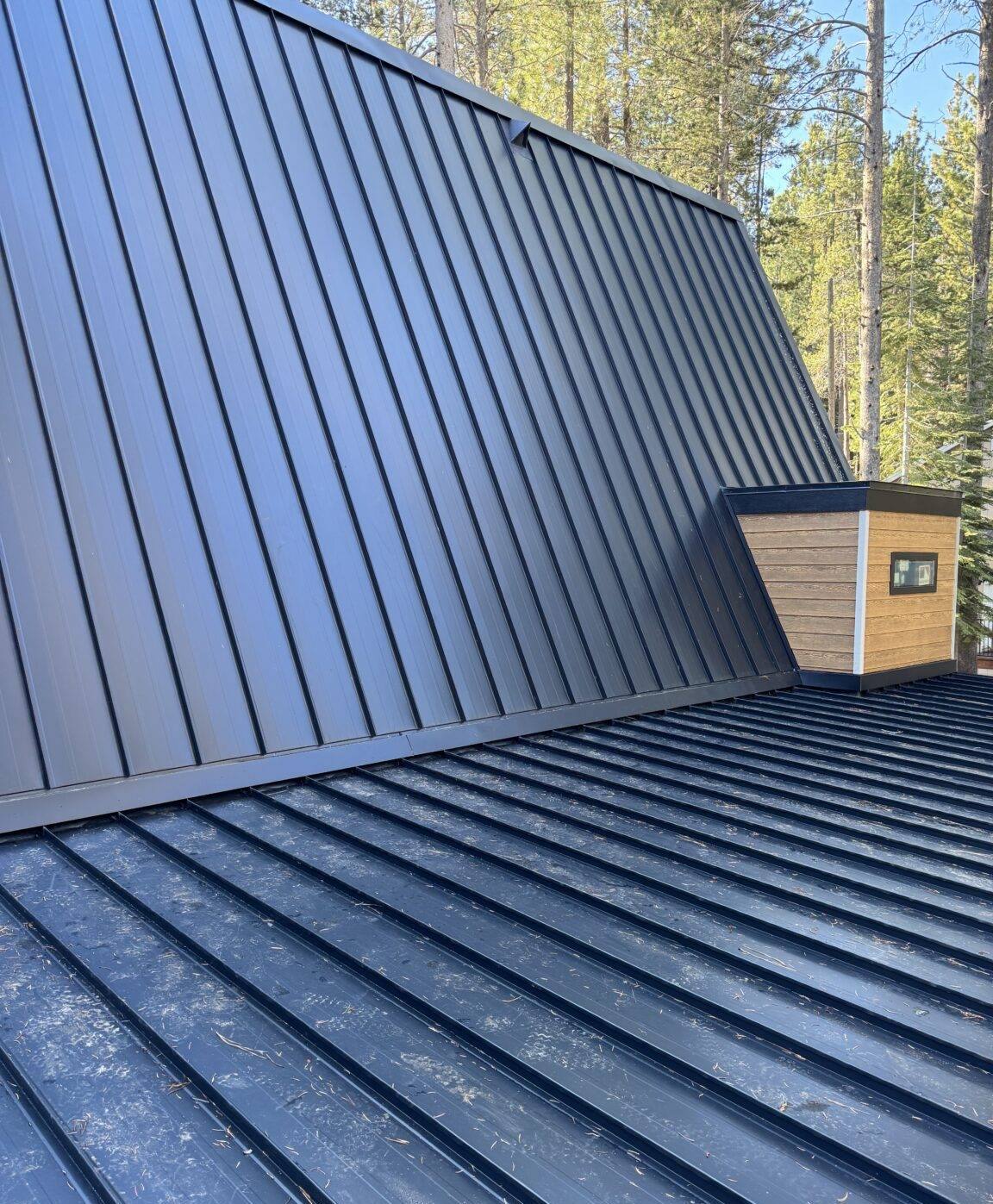
What Storm Damage Actually Looks Like on This Type of Roof
Wind Damage
Wind rarely tears a roof off in one dramatic event. More often it works a corner or an edge loose, lifts a row of shingle tabs just enough to break the seal, or peels back a section along a ridge or hip where the wind load concentrates. Once that seal is broken, the next rain gets underneath — even if nothing looks obviously "missing" from the ground.
Rain-Driven Damage
Driving rain finds the weak points: nail heads that have backed out slightly, flashing around chimneys and skylights that's worked loose over years of freeze-thaw and wind flex, and valleys where two roof planes meet and water volume is highest. On a moss-affected roof, rain can also back up under shingle edges that moss has lifted, which is a slower but just as real path to a leak.
Moss and Debris-Related Damage
Moss mats trap needles, leaves, and grit against the roofing material. That debris holds water long after a storm has passed, which accelerates granule loss on asphalt shingles and can rot the wood decking underneath if it goes unaddressed for a season or two. It also clogs gutters and downspouts right when a storm needs them to be working at full capacity, so water backs up under the roof edge instead of running off.
Why the First 48 Hours After a Storm Matter
The damage you can see after a storm — a few missing shingles, a dented vent cap, granules in the gutter — is rarely the whole story. Water that gets under a roofing system doesn't always show up as a ceiling stain right away; it can travel along decking or framing before it finds a path inside. Getting a proper inspection soon after a storm does three things: it stops small openings from becoming bigger ones during the next rain, it creates a clear record if you end up filing an insurance claim, and it lets us tell you honestly whether you're looking at a repair or something more involved before the damage grows into a bigger job.
If a roof is actively leaking or has an open section, temporary protection (tarping, sealing exposed nail holes, securing loose material) comes first. That's not the fix — it's what keeps the situation from getting worse until the actual repair can be done properly, with the right materials and in the right conditions.
What a Correct Storm Repair Actually Involves
A storm repair that holds up isn't just about swapping a few shingles. We look at the whole system that's supposed to keep water out:
- Matching replacement shingles as closely as possible in style, color, and age-appropriate look, so a repair doesn't stand out as a patch
- Checking and re-sealing or replacing flashing at chimneys, skylights, and vent penetrations — these fail more often than the field shingles themselves
- Inspecting the decking underneath any removed shingles for soft spots, staining, or rot before anything new goes back down
- Clearing moss and debris from the surrounding area so the repair isn't immediately undermined by the same conditions that caused the damage
- Confirming gutters and downspouts near the repair are clear and pitched correctly, since a repair means little if water still has nowhere to go
- Re-nailing or resetting any shingles nearby that show early signs of wind lift, even if they didn't fail outright
Skipping any one of these steps is how a "repair" ends up needing another repair the following winter.
Our Process for Silver Beach Storm Calls
1. Inspection and Documentation
We walk the roof (or use a ladder and, where needed, a drone view for steep or hard-to-access sections) and document what we find with photos — useful for you, and essential if insurance is involved.
2. Honest Assessment
We tell you plainly whether this is a targeted repair, a larger section replacement, or something that points toward the roof needing full replacement sooner rather than later. We're not going to talk you into more work than the roof needs, and we're not going to undersell a problem that's going to come back.
3. Temporary Protection if Needed
If there's active water intrusion, we secure the area first so you're not exposed to another storm before the permanent repair happens.
4. The Repair
Matched materials, proper flashing work, decking checked and replaced where needed, and cleanup of moss or debris that contributed to the failure.
5. Follow-Up
We check that the repair is holding, especially after the next real rain event, since that's the actual test of whether flashing and seals were done right.
Repair or Replace? What Actually Determines That
Not every storm-damaged roof needs to be replaced, and not every roof that looks fine from the driveway is actually in good shape underneath. Here's how we think about it:
| Factor | Points Toward Repair | Points Toward Replacement |
|---|---|---|
| Age of roof | Under 12–15 years, otherwise healthy | Nearing or past expected lifespan for its material |
| Extent of damage | Isolated to one section or slope | Spread across multiple slopes or recurring in the same spots |
| Decking condition | Solid, dry, no rot found | Soft spots, staining, or rot discovered during inspection |
| Moss history | Recently treated, minimal buildup | Years of untreated moss with granule loss and visible wear |
| Insurance coverage | Repair-level claim approved | Adjuster scopes full replacement due to damage extent |
We'll walk you through where your roof falls on that list rather than defaulting to the more expensive answer.
Why Local Storm Experience in Bellingham Matters
A crew that works Silver Beach and the surrounding Bellingham neighborhoods regularly knows which roof styles and ages are common here, how the moss season typically plays out through the wetter months, and what flashing details tend to fail first in this climate versus a drier part of the state. That local pattern recognition speeds up diagnosis — we're not guessing at what a Whatcom County storm typically does to a roof, we're seeing it repeatedly.
It also matters for practical reasons: local crews respond faster after a regional storm event because they're not driving in from out of the area, and they're accountable to a reputation in the neighborhoods they actually serve. When you're picking a contractor for storm repair work, ask directly how much of their work is in your area, whether they carry proper liability and workers' comp coverage, and whether they'll put the scope of repair in writing before work starts.
Reducing Storm Damage Before It Happens
Between storms, a little maintenance goes a long way toward keeping the next one from doing real damage:
- Have moss treated or removed before it builds up into thick mats, ideally before the wettest months arrive
- Keep gutters and downspouts clear so storm runoff has somewhere to go
- Trim back tree limbs that overhang the roof, reducing both debris and direct impact risk during wind events
- Get an inspection after any major wind event, even if nothing looks obviously wrong from the ground
- Address small flashing or shingle issues promptly rather than waiting for them to become leaks
Get a Straight Answer on Your Roof
If a recent storm has left you with missing shingles, a leak, or just a feeling that something's not right up there, we're happy to come take a look. We'll give you a clear, no-pressure assessment of what's actually going on and what it would take to fix it right — no upselling, no guesswork. Use the form below to request a free estimate.