 Bellingham Siding
 Building Decks for Sudden Valley's Terrain and Climate
Sudden Valley sits in the hills above Lake Whatcom, a few minutes outside Bellingham proper, and it's a different building environment than a flat in-town lot. Lots here are often sloped, heavily treed with second-growth fir and cedar, and close enough to the lake that humidity lingers under the canopy long after a storm has passed through the rest of Whatcom County. A deck built for a dry, open backyard in another part of town won't hold up the same way out here — the ground moves differently, the shade sits differently, and the wood dries out slower. We've built and repaired decks throughout Sudden Valley long enough to know what actually fails first in this setting, and we design around it instead of finding out the hard way three winters in.
This page is specifically about deck building for Sudden Valley properties — not a general overview of decks everywhere. If you're planning a new deck, replacing an aging one, or trying to figure out why your current deck feels soft or slick underfoot, this is what we look at and why.
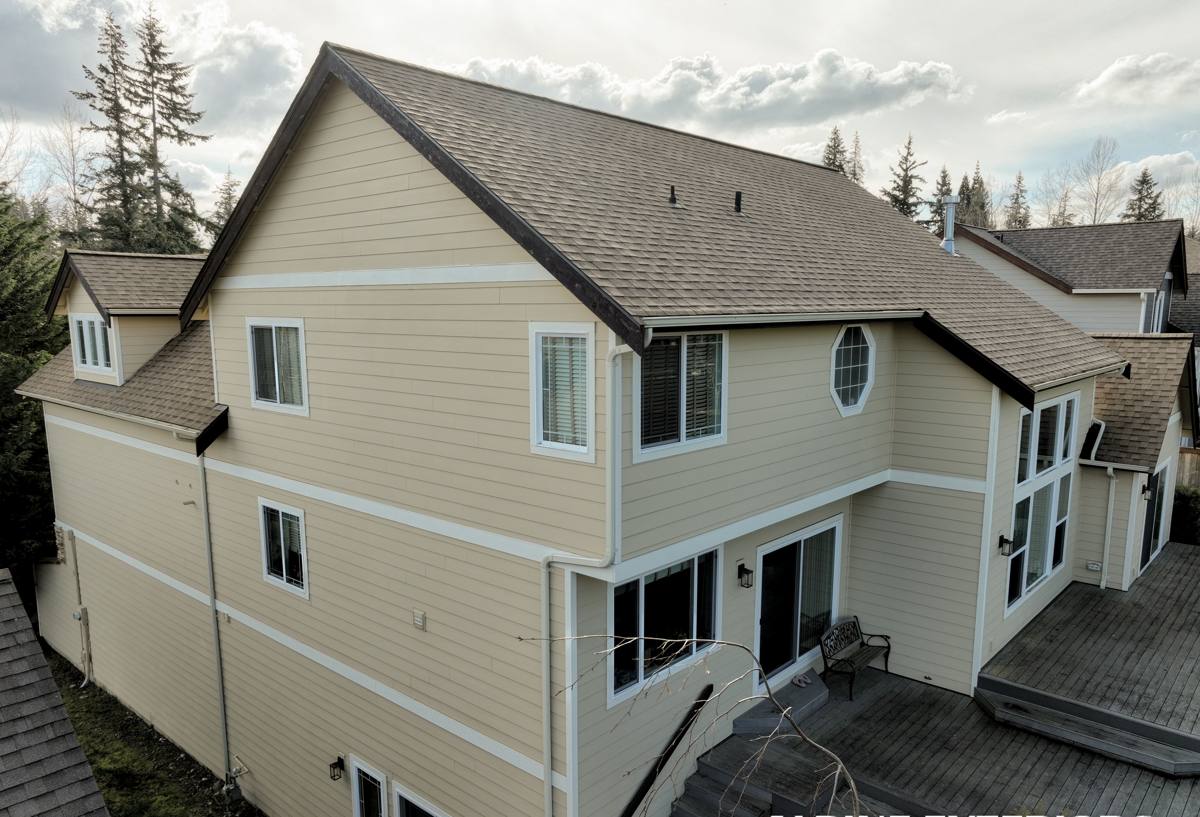
The Regional Climate a Sudden Valley Deck Has to Survive
Whatcom County's marine climate is the backdrop for every exterior decision we make, and Sudden Valley gets a concentrated version of it because of the tree cover and lake proximity.
Salt Air and Moisture
Bellingham's proximity to Puget Sound means the air carries more moisture and salt content than you'd get inland, and it corrodes fasteners, hinges, and cheap hardware faster than most homeowners expect. It's rarely dramatic — a deck doesn't fail overnight — but standard hardware left unprotected for a few seasons will rust, streak the decking, and eventually loosen.
Driving Rain
Storms here don't just fall straight down; wind-driven rain gets pushed sideways under railings, into ledger connections, and behind fascia boards. On a sloped Sudden Valley lot, that same rain also runs downhill across and under the deck footprint, which changes how we think about grading and drainage compared to a flat-lot build.
A Long Moss Season
Shade from mature trees plus consistent moisture is exactly what moss and algae need, and Sudden Valley's canopy gives it months of the year to establish. Moss on decking isn't just cosmetic — it holds water against the board surface, and on stairs and ramps it turns into a real slip hazard. The moss season here runs longer than in open, sunnier parts of town, so surface choice and drainage detailing matter more, not less.
What a Correctly Built Deck Actually Involves
A deck that looks finished and a deck that's built correctly are not always the same thing. The parts that matter most are the ones you stop seeing once the boards go down.
- Ledger attachment and flashing — where the deck meets the house is the single most common failure point on older decks. Proper flashing keeps water from tracking behind the siding and into the rim joist.
- Footings sized for the soil — Sudden Valley's hillside lots often have variable soil conditions from cut-and-fill grading, so footing depth and bearing need to match what's actually under the deck, not a generic assumption.
- Joist spacing and hardware rated for exterior exposure — hangers, screws, and structural connectors should be corrosion-resistant for this climate, not interior-grade hardware that happens to be outside.
- Airflow underneath — decks built low to shaded, damp ground without ventilation trap moisture and rot from below, often before the top surface shows any sign of a problem.
- Drainage away from the structure, not into it — on sloped lots this means grading and sometimes a simple drain path so runoff doesn't pool against footings or the house foundation.
Skipping any one of these doesn't usually cause an immediate problem — it shows up two, five, or eight years later as soft framing, a rusted-through hanger, or a deck that suddenly feels less solid than it used to.
Choosing Decking Material for a Sudden Valley Lot
There's no single "best" decking material — the right choice depends on how much sun the deck actually gets, how much upkeep you want to do, and your budget. Here's how the common options compare for a shaded, moisture-heavy Sudden Valley setting specifically.
| Material | Upfront Cost | Maintenance Needed | Moss/Mildew Resistance in Shade |
|---|---|---|---|
| Pressure-treated pine | Lowest | Regular cleaning and periodic sealing | Fair — needs consistent upkeep to stay ahead of it |
| Cedar | Mid-range | Sealing every 1–2 years to hold color and resist moisture | Good natural resistance, but still needs airflow and cleaning in deep shade |
| Composite decking | Higher | Occasional washing, no sealing or staining | Good — but grain-textured, capped composite handles standing moisture and moss growth better than uncapped boards |
In heavily shaded parts of Sudden Valley, we lean toward recommending composite or well-detailed cedar over bare pressure-treated lumber, simply because the maintenance burden of keeping wood clean and sealed under a tree canopy is real and ongoing. That's a trade-off call, not a rule — some homeowners like the look and lower upfront cost of PT lumber and are fine staying on top of it. We'll walk through the honest maintenance expectations for whatever you choose before you commit, not after.
Site Conditions Unique to Sudden Valley
Hillside and Sloped Lots
A lot of Sudden Valley properties step down toward the lake or sit on a graded hillside, which changes footing depth, sometimes calls for taller support posts or a stepped deck design, and affects how water needs to be routed away from the structure. We assess grade and drainage on-site before we design anything — it's not something you can spec accurately from a satellite photo.
Tree Cover and Root Systems
Mature trees are part of what makes Sudden Valley what it is, but they also mean root systems near a planned footing location, debris that needs regular clearing off the deck surface, and shade that keeps boards damp longer after rain. We plan footing placement with root protection in mind rather than defaulting to a standard layout.
Community and County Requirements
Sudden Valley is a homeowners' association community, so in addition to Whatcom County permitting for structural work, some projects may need to meet neighborhood design expectations too. We factor both into the plan up front so you're not caught mid-project by a requirement nobody mentioned at the start.
Our Process for a Sudden Valley Deck Project
- On-site visit — we walk the actual lot, check slope, shade, soil, and how the existing structure (if any) has held up.
- Design and material discussion — honest trade-offs on decking material, railing style, and layout based on what the site actually needs, not a one-size pitch.
- Permitting — we handle the Whatcom County paperwork and any HOA submittal needed for your specific property.
- Build — footings, framing, flashing, and decking installed in that order of priority, because the parts you can't see later are the parts that matter most.
- Final walkthrough — we go over the finished deck with you, including what maintenance it actually needs and on what timeline.
Keeping a Sudden Valley Deck in Good Shape Year-Round
Given the shade and moisture load out here, a little seasonal attention goes a long way toward avoiding early repairs.
- Sweep leaves and needles off the deck regularly — trapped organic debris holds moisture against the boards.
- Clean visible moss and algae before it spreads, especially on stairs and any north-facing sections.
- Check railing posts and stair connections once a year for looseness or rust streaking on fasteners.
- Keep gutters and downspouts near the deck clear so runoff isn't dumping directly onto or under it.
- Re-seal wood decking on the schedule appropriate to the species — don't wait until it's visibly gray and dry.
- Look underneath once a year if you can access it — early signs of rot or hardware corrosion are easiest to fix before they spread.
Why Local Sudden Valley Experience Matters
A crew that's already worked in Sudden Valley knows the access routes, the typical soil and slope conditions, the county's expectations for hillside builds, and how the tree cover changes maintenance needs — none of which you'd know from a first visit to an unfamiliar neighborhood. That familiarity shows up in fewer surprises during permitting, footing work that accounts for the actual ground instead of a guess, and a material recommendation that's honest about what will hold up under this much shade and moisture rather than what's easiest to sell.
If you're planning a new deck or need an honest look at one that's showing its age, we're happy to come out and take a look. The estimate is free, there's no pressure attached to it, and you'll get a straight answer about what your specific lot and structure actually need — just fill out the form below to get started.