 Bellingham Siding
 Decking Built for How Sunnyland Actually Weathers
Sunnyland sits inland enough from Bellingham Bay to feel like a quiet, tree-shaded neighborhood, but it's still close enough to catch the salt-laden air that moves in off the water on a regular basis. Combine that with Whatcom County's long stretch of driving rain and the shaded, moss-friendly conditions that come with mature trees and older residential lots, and you get a climate that is genuinely hard on outdoor wood surfaces. A deck in Sunnyland isn't fighting the same battle as a deck in a dry inland climate. It's fighting near-constant moisture, slow drying times, and organic growth that never fully takes a season off.
That's the starting point for any honest conversation about decking materials here. Composite decking isn't the right choice because it's trendy — it's the right choice because it's built to shrug off exactly the conditions that wear traditional wood decking down year after year.
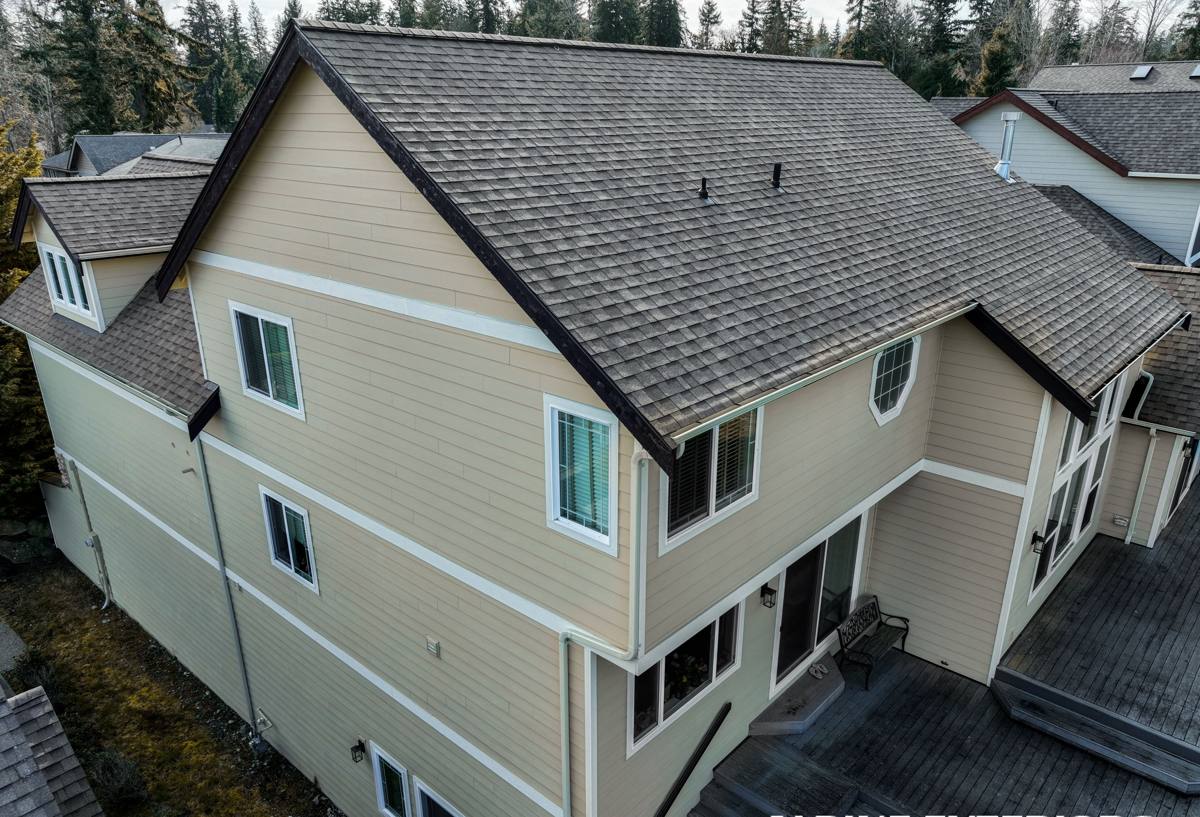
What Bellingham's Climate Does to an Outdoor Deck
If you've owned a deck in this part of Whatcom County for more than a few years, you've probably already seen some combination of the following:
- Green or black moss film building up on shaded boards, especially on the north side of the house or under tree canopy
- Boards that stay damp for days after a rain because they never get a real chance to dry between storms
- Cupping, splintering, or graying wood surfaces from repeated wet-dry cycling
- Corroding fasteners and hardware from salt-influenced air near the bay
- Slick, slippery walking surfaces during the wetter months, which is a real fall hazard on stairs and ramps
None of this is a knock on any particular homeowner's maintenance habits. It's just what happens to exposed wood fiber in a marine-influenced, moss-heavy climate. Bellingham gets a genuinely long wet season, and Sunnyland's tree cover means many decks sit in partial shade for a good part of the day — which slows drying even further.
Why This Matters More for Composite Than People Expect
Composite decking isn't immune to moss and moisture — nothing that sits outside in Whatcom County is. But it doesn't absorb water into its fiber structure the way wood does, so it doesn't swell, cup, splinter, or rot from repeated wet cycles. Moss and algae can still grow on the surface film of any decking material if it stays damp and shaded long enough, but on composite it's a surface condition you clean off, not a sign the board itself is breaking down underneath.
Why Composite Fits Sunnyland's Conditions Specifically
We install composite decking across a range of Bellingham neighborhoods, but Sunnyland's mix of mature landscaping, shaded lots, and proximity to the bay makes it a particularly good fit for composite over traditional wood. A few reasons why:
- No annual sealing or staining. Wood decks in this climate need re-sealing on a tight schedule to keep water out. Miss a year in a wet climate like this and you're often playing catch-up on damage. Composite skips that maintenance cycle entirely.
- Consistent color and structure under shade. Wood grays unevenly depending on sun and shade exposure — a real issue on tree-covered lots. Composite color is manufactured into the board, so shaded and sun-exposed areas age much more evenly.
- Better resistance to fastener corrosion problems. Paired with the right hidden fastener systems and coated structural screws, composite decking handles the region's humidity and salt air without the hardware staining or streaking the boards over time.
- Slip performance when wet. Quality composite boards are manufactured with a textured wear layer designed for wet-climate traction, which matters on a deck that may not fully dry out for days at a stretch.
Not All Composite Decking Performs the Same Here
This is the part homeowners often don't get told: composite decking is not one product. The construction of the board matters a lot in a climate like ours, and it's worth understanding the difference before you pick a material.
| Decking Type | How It Handles Bellingham's Wet Season | Trade-Offs to Know |
|---|---|---|
| Traditional wood (cedar, treated lumber) | Absorbs moisture readily; needs regular sealing to resist rot, cupping, and moss staining | Lowest material cost, but highest ongoing maintenance burden in this climate |
| Uncapped composite | Better than wood, but the exposed wood-plastic core can still absorb some surface moisture and is more prone to staining and mold in constant shade | Mid-range cost; requires more attentive cleaning than capped composite |
| Fully capped composite | A polymer shell wraps the entire board, resisting moisture absorption, staining, and mold growth even in persistently damp, shaded conditions | Higher material cost, but the lowest long-term maintenance in a climate like Sunnyland's |
| PVC decking | Fully synthetic, excellent moisture resistance | Different look and feel than wood-grain composite; worth comparing in person before deciding |
For most Sunnyland homes, we steer clients toward fully capped composite boards specifically because of the shade and moisture profile of the neighborhood. It's a professional judgment call based on what actually holds up here — not a knock on any manufacturer's product line.
What a Correct Composite Deck Installation Actually Involves
Composite decking is often marketed as low-maintenance, and it is — but that reputation depends entirely on the substructure underneath it being built right the first time. A composite deck installed on a poorly designed frame will still trap moisture, sag, or develop soft spots at the framing level, even though the boards themselves resist rot. In a climate that stays wet as long as ours does, the details below aren't optional extras — they're what determines whether the deck performs for decades or becomes a problem in five years.
The Fundamentals We Never Skip
- Pressure-treated or composite-compatible framing, spaced and sized to the manufacturer's span ratings — not just "what we had on the truck"
- Proper ledger board flashing where the deck meets the house, so water is directed away from the wall assembly rather than into it
- Joist tape or a moisture barrier on top of framing members to slow long-term moisture wicking into the wood substructure
- Adequate airflow and ventilation underneath the deck so the frame can actually dry between rain events
- Correct board spacing and fastening per the manufacturer's specifications — too tight and boards can buckle when they expand; too loose and it looks and feels wrong underfoot
- Drainage planning so water sheds off the deck surface and away from the foundation, not pooling against the house
This is the difference between a deck that's genuinely low-maintenance for 25-plus years and one that looks fine for a couple of seasons before problems start showing up at the framing level, where they're expensive to fix.
Our Process for Sunnyland Composite Decking Projects
- On-site assessment. We walk the property, look at sun/shade exposure, existing drainage patterns, tree proximity, and the condition of any existing deck or ledger connection.
- Material and layout discussion. We talk through board options, color, railing systems, and layout based on how the space is actually used — not a one-size-fits-all package.
- Permitting. Deck projects in the City of Bellingham and unincorporated Whatcom County often require permits depending on size, height, and attachment to the home. We handle that process rather than leaving it on you.
- Demolition and framing. Old decking is removed, framing is inspected or rebuilt to current span and flashing standards, and any rot or moisture damage from the previous structure is addressed before new material goes down.
- Composite installation. Boards, fasteners, and trim go in per manufacturer spec, with attention to drainage, ventilation, and clean board alignment.
- Final walkthrough. We go over basic care with you — what to expect in year one, and how to keep moss and algae from getting a foothold on the surface.
Cost Factors for a Sunnyland Deck Project
We don't publish flat prices because every deck is different, but these are the main factors that move the cost of a composite deck project up or down. We'll walk through all of these specifically for your property during a free estimate.
| Factor | How It Affects the Project |
|---|---|
| Deck size and shape | Larger footprints and multi-level or angled layouts require more material and labor time |
| Board tier (uncapped vs. fully capped composite) | Fully capped boards cost more up front but typically mean less long-term maintenance in this climate |
| Framing condition | Rebuilding a rotted or undersized substructure adds cost but is not something we'll skip to save money |
| Height and railing requirements | Elevated decks need code-compliant railing and stair systems, which adds material and labor |
| Site access | Tree-covered or tight-access lots, common in older Sunnyland yards, can affect equipment access and labor time |
| Permitting scope | Larger or attached decks generally require permitting through the local jurisdiction, which adds time but is necessary |
Keeping a Composite Deck Looking Right Through Whatcom County's Wet Season
Composite decking cuts out sanding, staining, and sealing, but "low-maintenance" doesn't mean "no maintenance" — especially with the moss pressure we deal with here. A simple seasonal routine keeps a composite deck looking new for years:
- Sweep off leaves, needles, and debris regularly, especially in fall — trapped organic matter is what feeds moss and algae growth
- Rinse the deck surface periodically with a garden hose to keep pollen and grime from building into a film
- Clean shaded or moss-prone areas with a soft-bristle brush and a mild soap-and-water solution or manufacturer-approved deck cleaner — avoid pressure washing at close range, which can damage the board's textured surface
- Keep gutters and downspouts clear so water isn't dumping directly onto the deck surface or framing below
- Check railing posts and stair connections once a year for any looseness
- Trim back overhanging branches where practical to improve sun exposure and airflow across the deck
Why Hiring a Crew That Already Works in Sunnyland Matters
A contractor who mainly builds decks in drier climates will often under-spec ventilation, skip proper flashing details, or recommend a board tier that isn't suited to a shaded, moss-prone lot — not out of carelessness, but because it's not what they deal with every day. We work throughout Bellingham and Whatcom County, including Sunnyland specifically, so we're building to the conditions your deck will actually face: sustained rain, salt-influenced air, and shade patterns that keep surfaces damp longer than they would in most parts of the country.
That local familiarity also shows up in smaller, practical ways — knowing how Bellingham and Whatcom County permitting typically works, understanding how older Sunnyland lots are graded and drained, and building in the ventilation and flashing details that matter most in a climate like ours. It's the difference between a deck that's engineered for the Pacific Northwest and one that just happens to be located here.
If you're weighing a new composite deck or replacing an aging wood deck in Sunnyland, we're happy to take a look and talk through honest options for your property — no pressure, no obligation. Use the form below to request a free estimate.