 Bellingham Siding
 Deck Building in Sunnyland: Built for This Neighborhood's Weather
Sunnyland is one of Bellingham's older, well-established neighborhoods, and that shows in its housing stock — a mix of early-to-mid-century homes with mature landscaping, sloped lots, and decks that have usually been added or rebuilt at least once since the house was framed. Any deck we build here has to answer to the same conditions every outdoor structure in this part of Whatcom County faces: salt-tinged air off Bellingham Bay, long stretches of driving rain, and a moss and algae season that can run eight months or more. A deck that's designed for a dry climate, or even for inland Western Washington without the marine influence, doesn't hold up the same way here. We build for the site we're standing on, not a generic spec sheet.
What that means in practice is fewer shortcuts in the parts of the deck nobody sees once it's finished — flashing, fastener selection, ventilation under the frame — and more honest conversation up front about what a given material or design will actually cost you in upkeep five and ten years down the road.
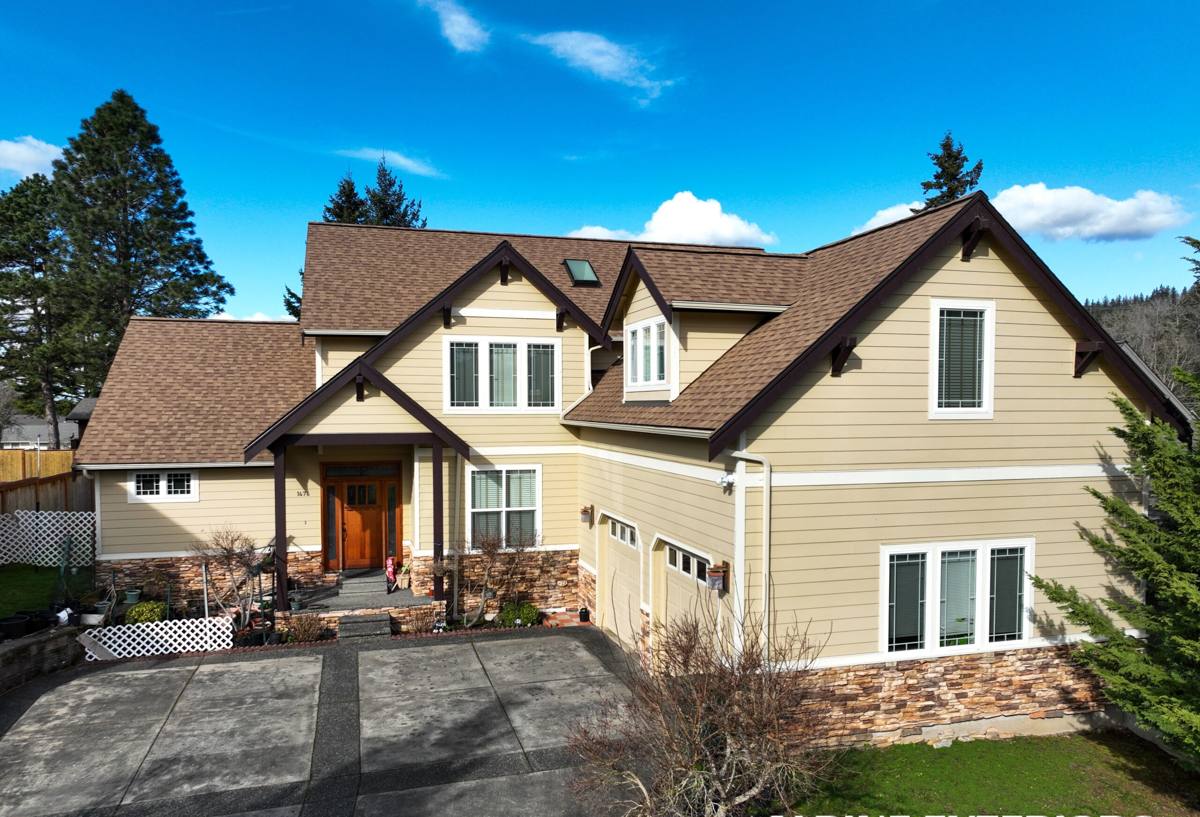
What Sunnyland's Climate Actually Does to a Deck
Three things drive almost every deck problem we get called out to fix in this part of Bellingham:
Salt Air
Proximity to Bellingham Bay means airborne salt is a constant, low-grade factor in how fast metal corrodes. Standard electro-galvanized fasteners and connectors that might be fine thirty miles inland can start showing rust streaks and pitting within a few years this close to the water. It's rarely dramatic — it's a slow erosion of hardware integrity that eventually shows up as a loose railing post or a squeaking joist connection.
Driving Rain
Whatcom County doesn't just get a lot of rain, it gets a lot of wind-driven rain, which pushes moisture into places that would stay dry in a straight-down downpour — up under railings, behind ledger boards, into end-grain cuts on joists and beams. Decks that fail early almost always fail because water got somewhere it wasn't supposed to and had no way to get back out.
Moss and Algae Season
Shade from mature trees, consistent moisture, and mild temperatures add up to a moss and algae season that, in Sunnyland's tree-canopied lots, can run nearly year-round on north-facing or heavily shaded decks. Moss holds water against decking boards, feeds on the wood fiber itself over time, and turns walking surfaces slick and dangerous long before the structure underneath is actually compromised.
Choosing the Right Decking Material for This Site
There's no single "best" decking material — there's a best material for a given budget, sun exposure, and how much maintenance a homeowner actually wants to do. Here's how the common options stack up specifically for a shaded, damp, salt-air site like Sunnyland:
| Material | How It Handles This Climate | Maintenance Reality |
|---|---|---|
| Pressure-treated lumber | Good rot resistance when properly rated and detailed; still needs a real drainage plan underneath | Annual cleaning and re-sealing to keep moss and graying in check |
| Cedar | Naturally rot- and insect-resistant, ages well visually, but softer and more prone to surface checking in constant damp | Regular cleaning, periodic oil or stain to prevent moss taking hold in the grain |
| Composite decking | Excellent moisture and moss resistance on the surface; performance depends heavily on correct ventilation underneath | Occasional washing, no staining or sealing, but expect a premium up front |
| PVC decking | Fully synthetic, best moisture and algae resistance of the group, doesn't absorb water at all | Lowest ongoing maintenance; highest material cost |
We're honest with Sunnyland homeowners that composite and PVC decking cost more up front but usually make sense on shaded, moss-prone lots where a wood deck would need aggressive, regular maintenance just to stay safe underfoot. On sunnier, more exposed sites, a well-detailed cedar or treated-wood deck can be the more sensible choice.
Structural Framing Wood
Regardless of what decking surface a homeowner chooses, we don't cut corners on the framing underneath it. Ground-contact rated pressure-treated lumber for posts and any wood within six inches of soil, standard treated lumber for joists and beams, and stainless or heavy hot-dip galvanized fasteners throughout — not the lighter coated screws that start rusting within a couple of Bellingham winters.
Where Decks Actually Fail: The Substructure
Homeowners understandably focus on what the decking boards look like, but the structure underneath is what determines whether a deck lasts 10 years or 30. The failure points we see most often on older Sunnyland decks are:
- Ledger board flashing — where the deck attaches to the house is the single most common source of hidden rot; without proper flashing, water works its way behind the ledger and into the house's rim joist
- Joist tops with no protective tape or cap — screw holes and cut ends soak up rainwater like a wick if left bare
- Footings set too shallow or without proper drainage — frost heave and saturated soil shift posts out of level over time
- Poor airflow underneath low decks — trapped moisture under the frame accelerates rot even when the visible surface looks fine
Every one of these is invisible from the top once the deck is built, which is exactly why they get skipped by crews trying to hit a low price. We flash every ledger connection properly, cap joist tops, set footings below frost depth with drainage rock, and build in ventilation gaps rather than closing a deck frame in tight against the ground.
Managing Moss, Drainage, and Standing Water by Design
Moss doesn't grow on a deck because the homeowner is doing anything wrong — it grows because moisture and shade are present, which describes a large share of yards in this part of Bellingham. Design choices that reduce how much moss takes hold include gapping decking boards correctly for drainage and air movement, choosing surface textures that shed water rather than trap it in a grain pattern, and grading or adding drainage below the deck so water doesn't pool and wick back up into the frame. None of this eliminates the need for periodic cleaning, but it substantially cuts down how often and how aggressively a homeowner has to scrub and treat the surface to keep it safe.
Our Deck Building Process in Sunnyland
1. On-Site Assessment
We walk the actual lot — slope, sun exposure, tree canopy, drainage patterns, and how the deck will tie into the house — before recommending a material or layout. A deck plan that works on a flat, sunny lot elsewhere in Bellingham may need real changes on a shaded, sloped Sunnyland site.
2. Design and Material Selection
We walk through decking material trade-offs honestly, including what each option will actually cost to maintain given the specific shade and moisture conditions of that yard, not a generic sales pitch.
3. Permitting
Deck projects in the City of Bellingham typically require a building permit once they exceed certain size or height thresholds, and inspections generally cover the footings, framing, and ledger attachment before the decking surface goes down. We handle the permit process as part of the job so homeowners aren't left navigating city requirements on their own.
4. Framing and Structural Work
This is where the climate-specific detailing happens — proper ledger flashing, corrosion-resistant hardware, correctly rated posts and footings, and ventilation built into the frame from the start.
5. Decking, Railing, and Finish Work
Surface material goes down last, along with code-compliant railings and any stairs, with attention to fastener spacing and drainage gaps.
6. Final Walkthrough
We go over basic care for whatever material was installed, so the homeowner knows what routine maintenance actually looks like for their specific deck.
Permits and Code Considerations for This Area
Whatcom County and City of Bellingham building codes govern guardrail height, baluster spacing, stair geometry, and structural connections for residential decks, and enforcement isn't just paperwork — an under-flashed ledger board or an undersized footing is exactly the kind of thing an inspector catches, and exactly the kind of thing that causes real problems five or ten years later if it's missed. We build and permit to code as a baseline, not an upsell, because it's the difference between a deck that's actually safe in wet, shaded conditions and one that just looks finished.
Maintenance Checklist for Sunnyland Deck Owners
Whatever material a deck is built from, a short list of seasonal habits goes a long way in this climate:
- Sweep leaves and debris off the surface regularly, especially in fall — trapped organic matter feeds moss growth
- Rinse or gently power-wash the surface at low pressure once or twice a year to knock back moss and algae before it gets established
- Check railings and stair connections annually for loosening — a sign that fastener corrosion may be starting
- Keep gutters and downspouts near the deck clear so roof runoff isn't dumping extra water onto or under the structure
- Re-seal or re-stain wood decking on the manufacturer's recommended schedule, not just when it looks faded
- Look underneath the deck once a year for standing water, sagging joists, or soft spots near the ledger board
Why It Matters to Hire a Crew That Already Works in Sunnyland
Deck building isn't the same job in every part of Whatcom County. A crew used to building in a dry, sunny, inland climate will make different — and sometimes wrong — assumptions about flashing, drainage, and material choice than a crew that builds regularly in neighborhoods like Sunnyland, with its mature tree cover, older housing stock, and proximity to the bay. We've seen what actually fails on decks here, not what fails in a manufacturer's climate-neutral installation guide, and we design and build accordingly. That local pattern-recognition is worth more than a lower bid from a crew that's never had to answer for how a deck holds up through a full Bellingham winter.
If you're planning a new deck or need to replace one that's showing its age, we're happy to come take a look and give you a straightforward, no-pressure estimate — just fill out the form below.