 Bellingham Siding
 Storm Damage Roof Repair for Sunnyland Homes
Sunnyland is one of Bellingham's older, more established residential neighborhoods, sitting on the city's north-central side with a mature tree canopy over much of its housing stock. That combination — big trees, a mix of home ages, and the same marine weather that hits the rest of Whatcom County — means storm damage here tends to show up in a few predictable ways: wind-lifted shingles, a limb that comes down across a roof plane, flashing that finally gives out after years of driving rain, or moss that's been quietly weakening a roof section long before the storm that finally exposes it. We work storm damage repair calls in Sunnyland regularly, and this page walks through what actually needs to happen after a storm, not a generic overview of roofing in general.
Storm damage repair is its own category of work. It's not the same as a scheduled roof replacement, and treating it that way — either by patching too little or by upselling a full tear-off that isn't needed — does a homeowner a disservice either way. The goal on a storm call is to figure out exactly what the storm actually did, stop any active water intrusion, and fix it correctly without turning a repair into a bigger project than the damage calls for.
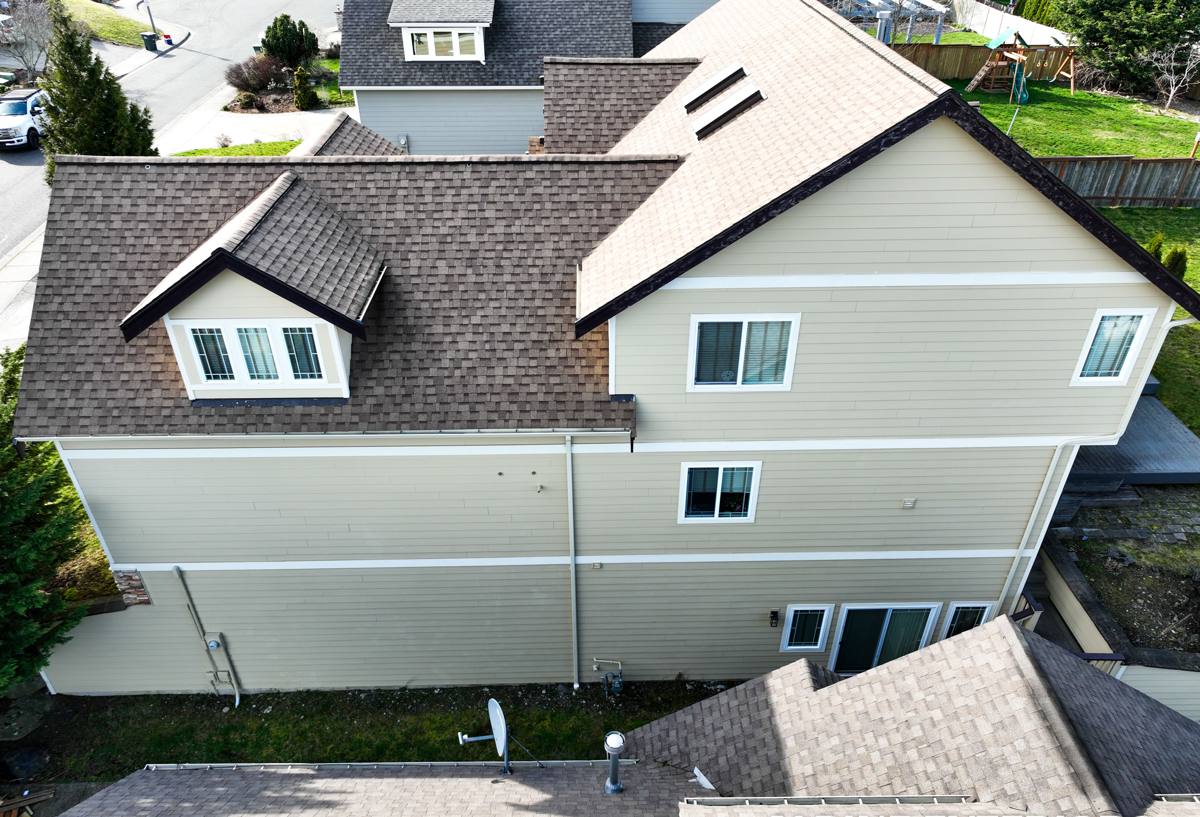
What This Climate Adds to Storm Damage in Sunnyland
Salt Air and Corrosion
Bellingham sits on the bay, and even a few miles inland in a neighborhood like Sunnyland, the air still carries enough salt to accelerate corrosion on fasteners, flashing, and any exposed metal on a roof. A storm that loosens a nail or lifts a flashing edge does more damage here than the same event would in a drier, inland climate, because the exposed metal starts corroding almost immediately once it's no longer sealed and protected.
Wind-Driven Rain
Storms in this part of Whatcom County rarely drop rain straight down. Wind pushes it sideways, driving water up under shingle tabs, into roof valleys, and around chimney and vent flashing that would shed a normal rainfall just fine. A lot of the "mystery leaks" we get called out for after a storm trace back to wind-driven rain finding a gap that only opens up under lateral pressure — not a spot that would ever leak in calm weather.
A Moss Season That Doesn't Quit
Sunnyland's mature trees mean plenty of shaded roof area, and shaded roof area in this climate holds moisture and grows moss for most of the year. Moss isn't just cosmetic — it holds water against the roofing material and works its way under shingle edges, which weakens exactly the parts of a roof that need to hold up under wind. A storm often finishes off a roof section that moss had already been quietly undermining for a season or two.
Mature Tree Canopy
The same trees that make Sunnyland a pleasant neighborhood to live in also mean more limb debris coming down during wind events than a more open, newer subdivision would see. Impact damage from limbs, even small ones, can crack shingles, dent metal flashing, or puncture underlayment in ways that aren't always obvious from the ground.
Recognizing Storm Damage on Your Roof
Some storm damage is obvious. A lot of it isn't, and the damage that isn't obvious is usually what turns into an interior leak weeks later. After any significant wind or rain event, it's worth checking for:
- Shingles that are visibly lifted, curled, cracked, or missing entirely
- Granules collecting in gutters or at the base of downspouts, which points to shingle wear or impact damage
- Flashing around chimneys, vents, or skylights that looks bent, lifted, or separated from the roof surface
- Dented or creased metal flashing and gutters, which usually means debris impact
- Sagging sections or soft spots when the roof is walked, which can indicate saturated decking underneath
- Water stains on interior ceilings or walls, especially near exterior walls or around chimneys
- Visible daylight through the roof deck if you check from inside the attic
- Moss or debris buildup that's shifted or torn loose in a storm, exposing bare roofing underneath
Any one of these is worth a professional look. Several together, especially after a named storm event, usually mean the roof took real damage that's worth documenting before it's addressed.
What to Do Right After a Storm
What happens in the first day or two after a storm affects both how well the repair goes and how smoothly an insurance claim, if there is one, gets handled. We generally recommend:
- Stay off the roof yourself, especially in wet or windy conditions — most ladder and fall injuries we hear about happen when a homeowner tries to inspect or tarp their own roof after a storm
- Photograph visible damage from the ground and from inside the attic if you can safely access it, before any cleanup happens
- Move furniture and belongings away from any active interior leak and place a container to catch water
- Call a licensed contractor for a professional inspection rather than relying on a ground-level look alone
- Get emergency tarping done quickly if there's an active opening, since a properly installed tarp can prevent a manageable repair from turning into a full deck replacement
- Hold off on permanent repairs until the damage has been documented, if you plan to file an insurance claim
What a Correct Storm Damage Repair Involves
Inspection Beyond the Obvious Spot
A storm rarely damages just the one visible spot. Wind and impact forces travel across a roof plane, so a proper inspection covers the full roof — not just the area near the leak — checking flashing, valleys, ridge lines, and any penetrations for damage that hasn't started leaking yet but will after the next storm.
Matching Materials and Correct Flashing Work
A patch that doesn't match the surrounding roofing in material, profile, and age is a repair that stands out and, more importantly, one that doesn't always integrate properly with existing flashing and underlayment. Correct storm repair means matching shingle type and, where possible, color, and rebuilding flashing at valleys, chimneys, and vent penetrations to shed water the way the rest of the roof does — not just sealing over the gap with caulk or roofing cement as a shortcut.
Checking the Deck, Not Just the Surface
If water has been getting into a section of roof for any length of time before the storm damage was found, the plywood or OSB decking underneath may already be soft or delaminating. Replacing shingles over damaged decking just hides the problem until it fails again. Any real repair includes checking the deck at the damaged area and replacing it if it's compromised.
Repair or Replace: Weighing the Decision
Storm damage doesn't automatically mean a full replacement, and it doesn't automatically mean a small patch will do either. The right call depends on the roof's age, how much area is affected, and what condition the rest of the roof was in before the storm hit.
| Situation | Usually Points To | Why |
|---|---|---|
| Localized damage on a roof under 10-15 years old, otherwise in good shape | Targeted repair | The rest of the roofing and underlayment still has plenty of service life; a matched repair restores the damaged section without wasting sound material |
| Damage spread across multiple slopes, or a roof already near the end of its rated life | Full or partial replacement | Patching an aging roof in several places usually costs more over time than replacing it once, and new storms will keep finding the next weak spot |
| Deck damage limited to the area directly under the storm damage | Repair with deck replacement at that section | Isolated deck rot doesn't require re-roofing the whole house, just addressing the compromised area properly |
| Widespread moss damage discovered underneath storm-lifted shingles | Depends on extent — inspect before deciding | Moss damage found during a storm repair sometimes reveals a bigger underlying problem than the storm alone caused |
Cost for a targeted repair is typically a few hundred to a couple thousand dollars depending on scope, while a full replacement runs considerably more — we won't give you a real number until we've actually looked at the roof, because guessing off a phone call does homeowners a disservice either way.
Working With Your Insurance Company
Most homeowners' policies cover sudden storm damage — wind, impact from falling debris, and the water intrusion that follows — though coverage details and deductibles vary by policy, so we're not going to make blanket promises about what any specific policy covers. What we can do is provide a written inspection report and photo documentation that describes what we found and what caused it, which is generally what an adjuster needs to evaluate a claim. A few things that help the process go smoothly:
- Document damage before any repair work begins, including photos of the affected area and any debris involved
- Keep receipts for any emergency mitigation, like tarping, since that's typically reimbursable
- Get a written scope of work and estimate rather than a verbal number
- Be cautious of contractors who show up uninvited after a storm and pressure you to sign paperwork on the spot — we'd rather you take our estimate, get a second opinion if you want one, and make the decision on your own timeline
Why a Crew That Already Works in Sunnyland Matters
A contractor who works this part of Bellingham regularly has a working sense of what a given block's tree cover, roof age, and exposure typically mean for storm damage, rather than treating every call the same. That shows up in practical ways: knowing which roof orientations in a tree-heavy neighborhood like Sunnyland tend to hold moss longest, recognizing when flashing damage is really old corrosion that a storm just exposed versus fresh impact damage, and being straightforward about which situations genuinely need a full replacement versus a targeted fix. Whatcom County's storms and this neighborhood's tree canopy are a specific combination, and we've seen how they play out on real roofs here over multiple storm seasons, not just on a spec sheet.
Beyond the Roof
Storm damage rarely stops at the roofline. Wind and driving rain that lift shingles can also loosen siding, damage trim, and stress gutters and downspouts, and a falling limb that hits a roof edge sometimes takes fascia or siding with it. We handle siding, windows, and decks in addition to roofing, and we install James Hardie fiber cement siding as our standard for the same reason we take flashing and underlayment seriously on a roof — it holds up to sustained coastal moisture better than the alternatives. If a roof inspection turns up related damage elsewhere on the exterior, we'll point it out and give you an honest read on whether it needs attention now or can wait.
If your Sunnyland home has storm damage, or you're not sure whether what you're looking at is storm-related or just years of wear catching up, we're glad to take a look. Reach out using the form below to schedule a free, no-pressure estimate.