 Bellingham Siding
 Custom Windows Built for York's Corner of Bellingham
York sits inside one of the wetter, saltier micro-climates in Whatcom County, and that combination is hard on windows in ways homeowners don't always expect until they're dealing with a fogged-up double pane or a sill that's gone soft. Custom window work here isn't just about picking a style out of a catalog — it's about matching the frame material, the glazing package, and the installation detail to a house that's going to sit through months of driving rain, salt-laden air off the water, and a moss season that seems to start earlier every year.
"Custom" in this context usually means one of two things: windows built to fit openings that aren't standard sizes (common in older homes that have settled or been added onto over the decades), or windows chosen and detailed specifically for a difficult exposure — a wall that catches the worst of the weather, a bay or picture window that needs extra structural support, or a replacement that has to match the look of the rest of the house. Either way, the job only turns out right if the person measuring and installing it understands what York's climate does to a window over ten or twenty years, not just what it looks like on install day.
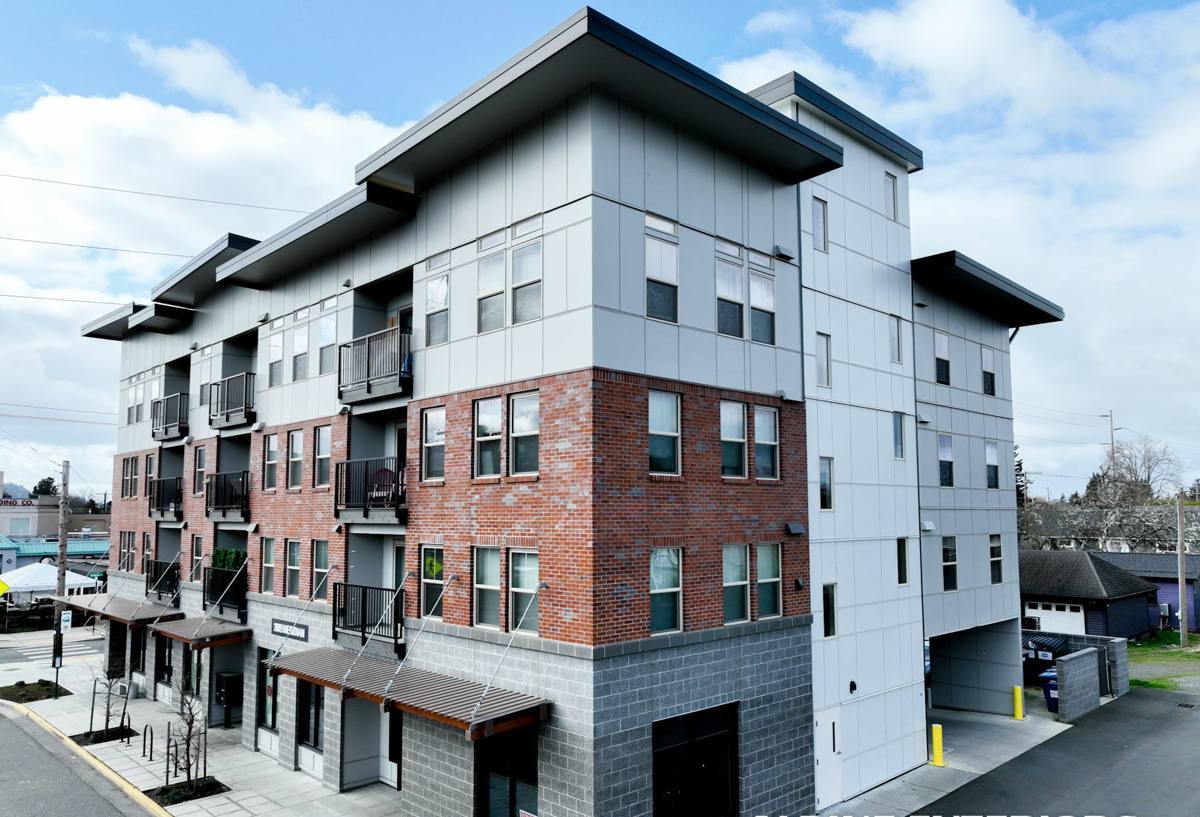
What Bellingham's Climate Actually Does to Windows
We don't need to oversell this — the climate here is simply demanding on building materials, windows included. Three things matter most for York homes specifically:
Salt Air
Proximity to Bellingham Bay means airborne salt can accelerate corrosion on hardware, fasteners, and unclad metal components. Over years, cheap or unprotected hardware pits and seizes, locks get stiff, and aluminum components can pit if they're not properly finished or clad.
Driving Rain
Wind-driven rain doesn't just hit a window — it gets pushed sideways and upward into gaps that a calm-weather install would never expose. Flashing details and sealant choices that would be fine in a drier climate aren't good enough here. Water finds the weak point, and in a wall assembly that usually means rot before it means a visible leak.
Moss Season
Moss and algae thrive in the shaded, damp conditions common through fall, winter, and spring. On windows, that shows up as green growth in track channels, on sills, and in corners where water sits instead of draining. Beyond looking bad, trapped moisture under moss buildup is what starts wood rot in sills and lower sash frames.
Signs a York Home Needs Custom Window Work, Not Just a Repair
Homeowners often call us for a simple fix and find out the real problem is bigger. A few signs it's time to talk about replacement or a custom-built solution rather than a patch:
- Persistent fogging or moisture between panes — the seal has failed and the insulated glass unit can't be repaired, only replaced
- Soft or discolored wood at the sill or lower frame corners, especially on walls exposed to prevailing wind and rain
- Windows that are difficult to open, lock, or latch — often a sign of frame swelling, hardware corrosion, or settling
- Visible daylight or a noticeable draft around the frame when the window is closed
- Moss or dark staining building back within weeks of cleaning, which usually means water is sitting somewhere it shouldn't
- Mismatched or oddly sized openings from a prior remodel, addition, or a house that has settled over time
Any one of these is worth a look. Several together usually mean the window and the opening around it both need attention, which is exactly the situation custom work is meant to solve.
What a Correct Custom Window Installation Involves
The window unit itself is only part of the job. In a climate like this, the installation detailing is what determines whether a window lasts five years or twenty-five.
Removal and Opening Inspection
Before anything new goes in, we pull the old unit and check the framing underneath for rot, moisture damage, or settling that's thrown the opening out of square. This is the step that gets skipped by crews trying to move fast, and it's the step that matters most in a wet climate — a new window installed over a compromised opening will fail again, just more slowly.
Flashing and Weatherproofing
Proper flashing tape and a correctly lapped weather-resistive barrier around the opening are what actually stop wind-driven rain from getting behind the siding. This is invisible once the job is done, which is exactly why it's the detail that separates a durable install from one that leaks in three years.
Fitting, Shimming, and Sealing
Custom or odd-sized openings need careful shimming so the window is square, plumb, and supports its own weight correctly — especially on larger units. Sealant goes where it needs to go on the exterior, and just as importantly, is left out where it shouldn't be, so any incidental moisture that does get past the outer defenses has a way to drain back out instead of getting trapped in the wall.
Interior and Exterior Finish
Trim, casing, and caulking are finished to match the home, and hardware is checked for smooth operation before we call the job done.
Choosing a Frame Material for a Coastal Whatcom County Exposure
There's no single "best" window material — the right choice depends on the specific exposure, the look of the house, and how much upkeep the homeowner wants to take on. Here's how the common options stack up for a York-area install:
| Frame Material | Moisture & Salt Air Behavior | Maintenance | Typical Lifespan |
|---|---|---|---|
| Vinyl | Won't rot or corrode; performs well in wet, salty air | Low — occasional cleaning | 20–30 years |
| Fiberglass | Excellent moisture and salt resistance; very stable, minimal expansion/contraction | Low | 30+ years |
| Wood (unclad) | Classic look but needs consistent upkeep to resist rot in this climate | High — periodic painting/sealing | Varies widely with maintenance |
| Wood, aluminum- or fiberglass-clad | Wood interior with a weather-facing exterior shell; good protection if flashing detail is correct | Moderate | 25–35 years |
| Aluminum | Can pit or corrode in salt air unless properly finished; conducts cold, prone to condensation | Moderate | Varies; hardware often the weak point |
For most York homes dealing with regular salt air and driving rain, we lean toward vinyl or fiberglass for straightforward replacements, and clad-wood when a homeowner wants a traditional wood interior look with better weather protection on the exterior face. We're happy to walk through the trade-offs for your specific house rather than pushing one product line.
Our Process, Start to Finish
The process is the same whether it's one window or a whole house:
- On-site assessment — we look at existing openings, note any rot, settling, or non-standard sizing, and talk through what you want out of the windows (energy performance, appearance, low-maintenance operation).
- Measurement and product selection — accurate measurements matter more on older or custom openings than on new construction, since nothing is guaranteed to be square.
- Written estimate — clear pricing with the frame material, glazing package, and scope spelled out, no surprise add-ons once the work starts.
- Scheduling around the weather — installs are timed for dry windows where possible, since an open wall in the rain is exactly what you don't want in this climate.
- Installation — removal, opening inspection, flashing, fitting, and finish work as detailed above.
- Final walkthrough — we check operation, sealing, and cleanup with you before calling it complete.
Why Local Experience in York Actually Matters
A lot of window contractors can install a window correctly on a calm, dry day in a controlled environment. Fewer have detailed enough openings, on enough homes in this specific pocket of Bellingham, to know where the trouble spots usually are — which wall orientations take the worst of the wind-driven rain, which older housing stock tends to have settling issues around openings, and how aggressively moss and algae will come back if drainage isn't handled right the first time.
That local pattern recognition is what keeps a job from turning into a callback. It also means we're not guessing at permitting or code requirements that apply to work in the City of Bellingham — we handle that as a normal part of the job, not an afterthought.
Keeping New Windows Performing in a Wet Climate
Even a well-installed window benefits from basic upkeep, especially through the wetter months. A simple seasonal routine goes a long way:
- Wipe down tracks and sills a few times a year to keep moss and algae from establishing, especially on shaded or north-facing windows
- Check that weep holes (the small drainage openings on the exterior of the frame) are clear of debris and moss so water can drain instead of pooling
- Inspect exterior caulking annually and touch up any cracked or separated sealant before the rainy season sets in
- Test locks and hardware periodically — stiffness can be an early sign of corrosion or frame movement worth addressing before it gets worse
- Trim back vegetation that keeps a window in constant shade and dampness, which speeds up moss and algae growth
None of this is complicated, but skipping it is how a well-installed window ends up looking neglected within a few years in this climate.
Get a Free, No-Pressure Estimate
If you're dealing with foggy glass, a stubborn sash, or windows that just aren't holding up to York's weather anymore, we're happy to take a look and give you an honest assessment — no pressure, no obligation. Fill out the form below and we'll get in touch to schedule a time that works for you.