 Bellingham Siding
 Building Decks for York That Actually Hold Up
York is one of Bellingham's older, established neighborhoods, and a lot of the homes here have decks that were built decades ago under very different expectations for how wood and hardware would hold up over time. A deck in this part of Whatcom County isn't just outdoor furniture — it's a structure that sits exposed to salt-tinged air off Bellingham Bay, months of driving rain, and a moss season that can run from October well into spring. Building one correctly here means designing for that reality from the footings up, not just picking attractive decking boards and calling it done.
We build and rebuild decks for homeowners in York and the surrounding Bellingham neighborhoods, and the patterns are consistent: decks fail first at the connections and the details you can't see once the boards are down, not at the decking surface itself. That's where we put the most attention.
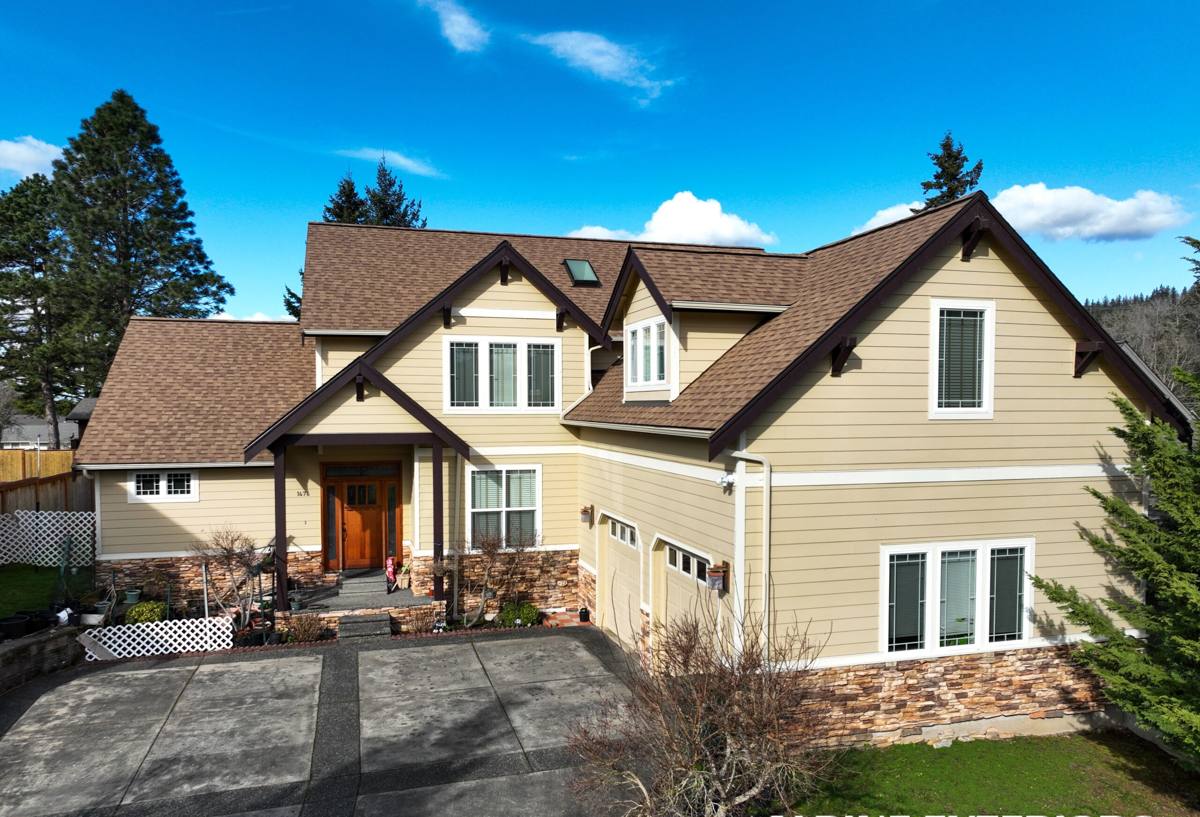
What Bellingham's Climate Does to a Deck
Three things shape almost every decision we make on a deck build in York.
Salt Air and Corrosion
Homes closer to the water deal with airborne salt that accelerates corrosion on fasteners, brackets, and any exposed metal hardware. Standard interior-grade screws or under-rated connectors can start rusting and losing holding strength years before the wood around them shows any wear. We spec fasteners and structural connectors rated for coastal exposure as a baseline, not an upgrade.
Driving Rain and Standing Water
Rain here doesn't just fall straight down — wind-driven rain gets pushed sideways into ledger boards, stair stringers, and any spot where two pieces of wood meet. If water can get behind a ledger board or pool on a horizontal surface without a way to drain or dry out, rot follows. Good deck building is largely about giving water a way out.
The Long Moss Season
Whatcom County's wet, mild winters are ideal growing conditions for moss and algae. On a deck, that shows up as green film on boards, slick stair treads, and moisture trapped against the wood surface for months at a time. Moss isn't just cosmetic — where it holds, wood stays wet longer, which is exactly what accelerates rot.
Where Deck Failures Actually Start
When we get called to look at an aging or failing deck in York, the problem is almost never the decking boards themselves. It's usually one of these:
Ledger Board Attachment
The ledger is the board that connects the deck to the house, and it's the single most important structural and moisture detail on the whole project. It has to be properly flashed so water sheds away from the house framing, and it has to be through-bolted or lag-screwed with hardware rated to carry the deck's load — not just nailed. A poorly flashed ledger is the most common source of hidden rot we find, because the damage happens behind the board where nobody looks.
Post Bases and Footings
Wood posts set directly in or on concrete without a proper standoff base wick up moisture from below. In a climate that stays damp for most of the year, that constant moisture contact is a slow but reliable way to rot a post from the bottom up.
Under-Deck Drainage and Airflow
Decks built low to the ground or over soil with poor drainage stay damp underneath long after a storm has passed. Without airflow, framing members dry out slowly, which gives rot and moss more time to take hold.
Comparing Decking Materials for This Climate
There's no single "best" decking material — the right choice depends on how much upkeep you want to do and what you're willing to spend up front versus over time. Here's how the common options actually perform in a York-type environment.
| Material | Moisture / Salt Air Performance | Moss and Algae Resistance | Maintenance | Relative Upfront Cost |
|---|---|---|---|---|
| Pressure-treated wood | Good if properly sealed and maintained; fasteners must be corrosion-rated | Low — porous surface holds moisture and organic growth | Annual cleaning, periodic sealing/staining | Lowest |
| Cedar | Naturally rot-resistant, but still needs sealing in this climate | Moderate — still needs regular cleaning | Sealing every 1-3 years, regular cleaning | Moderate |
| Composite decking | Very good — doesn't absorb water the way wood does | Moderate to good, depends on the product's surface texture | Periodic washing, no sealing or staining | Moderate to higher |
| PVC / capped polymer decking | Excellent — fully sealed surface, minimal water absorption | Good — smoother, less porous surface sheds moss more easily | Occasional washing | Highest |
Composite and PVC products cost more up front but ask for almost nothing in ongoing maintenance, which matters in a climate where a wood deck genuinely needs yearly attention to hold up. Wood costs less to install but only performs as well as the maintenance schedule behind it. We'll walk through the honest trade-offs for your project rather than push one product line — the right answer depends on your budget and how much deck upkeep you actually want to take on.
Our Deck Building Process
Site Assessment and Design
We start by looking at drainage on your lot, sun and rain exposure, slope, and how the deck will tie into the house. In York's mix of older lots and established grading, this step catches problems — like a low spot that collects water — before they get built into the structure.
Permits and Inspections
Most attached decks in Bellingham require a building permit and inspection, and for good reason — the structural and flashing details are exactly the things that fail quietly if they're done wrong. We handle the permit process and build to the inspected standard, not just to what will "pass fine for now."
Footings, Framing, and Flashing
This is where the deck's actual lifespan gets decided: proper footing depth, corrosion-rated hardware, correctly flashed ledger attachment, and framing spaced and sized for the load and span. None of this is visible once the decking goes down, which is exactly why it has to be right the first time.
Decking, Railings, and Stairs
Once the frame is solid, we install the decking material you've chosen, along with code-compliant railings and stair stringers built for the same wet-climate durability as the frame underneath.
Final Walkthrough
We go over the finished deck with you — how it drains, what maintenance it needs (if any), and what to watch for as the seasons change.
Railings, Stairs, and Code Basics
Guardrails, baluster spacing, and stair geometry aren't optional design choices — they're set by building code, and they matter more than most homeowners realize. A few basics that come up on almost every project:
- Guardrails are generally required once a deck surface is a certain height above grade, and must meet a minimum height standard
- Baluster spacing has a maximum gap to prevent a young child from passing through
- Stair rise and run have to stay within a consistent range from step to step — uneven stairs are one of the more common inspection failures on older decks
- Handrails on stairs need to be graspable and properly anchored, not just decorative
We build to these standards as a matter of course, and we'll explain the reasoning behind each one if you're curious — most of it comes down to plain safety, not bureaucracy for its own sake.
Seasonal Maintenance Checklist for York Homeowners
Whatever material you choose, a little seasonal attention goes a long way in this climate. A basic routine:
- Sweep leaves and debris out of gaps between boards before fall rains set in
- Check that under-deck drainage paths and gutters/downspouts near the deck aren't blocked
- Look at the ledger flashing line each fall for any gaps, cracking, or staining
- Wash moss and algae off decking and stair treads before they become a slip hazard — a stiff brush and mild cleaner is usually enough
- Check exposed fasteners and hardware yearly for rust or loosening, especially closer to the water
- Reseal wood decking on the schedule recommended for your specific product, not just "when it looks dry"
Why a Crew That Already Works in York Matters
Deck building isn't exotic work, but building one that holds up in Whatcom County's climate takes more than a generic set of plans. A crew that already works in York has seen how the neighborhood's lots drain, how close different properties sit to salt air influence off the bay, and which details on older homes tend to need extra attention when a new deck ties into existing framing. That local familiarity shows up in fewer surprises during the build and a deck that's designed for the weather it will actually face, not a generic version of it.
It also means someone who's easy to reach after the project is done — for a warranty question, a maintenance question, or just an honest opinion on whether something you're seeing is normal wear or worth a second look.
Get a Straightforward Estimate
If you're planning a new deck or looking to replace one that's past its prime, we're happy to come take a look and walk you through your options — materials, layout, and what it'll take to build something that actually holds up to a York winter. The estimate is free, there's no pressure, and you'll get a straight answer about what your project needs. Use the form below to get started.