 Bellingham Siding
 New Roof Installation Built for York's Weather
York is one of Bellingham's older, tree-shaded neighborhoods, and that combination — mature canopy, proximity to Bellingham Bay, and Whatcom County's long wet season — puts a specific kind of stress on a roof. Salt-tinged air drifting in off the bay accelerates corrosion on fasteners and flashing. Driving rain, often pushed sideways by wind off the water, finds every weak seam and undersized flashing detail. And the shade from mature trees that gives York its character also means roofs here stay damp longer after every storm, feeding moss and algae growth for much of the year. A new roof for a York home isn't a generic install — it's a system chosen and detailed to handle those three things together.
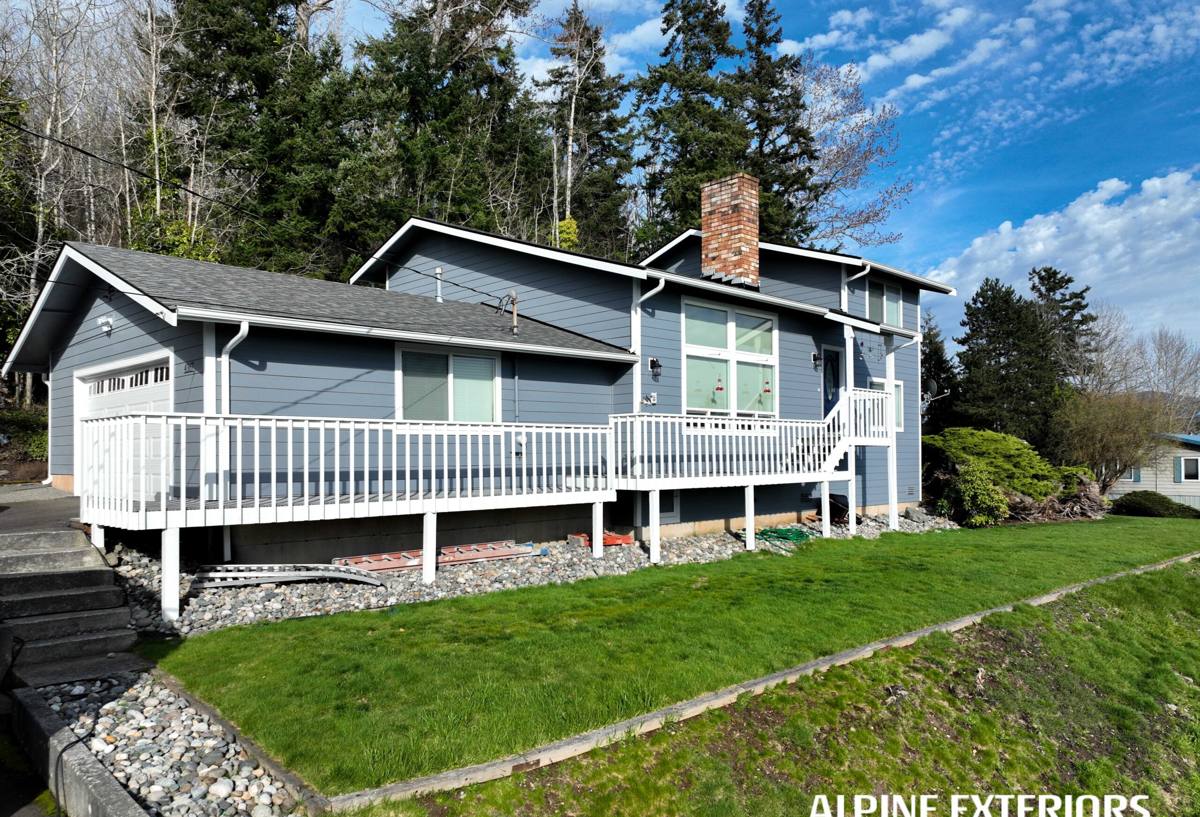
Signs a York Home Is Due for a New Roof
Roofs rarely fail all at once. They give warning signs first, and in a wet, shaded neighborhood like York those signs often show up earlier than they would on a roof out in full sun and open wind. Here's what we look for, and what homeowners can check from the ground:
- Granules collecting in gutters or at downspout outlets — a sign asphalt shingles are wearing thin
- Dark streaking or thick moss patches, especially on north-facing slopes that stay shaded most of the day
- Shingles that are curling, cupping, or have visibly lost their flat profile
- Soft spots or sagging when walked on, which usually points to deck damage underneath
- Daylight visible through the attic roof deck, or damp insulation after a heavy rain
- Rusted, lifting, or missing flashing around chimneys, skylights, and roof-to-wall transitions
- A roof that's 20+ years old, since most standard asphalt systems are nearing the end of their service life by then in this climate
Any one of these on its own might just mean a repair. Several together, or a roof pushing past its expected lifespan, usually means it's time to talk about full replacement instead of patching the same problem year after year.
What a Correct Installation Actually Involves
A new roof is more than laying down new shingles over the old ones. In a climate that gets as much sustained rain as Whatcom County, the layers underneath the visible roofing material are what actually keep water out over the long run. A correct installation includes:
Full Tear-Off and Deck Inspection
We remove the existing roofing down to bare decking. This is the only way to actually see the wood underneath — you can't assess deck condition through old shingles, and you can't warranty a new roof over hidden rot. Any soft, delaminated, or water-stained sheathing gets replaced before anything new goes down.
Ice and Water Shield at Vulnerable Areas
Eaves, valleys, and any low-slope transitions get a self-adhering waterproof membrane underneath the primary underlayment. These are the spots where wind-driven rain is most likely to work its way backward under standard shingles, and they're worth the extra protection given how often York sees that kind of weather.
Synthetic Underlayment Across the Full Deck
A quality synthetic underlayment goes down over the rest of the roof as a secondary water barrier, tougher and more consistent than older felt products, and it holds up better during the install itself if weather moves in mid-project.
Flashing Done Right
Chimneys, sidewalls, skylights, and any roof penetrations get new metal flashing, properly stepped and integrated with the underlayment — not just caulked over old flashing. This is one of the most common places older roofs fail, and it's not a place to cut corners.
Ventilation That Matches the House
Balanced intake and exhaust ventilation keeps the attic dry and temperature-regulated, which matters twice over here: it prevents condensation buildup during our long damp stretches, and it helps the roofing material itself last as long as it's rated to.
Choosing a Roofing Material for Whatcom County Conditions
There's no single "best" roofing material — the right choice depends on the home's structure, budget, and how much long-term maintenance the homeowner wants to take on. Here's how the common options compare for a coastal, moss-prone environment like York:
| Material | Moss/Moisture Resistance | Typical Lifespan | Maintenance |
|---|---|---|---|
| Architectural asphalt shingle | Good, especially with algae-resistant granules | 25–30 years | Periodic moss/debris removal recommended |
| Standing seam metal | Excellent — sheds moisture fast, little surface for moss to grip | 40–50+ years | Low; occasional debris clearing |
| Synthetic/composite shake | Very good, doesn't absorb moisture like natural wood | 30–50 years | Low to moderate |
| Natural cedar shake | Requires diligent upkeep in shaded, damp settings | 20–30 years with maintenance | High — regular treatment and moss control needed |
For heavily shaded York lots specifically, we usually steer homeowners toward algae-resistant asphalt shingles or metal roofing over untreated natural wood products — not because cedar is a bad material, but because a shaded, moisture-heavy lot asks more of a wood roof's maintenance schedule than most homeowners want to keep up with. That's a trade-off we'll walk through honestly based on your specific property, not a one-size-fits-all recommendation.
Our New Roof Installation Process
- On-site assessment — we inspect the existing roof, attic ventilation, and deck condition, and take measurements for an accurate quote.
- Material selection — we walk through options based on your home's style, budget, and how much shade and tree cover your specific lot gets.
- Permitting — we handle the City of Bellingham or Whatcom County permit as required before work begins.
- Protection setup — landscaping, siding, and gutters get protected before tear-off starts.
- Tear-off and deck repair — old roofing comes off, decking is inspected and repaired as needed.
- Underlayment, flashing, and ventilation install — the waterproofing system goes in first, correctly detailed at every transition.
- Roofing material installation — installed to manufacturer specification, which is what keeps the warranty valid.
- Cleanup and magnetic sweep — full site cleanup, including a nail sweep of the yard and driveway.
- Final walkthrough — we go over the finished roof with you before calling the job done.
Moss and Moisture Control After Installation
A new roof doesn't make moss impossible in a shaded York yard — it makes it manageable. Algae-resistant shingles, proper attic ventilation, and clean gutters all reduce how fast moss and algae take hold, but a roof under mature tree cover will still benefit from a light moss treatment and debris clearing every year or two. We're upfront about this during the estimate rather than promising a maintenance-free roof, because that's not realistic in this part of Whatcom County and any contractor who tells you otherwise isn't being straight with you.
Permits and Timeline
Most new roof installations in York fall under standard residential reroofing permits through the local jurisdiction, and we take care of pulling and closing that permit as part of the job. A typical single-family home reroof takes one to three days on-site, depending on roof size, pitch, and how much deck repair turns up once the old material is off. Weather is the biggest variable — we plan around forecasted dry windows and won't leave a roof exposed to an incoming storm mid-tear-off.
Cost Factors to Expect
Every roof is priced individually, but the main variables that move the number are consistent from job to job:
| Factor | Why It Matters |
|---|---|
| Roof size and pitch | More surface area and steeper slopes mean more material and labor time |
| Number of layers to remove | Tear-off of multiple old layers adds disposal cost and labor |
| Deck condition | Rotted or soft decking found during tear-off requires repair before install |
| Material choice | Asphalt, metal, and synthetic products carry different material and install costs |
| Roof complexity | Valleys, dormers, chimneys, and skylights all add flashing and labor time |
| Access | Tree cover, tight lots, or difficult truck access can affect setup time |
We give a firm, itemized quote after the on-site assessment — not a rough phone estimate — because guessing at any of these factors from a distance does homeowners a disservice.
Why a Crew That Already Works in York Matters
York's mix of older homes, mature tree cover, and lot layouts common to the neighborhood means a crew that's worked here before already understands what to expect before the tear-off even starts — how much moss buildup is typical, where deck damage tends to show up on homes of a certain age, and how to work around mature landscaping without causing damage. That familiarity translates into a smoother, more accurately quoted job, and fewer surprises once the old roof comes off.
If your York home is due for a new roof, we'll come take a look, walk you through what we find, and put together a straightforward, no-pressure estimate — free of charge, with no obligation to move forward. Use the form below to get started.